Global Expansion Guide · Spain

Market expansion guide:Spain.
Animated Nuvei dot mosaic of Spain

One of Europe’s fastest-growing economies and the EU’s fourth-largest market. Spain pairs a highly connected, mature consumer base with a gateway into Southern Europe and Latin America. Explore it on your terms: pick a section, dig into the data, decide where to focus.

49.7m
Population
EU's fourth-largest economy
$115.9B
E-commerce by 2028
From $76.7B in 2024
60%
Already cross-border
$46.3B → $70.9B by 2028
10.9%
E-commerce CAGR
Vs 1.6% GDP growth in 2028

Spain at a glance

Big market,bigger momentum

A market of almost 50 million people, growing faster than the EU average and deeply integrated into European and global e-commerce.

USD
76.7bn
E-commerce market, 2024
Mature, diverse and growing
USD
115.9bn
Forecast market, 2028
10.9% CAGR
60%
Of e-commerce is cross-border
USD 46.3bn in 2024
68.9%
E-commerce penetration
Headroom to grow
92%
Smartphone penetration
Germany: 82%
98.4%
Bank account penetration
Near-universal inclusion
USD
40.6k
GDP per capita (approx.)
GDP ~USD 1.9 trillion
49.7m
Population
EU's fourth-largest economy
Sources: PCMI · International Monetary Fund (IMF) · Banco de España · IAB Spain · ONTSI
Aerial view of a marina and turquoise bay on the Mallorca coast
Spain: 49.7 million people and the EU's fourth-largest economy.

Why Spain

One of Europe'smain growth engines.

Gran Vía and the Metropolis building in Madrid at sunset

Since the Covid-19 pandemic, Spain has been powered by a strong recovery in tourism and services, sustained immigration, the efficient deployment of large-scale EU funds and relatively favorable energy costs. That macroeconomic strength is a significant tailwind for e-commerce, alongside better logistics, rising mobile adoption and a steadily improving online shopping experience.

Why Spain

Scale, momentumand open doors

Several structural factors provide a strong foundation for sustained e-commerce expansion in Spain.

“Spain is currently one of the fastest-growing economies in Europe, with much greater growth potential than other developed economies. This macroeconomic momentum is clearly translating into strong demand from merchants.”
— Mentxu Triviño, Nuvei VP for Payments Partnerships in Spain
Spain’s digital foundations

Highly connected,still room to grow.

68.9%
E-commerce penetration
Lowest of the “Four Markets”
92%
Smartphone penetration
High even among neighboring European markets (Germany: 82%).
98.4%
Bank account ownership
Near-universal inclusion
~USD
40.6k
GDP per capita
2026 est. · IMF
~USD
1.9tn
GDP
EU's fourth-largest · IMF

E-commerce penetration trails several Latin American markets, including Brazil (90%), Chile (88%) and Colombia (86%). For merchants, that gap signals meaningful headroom for adoption.

Growth momentum

Digital growth attwice the pace.

Spain’s digital economy is projected to expand at a CAGR of 10.9%, more than twice the growth rate projected for Germany or Japan. This reflects the structural acceleration of digital consumption and Spain’s deepening integration into European and global e-commerce.

USD
76.7bn
Spain, 2024
E-commerce market
10.9%
E-commerce CAGR
2024–2028
USD
39.2bn
New transaction value
Added by 2028
USD
115.9bn
Spain, 2028
Forecast
Source: PCMI
City of Arts and Sciences in Valencia reflected in water at dusk
A modern launchpad with established corridors into Southern Europe and Latin America.

A strategic launchpad

One base.Three continents.

Spain
Portugal
Italy
France
Germany
North Africa
Latin America
United States

A “golden triangle” linking Europe, Africa and Latin America.

Beyond domestic demand, Spain increasingly serves as a launchpad for international expansion, not only into Southern Europe, but also into Latin America. Global platforms have long used it as a key market and testing ground.

Amazon

Has performed extremely well in Spain since the 2010s and leads online retail as the main marketplace.

AliExpress

Spain has been one of Alibaba's largest markets outside China and the US. AliExpress has its European headquarters here.

Miravia

AliExpress launched its new brand in Spain first — before Germany or France.

“For German or other European merchants targeting Spanish-speaking markets, it’s easier to start in Spain before going to Latin America.”
— David Exposito, Nuvei VP of Sales for Southern Europe

Economic outlook

Outpacing the EU,year after year.

3.8%
Average GDP growth since 2022

Versus an EU average of 1.7%.

2.8%
GDP growth in 2025

Roughly twice the EU average of 1.4%.

2.0%
Forecast GDP growth, 2026

Recorded 1.7% in 2027 and 1.6% in 2028 - still above the EU average.

Source: International Monetary Fund (IMF)
What this means for merchants
For companies expanding beyond their home market, Europe is often the first region to consider - and Spain combines the scale, the infrastructure and a population long exposed to e-commerce and open to international merchants.
  • Scale and momentum together: the EU's fourth-largest economy, growing faster than its peers.
  • Consumers are highly connected, yet e-commerce penetration still has room to rise.
  • Spain doubles as a proving ground for Southern Europe and a bridge into Latin America.

Market dynamics

Strong momentum andcross-border at its core.

Aerial view of Barcelona's Eixample grid and the Sagrada Família

Spain's total e-commerce market reached USD 76.7bn in 2024 and is projected to reach USD 115.9bn by 2028. Cross-border commerce plays a structurally central role, reflecting Spain's integration into the EU single market and its openness to international merchants.

E-commerce growth vs economic growth

E-commerce is growingfar faster than GDP.

USD 76.7bn → 115.9bn
E-commerce market, 2024–2028
10.9%
E-commerce CAGR
USD
39.2bn
New transaction value added

GDP growth is forecast to ease to 1.6% by 2028 while staying above the EU average. Digital commerce is expanding far faster, at more than twice the pace projected for Germany or Japan.

Source: PCMI
Market dynamics

A $115.9B projection by 2028,with $39.2B in new value.

Supported by stronger logistics, rising mobile adoption and an improving online experience, with cross-border commerce already accounting for around 60% of the market.

Total e-commerce
Cross-border only
Where growth is concentrated

Select a vertical to see how cross-border it really is.

Retail
Spain's largest segment. $29.7B in 2024 → $45.5B by 2028 (11.2% CAGR). Amazon leads; El Corte Inglés, Zara and Mango hold strong.
60.6%
Cross-border share
39%
Share of e-commerce
Travel
$14.5B in 2024 → $21.4B by 2028 (10.2% CAGR). 90m+ visitors a year, powered by brands including Booking.com, Airbnb, Iberia, Vueling lead.
66.2%
Cross-border share
19%
Share of e-commerce
Ride-hailing & delivery
Fastest-growing major segment. 13% CAGR from $5.7B to $9.3B. Uber Eats, Just Eat, Glovo, Uber, Cabify, Bolt.
69.7%
Cross-border share
7%
Share of e-commerce
SaaS
$2.7B → $4.4B by 2028 at 12.7% CAGR, driven by cloud and subscription tools.
85%
Cross-border share
4%
Share of e-commerce
Gaming
Small but Spain's fastest-growing segment. $1.7B in 2024 at a 14.2% CAGR. Dominated by global providers.
95%
Cross-border share
2%
Share of e-commerce
Streaming
$2.2B in 2024 → $2.8B by 2028 at 6.1% CAGR. Digitally delivered, so global providers dominate.
80%
Cross-border share
3%
Share of e-commerce

Cross-border vs domestic

Six in ten euros spentin Spain is already cross-border.

2024USD 76.7bn total
Cross-border 60%
Domestic 40%
USD 46.3bn cross-border · USD 30.4bn domestic
2028USD 115.9bn total
Cross-border 61%
Domestic 39%
USD 70.9bn cross-border · USD 45bn domestic
Cross-border CAGR 11.2%
Domestic CAGR 10.3%

Around 60% of Spain’s e-commerce is cross-border, the highest share across the “Four Markets”. It is structural, not cyclical: consumers seek better prices, more variety and foreign brands, and platforms such as Amazon, Decathlon, Temu and Shein are strong.

Source: PCMI
Plaza de España in Seville with its canal and arcades
USD 76.7bn in 2024, on track for USD 115.9bn by 2028.

E-commerce by vertical

Retail leads.Travel follows.

Retail39% → 39%
Travel19% → 18%
Ride-hailing & delivery7% → 8%
SaaS4% → 4%
Streaming3% → 2%
Gaming2% → 3%
Share of e-commerce value, 2024 → 2028 · Source: PCMI · Streaming share not available
Retail

USD 29.7bn in 2024 to USD 45.5bn by 2028 at 11.2% CAGR. Amazon leads, alongside El Corte Inglés, Zara and a wave of Chinese marketplaces.

Travel

USD 14.5bn to USD 21.4bn at 10.2% CAGR. Tourism is over 12% of GDP; Booking.com, Airbnb, Iberia, Vueling and Ryanair lead.

Ride-hailing & delivery

13% CAGR, USD 5.7bn to USD 9.3bn. Uber Eats, Just Eat and Glovo in delivery; Uber, Cabify and Bolt in ride-hailing, under strict regulation.

Digital services

SaaS grows from USD 2.7bn to USD 4.4bn (12.7% CAGR); gaming from USD 1.7bn at 14.2% CAGR. Both are overwhelmingly cross-border.

Platform landscape

Global marketplaces meetstrong local champions.

AmazonAliExpressEl Corte InglésZaraMangoMediaMarktCarrefourMercadonaZalandoTemuSheinBooking.comAirbnbGlovoCabify
Online retail

Amazon leads; AliExpress, El Corte Inglés, Zara, Apple, MediaMarkt, Carrefour, Lidl, Mercadona and Zalando follow.

Low-cost entrants

Temu and Shein have intensified competition with low-cost products for price-sensitive shoppers.

Regulation ahead

From 2026 the EU plans a €3 customs duty per item on parcels under €150, expected to hit Chinese platforms.

Spain

A testing ground: AliExpress launched Miravia here first, before Germany or France.

Cross-border intensity by digital category
Gaming95%
Dominated by global providers
SaaS85%
Global providers dominate
Streaming80%
Minimal delivery friction
Retail60.6%
Balanced by strong domestic merchants
What this means for merchants
Spain combines strong growth with a market that is structurally open to international merchants. USD 24.6bn of new cross-border value is expected by 2028 alone.
  • Cross-border already accounts for ~60% of e-commerce and is growing faster than domestic.
  • Retail and travel make up nearly 60% of the market; delivery, SaaS and gaming grow fastest.
  • Competition from global and low-cost platforms is intense, so differentiation matters.

Consumer behavior

Pragmatic, connectedand increasingly demanding.

Orange tree heavy with fruit against a blue sky

Spanish consumers are strongly focused on value for money. Years of shopping in secure, trusted online environments have made them more confident and more demanding, with a clear preference for personalized and engaging experiences.

A mobile-first consumer environment

Mobile is now the mainchannel for e-commerce.

With smartphone penetration at 92%, mobile devices have consolidated as Spain’s primary way to shop online. Merchants should adopt a mobile-first approach: fast load times, intuitive navigation and frictionless checkout.

83.6%
of Spaniards shop online via smartphone
Smartphone83.6%
Desktop49.8%
Source: ONTSI, Compras online en España 2025
“Spanish consumers are experiencing a digital boom. Highly mobile-oriented, they have made mobile e-commerce a strong channel.”
— Mentxu Triviño, Nuvei VP for Payments Partnerships in Spain
How Spaniards shop

Meet Spanish shopperson value and speed.

Spanish consumers are pragmatic and highly connected. Success depends on clear value, reliable delivery and a smooth mobile experience.

Mobile-first, by default

83.6% shop online via smartphone; 49.8% use a desktop.

Tap / hover —
What this means

Smartphone penetration of 92% makes mobile the main e-commerce channel. Merchants should prioritize fast load times, intuitive navigation and frictionless checkout.

Pragmatic and value-driven

Price and promotions drive 87% of online shoppers.

Tap / hover —
What this means

With moderate incomes by European standards, Spaniards compare prices, seek promotions and hesitate to pay more without clear added value. Hence strong private-label demand and low-cost platforms.

Open to international merchants

~60% of e-commerce is cross-border, the highest of the Four Markets.

Tap / hover —
What this means

If a foreign retailer offers similar quality at a lower price, consumers buy without much hesitation. That openness is why Chinese platforms have gained traction so quickly.

Confident and demanding

Trust (61%) and post-purchase service (63%) shape store choice.

Tap / hover —
What this means

Years of secure online shopping have made consumers more confident and more demanding. Delivery speeds and expectations match Germany, France and Italy.

“Spain is a mature market across many verticals, with delivery speeds and customer expectations comparable to Germany, France, and Italy.”
— David Exposito, Nuvei VP of Sales for Southern Europe
Value for money comes first

Convenience, varietyand the right price.

Convenience96%
Greater variety of products and services92%
Price and promotions87%
Main drivers of online shopping · Source: IAB Spain, Estudio E-commerce 2025
With moderate incomes by European standards, many Spaniards compare prices, seek promotions and hesitate to pay more unless they see clear added value. That explains the appeal of private-label products and low-cost platforms, alongside loyalty to a few long-established brands.
“Spanish consumers focus heavily on the price-quality ratio and are open to international merchants. If a Chinese retailer offers similar quality at a lower price, consumers will buy it without much hesitation.”
— David Exposito, Nuvei VP of Sales for Southern Europe
Passengers on their phones in a horse carriage at Plaza de España, Seville
83.6% of Spaniards shop online via smartphone.

What decides where they buy

Pricing opens the door.Customer service keeps it open.

71%
Economic factors

Best prices, no extra shipping costs

64%
Delivery efficiency

Short delivery times, easy order tracking

63%
Post-purchase service

Easy, free returns and good customer service

61%
Trust

Brand credibility, reviews and user forums

Source: IAB Spain, Estudio E-commerce 2025

Spain is a mature market across many verticals, with delivery speeds and customer expectations comparable to Germany, France and Italy. Newcomers must match established players such as Amazon and El Corte Inglés, which can make entry capital-intensive in some sectors.

Research before purchase

Two in three shoppersresearch before buying.

65.7%
Look for information and recommendations online
73.8%
Of those research price first
18%
Use AI platforms to search for information
Channels influencing online purchases
Search engines56.1%
Brand websites43.6%
Marketplaces40.6%
Social networks31.4%
Video platforms31.4%
Source: ONTSI, Compras online en España 2025
Search dominates discovery, but brand websites and marketplaces are close behind. Social and video platforms already influence nearly a third of shoppers, and AI search is emerging as a new channel merchants cannot ignore.

Social commerce

The world’s most socialonline population.

Spain has the highest share of internet users on social media globally, ahead of Canada (93.1%), the US (92.9%) and the UK (90.4%).

94.1%
Internet users active on social networks
22 hrs
Average monthly time on social media, 2025
18.2%
Bought on social platforms in 2024, up from 8.9%
13%
Watched a live shopping session
Source: Comscore, The State of Social Media 2025; ONTSI; IAB Spain

TikTok and Instagram are the top platforms for social commerce, where brands and influencers increasingly sell through live-streamed video.

What this means for merchants
Spanish shoppers are open to new merchants but hold them to high standards. Winning brands pair clear value with fast delivery, easy returns and a seamless mobile experience.
  • Design mobile-first: 83.6% of online shoppers buy on a smartphone.
  • Compete on transparent value: best price, no surprise shipping costs, easy free returns.
  • Invest in discovery across search, marketplaces and social platforms like TikTok and Instagram.

Payments landscape

Card-led, debit-first,and going instant.

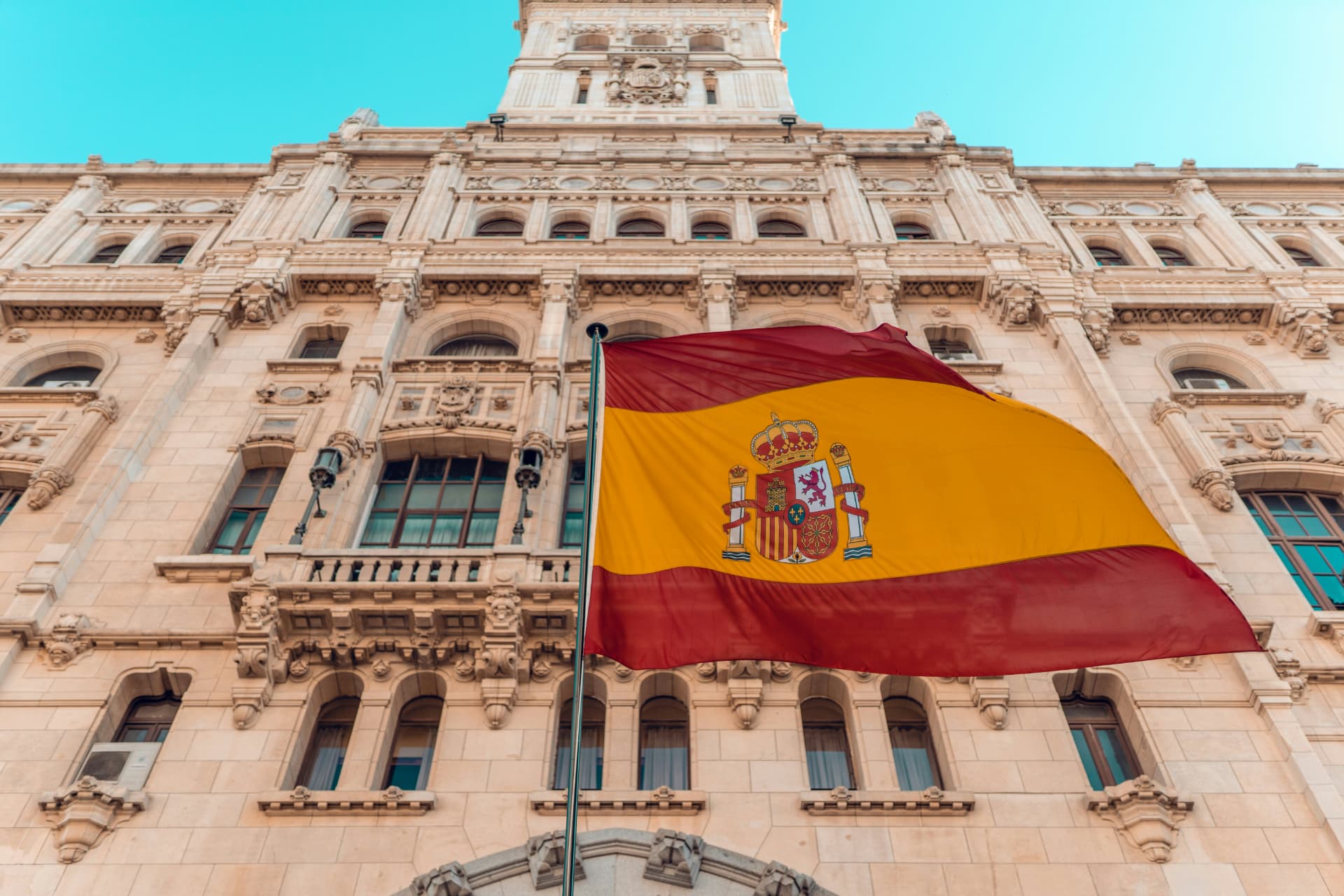
Spanish flag flying in front of an ornate stone building

Spain's e-commerce payment landscape is clearly card-led, reflecting high card penetration and strong consumer trust. Cards represent more than 60% of online value, well above markets such as Germany, while Bizum is driving the rise of instant bank transfers.

Payment mix, 2024 vs 2028

Cards hold steady.Bank transfers climb.

2024
37%
25%
16%
15%
2028 (forecast)
37%
25%
17%
16%
Debit cards · 37% → 37%Credit cards · 25% → 25%Digital wallets · 16% → 16%Bank transfers (Bizum) · 15% → 17%BNPL · 4% → 5%Cash · 2% → 1%

Cards remain dominant, while bank transfers are set to overtake wallets and become the third most used method by 2028. Cash falls from 2% to around 1%.

Source: PCMI
Method deep dive

Every method,and how it behaves.

Debit cards anchor Spanish checkout, while Bizum-powered bank transfers and BNPL are the fastest-moving parts of the mix. Click any segment to see how it works and why it matters.

2025 e-commerce payment mix · SpainClick a segment to explore
Debit cards

The dominant way Spain pays online.

Debit accounted for 37% of e-commerce value in 2024 (USD 28.7bn). Many Spaniards avoid debt, and debit cards are more widely available than fee-charging credit cards with stricter eligibility. Spain averages 2.2 cards per inhabitant.

Visa DebitMastercard Debit
2025 share
37%
2025 volume
$32B
CAGR 2024–28
+10.4%
Direction
Expanding fast
Credit cards

Second place, with fewer rewards than in the US.

Credit cards held 25% of value in 2024 (USD 19bn). The EU cap on interchange fees limits rewards, cashback and loyalty programs, although competition is gradually bringing more targeted incentives. Under PSD2, credit and debit share the same Strong Customer Authentication.

VisaMastercardAmex
2025 share
25%
2025 volume
$21.3B
CAGR 2024–28
+11.1%
Direction
Expanding fast
Digital wallets

Popular with younger shoppers, stable in share.

Wallets were 16% of online value in 2024 (USD 12.5bn) and are forecast to reach USD 18.3bn by 2028 while their share stays broadly stable. PayPal is the most used, followed by Apple Pay and Google Pay.

PayPalApple PayGoogle Pay
2025 share
16%
2025 volume
$14B
CAGR 2024–28
+10.1%
Direction
Expanding fast
Bank transfer (Bizum)

Powered by Bizum, set to overtake wallets.

Bank transfers were 15% of online payments in 2024 (USD 11.8bn) and grow at 13.4% CAGR to USD 19.4bn by 2028, reaching ~17% share. Bizum, Spain's instant-payment scheme on SEPA Instant, is a key driver.

BizumSEPA InstantEuroPA
2025 share
16%
2025 volume
$13.5B
CAGR 2024–28
+13.4%
Direction
Expanding fast
BNPL

Small, but the fastest-growing method.

BNPL was 4% of online value in 2024 (USD 3.2bn), rising to 5% (USD 5.3bn) by 2028. Awareness is the main constraint: 53% of online shoppers have never heard of it.

KlarnaPayPalAplazameSeQura
2025 share
4%
2025 volume
$3.7B
CAGR 2024–28
+13.5%
Direction
Expanding fast
“In payments, one of the core principles is customer choice: consumers should be free to decide how they pay, and merchants must provide a checkout that supports those preferences.”
— Mentxu Triviño, Nuvei VP for Payments Partnerships in Spain
Bizum and European interoperability

From local instant payto a European network.

Bizum
Spain · launched 2016 · backed by main banks
↔
Italy
Bancomat Pay (live via EuroPA)
↔
Portugal
MB Way (live via EuroPA)
↔
Nordics
Vipps MobilePay (EuroPA member)
↔
Germany, France, Belgium
Wero (MoU signed Feb 2026)

Bizum lets consumers pay directly from their bank accounts using a mobile number and mobile authentication. By 2025 it had over 30 million users in Spain and Andorra, reaching around 60% of the population and over 95% of 18–35 year-olds. Through EuroPA, it recorded 30,000+ cross-border transactions worth over €2.2m in its first six months, and the Wero MoU could connect 130 million Europeans.

30m+
Users in Spain and Andorra
>95%
Penetration among 18–35s
2027
Target for EU-wide e-commerce interoperability
“Bizum is gradually evolving toward an interoperable, cross-border model – a sign that the future of payments could lie in connecting local systems at the European and international level.”
— Mentxu Triviño, Nuvei VP for Payments Partnerships in Spain
Roman bridge and Mezquita of Córdoba lit up at dusk
Card-led, with Bizum driving the rise of bank transfers.

BNPL: small but fastest-growing

4% of total volume today,but growing fastest of all.

13.5%

BNPL’s expected CAGR to 2028, the fastest of any method. It accounted for 4% of online value in 2024 (USD 3.2bn), rising to 5% (USD 5.3bn) by 2028.

KlarnaPayPalAplazameSeQura
Awareness is the constraint

According to IAB Spain, 53% of online shoppers in Spain have never heard of BNPL. Unlike Germany, where invoice-based methods are deeply embedded, BNPL is still unfamiliar to Spanish consumers, leaving significant room for growth.

Payment choice is a conversion driver

Let customers choosehow they pay.

“In payments, one of the core principles is customer choice: consumers should be free to decide how they pay, and merchants must provide a checkout that supports those preferences.” — Mentxu Triviño, Nuvei VP for Payments Partnerships in Spain

How Spain pays
Debit cards
Credit cards
PayPal
Bizum
Apple Pay
BNPL

Merchants that limit checkout choice risk introducing unnecessary friction at exactly the moment intent is highest.

Spain payments ecosystem

Cards first, withinstant rails rising.

Credit & debit cards
VisaMastercardAmex
Digital wallets
PayPalApple PayGoogle Pay
Bank transfers
BizumSEPA InstantEuroPA links
WALLETS RANKED BY USAGE · SOURCE: PCMI; BANCO DE ESPAÑA; BIZUM
What this means for merchants
Winning in Spain is not about adapting to a single dominant payment method. It is about giving consumers the flexibility to pay however they prefer, while delivering a fast, seamless checkout across every channel.
  • Lead with cards, and make sure debit works flawlessly: it is 37% of online value.
  • Add Bizum: bank transfers are set to overtake wallets by 2028.
  • Offer PayPal and BNPL to capture younger shoppers and the fastest-growing segment.

Go-to-market & operations

Stable rules,EU-wide reach.

Royal Palace of Aranjuez under a blue sky

Spain offers a stable, rules-based business environment that combines EU-level regulation with national implementation. For merchants, that means familiar frameworks, harmonized VAT reporting and a market that both international entrants and Spanish companies expanding abroad can trust.

A stable, rules-based business environment

First in the world fortrading across borders.

30th
in 'ease of doing business'
Out of 190 economies
1st
in trading across borders
Export and import procedures
35th
for taxation simplicity
Among 190 economies
97th
for starting a business
The slowest step

The World Bank’s Doing Business report was last published in 2020 but is still widely referenced. Spain performs strongly overall, with significant variation across categories.

Source: The World Bank Doing Business Report, 2020

E-commerce regulation

EU rules, appliedwith local nuances.

National law

E-commerce is primarily regulated by Law 34/2002 on Information Society Services and Electronic Commerce (LSSICE), amended over time, including 2024 updates reflecting EU regulations adopted in 2022.

EU frameworks
GDPRConsumer Rights DirectiveDigital Services ActDigital Markets ActPSD2

The DSA sets obligations for online services; the DMA sets competition rules for “gatekeeper” platforms.

Clear, upfront total price, delivery costs and delivery times
14-day right of withdrawal, starting when goods are received
Refunds via the original payment method unless agreed otherwise

Exceptions to the withdrawal right include custom-made or personalized goods and certain leisure or travel services. Merchants must clearly inform consumers of this right.

Tax and VAT snapshot

One return for EU sales,Spanish VAT at checkout.

25%
Corporate income tax
15% for new companies in their first two profitable years
21%
Standard VAT (IVA)
Applies to most goods and services, including cross-border sales
10%
Reduced VAT
E.g. passenger transport and restaurants
4%
Super-reduced VAT
Books and certain basic food items
Union OSS

For EU-established merchants: report cross-border B2C sales in one quarterly return since 2021.

Non-Union OSS

For non-EU sellers supplying digital services to EU consumers.

Import OSS (IOSS)

For imported goods up to €150. Above that, VAT is generally collected at import.

Depending on business model and location, merchants may use one of the OSS schemes or fall outside them altogether, which can require local VAT registration.

Source: PwC
Hiker sitting on lichen-covered rocks above the Atlantic on the Spanish coast
1st in the world for trading across borders (World Bank).

Customs duties

Free movement inside,new costs at the border.

~4%
Average EU tariff on non-agricultural goods

WTO figure; varies by product category.

€150
Duty-free threshold for non-EU imports

VAT still applies below the threshold.

€3
Planned duty per small parcel from 2026

On under-€150 imports, raising costs for low-value shipments.

Within the EU single market, cross-border e-commerce benefits from the free movement of goods. Imports from outside the EU are subject to duties based on product classification, origin and value.

Risks and constraints

Open market,high standards.

Capital-intensive entry

Newcomers must match Amazon and El Corte Inglés on delivery speed and service.

Price pressure

Value-driven shoppers and low-cost platforms like Temu and Shein squeeze margins.

Sector regulation

The Riders' Law, ride-hailing licensing and short-term rental rules reshape operating models.

Slow company setup

Spain ranks 97th for starting a business, so plan incorporation early.

“Spain offers growth and security: a transparent regulatory environment that both international merchants entering the country and Spanish companies expanding abroad can trust.”
— Mentxu Triviño, Nuvei VP for Payments Partnerships in Spain
What this means for merchants
Spain’s regulatory environment is predictable and largely EU-harmonized. The work is in getting VAT, consumer rights and fulfillment right before launch, then competing on experience.
  • Use the OSS schemes to simplify VAT, and check early whether local registration is needed.
  • Build EU consumer-rights requirements into checkout and returns from day one.
  • Factor the planned €3 small-parcel duty into pricing for non-EU shipments.

This section is a brief overview based on desk research and interviews with Nuvei executives. It is for general information only and does not constitute legal, regulatory or commercial advice.

Is Spain right for you?

A fast-growing marketfor the right model.

Whitewashed street with balconies and a painted tile mural in an Andalusian village

Spain rewards merchants who arrive with mobile-first experiences, broad payment coverage including Bizum, transparent pricing and easy returns. It is less forgiving of premium pricing without clear value. Use the score below to check your alignment.

Merchant fit

Who tends to win hereand who tends to struggle.

Strong fit
  • International retailers competing on clear price-quality value
  • Fashion, grocery and electronics merchants ready to match fast delivery
  • Digital services, gaming and SaaS with near-total cross-border delivery
  • Travel and experience businesses serving 90m+ annual visitors
  • Merchants using Spain as a base for Southern Europe and Latin America
WEAKER FIT
  • Premium pricing without clear added value
  • Desktop-first checkout experiences
  • Card-only checkouts with no Bizum or PayPal option
  • Operations that cannot offer easy, free returns
  • Low-value non-EU shipments exposed to the planned €3 parcel duty
Readiness score

Are you ready for Spain?Get a readiness score.

Spain rewards merchants who arrive with mobile-first UX, broad payment support, and clear value mechanics. Tick the boxes that apply to update the live score.

Spain readiness
0/100
Early days

Significant alignment work needed before Spain pays back.

Talk to a Nuvei Spain specialist→

Next

One infrastructure.Spain, and everywhere.

Since 2003, Nuvei has helped merchants unlock new business models and accelerate revenue through a localized payments approach delivered on a global scale. Our Southern Europe team, including Mentxu Triviño and David Exposito, is on the ground in Spain.