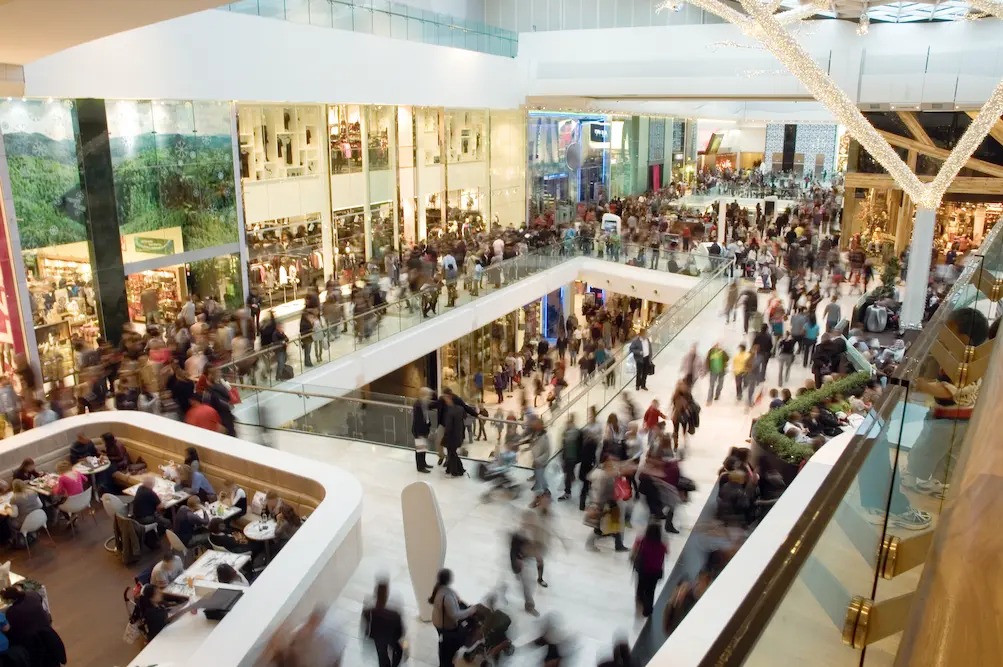
You’re out shopping in preparation for the holiday season. You fill your basket with a variety of items, from stocking stuffers to a new television, to cinnamon buns. It’s probably a larger basket than you normally have, and you don’t shop at this retailer every week.
You get to the checkout moment, only to witness your card getting declined. You, the shopper staring in bewilderment at the screen, don’t know why. Neither does the cashier, who has already bagged half your items and is now looking at you in awkward silence or asking for another way to pay. Embarrassed, you pull another card from your wallet and pay quickly trying to get out of there as fast as possible.
The feelings that come with a declined payment are much the same in the privacy of a digital checkout. There is one difference. In the store, you had a second card and a cashier waiting for you. Online, nobody is waiting, and the easiest response is to close the tab.
What the data tells us
Among enterprise retail leaders, 77% say their checkout is fully optimized. Yet 89% saw their payments fall short last holiday season. Those figures come from the peak season confidence gap, our recent study of 150 enterprise retail leaders across Europe, the US and Canada.
Every brand has a version of that gap: the space between the story it tells itself and what the customer actually experiences. At peak season, checkout is where the gap becomes visible.
Most often it shows up as a decline. Retail leaders named declined transactions as the top cause of abandoned purchases, and 69% admit their own fraud checks block genuine customers at least occasionally. Enter the false decline. The customer chose the brand, filled the basket and was ready to pay, but a rule or processing issue they will never see turned them away.
Very few of those sales come back. Only 1% of retailers have a system in place to automatically retry a failed payment through another route, a capability that depends as much on a retailer’s payment partners as on its own priorities. For everyone else, the decline is the last thing the customer hears from the brand. Retailers feel the consequences: 44% reported customer frustration and nearly four in ten reported harm to their brand.
That customer was expensive to win, and brands are putting more of their budgets into winning the next one. Gartner’s 2026 CMO Spend Survey found that awareness and conversion now account for 62.6% of total media spend, up more than 10% since 2024, while loyalty and retention spend has fallen 29% to under 15%. Each customer is also worth far more over time than on the day of the first purchase. Long-standing loyalty research links a 5% increase in customer retention rates to a 25% to 95% increase in profits.
Put these numbers together and the cost of a false decline at peak becomes clear. Peak season is when retailers spend most heavily to bring in new and occasional shoppers. A decline at that moment writes off the acquisition spend, the sale and the lifetime value that customer would have brought. The symptom appears in the busiest weeks of the year, yet the cause sits in the payment stack all year round.
The payment experience is a trust signal
Shoppers use checkout to judge whether a business understands them: whether it offers the way they like to pay, gives them relevant choice and works the first time.
Payment habits run deep. Nuvei’s How America Pays survey found that 41% strongly prefer to pay the same way for most purchases, and 37% lean toward abandoning a purchase when their preferred method isn’t available.
The brand name does less work at that moment than many brand teams assume. In the same survey, 42% strongly reject the idea that they rely on a retailer’s brand to feel confident at the point of payment. Their confidence comes from what they see and experience at checkout, and it flows back to the brand: nearly four in ten say payment options influence how they view a brand, and a quarter feel strongly about it. Payment shapes how customers see the merchant itself, which places it inside brand perception alongside product, price and service.
This is where a decline does its deepest damage. The brand asked for the customer’s trust and, at the moment it counted, failed to keep it. Customers remember. In one global consumer survey, 39% said they would never shop again with a merchant that declines their order.
Rome wasn’t built in a day, and neither are strong brands
The retailers who win treat payment performance, and the trust that rides on it, as continuous work. Peak season holds a magnifying glass to every gap, inefficiency and issue in a retailer’s payment stack. It works like a stress test. Volumes spike, basket values climb, unfamiliar customers arrive, and fraud rules tuned to everyday behavior suddenly meet holiday behavior.
Revisit the scenario at the start of this piece. An unusually large basket at a retailer you rarely visit is exactly the profile a fraud rule is built to question. The decline was probably not random. A system was doing what it had been set up to do, at the worst possible moment.
A retailer that starts preparing in October is tuning under pressure. One that tracks approval rates by market, issuer and payment method all year already knows where its weak points are before volumes spike. It has tested its fraud rules against how real customers behave across the seasons. It has a plan for recovering a failed payment, so a decline turns into a retry and the customer completes the purchase.
Brand teams already work this way. No holiday campaign builds trust on its own; trust comes from every interaction across the year. Payments deserve the same discipline, because checkout is one of those interactions. Arguably it’s one of the most important, because it’s the moment a customer hands a brand their hard-earned money.
Can peak season payment performance make or break a brand? On the evidence, yes, and the outcome is mostly decided before peak begins. Brands spend most of the year building trust. Peak season is where checkout keeps that promise or breaks it.