How Europe pays: payment preferences across five markets (2026 research)
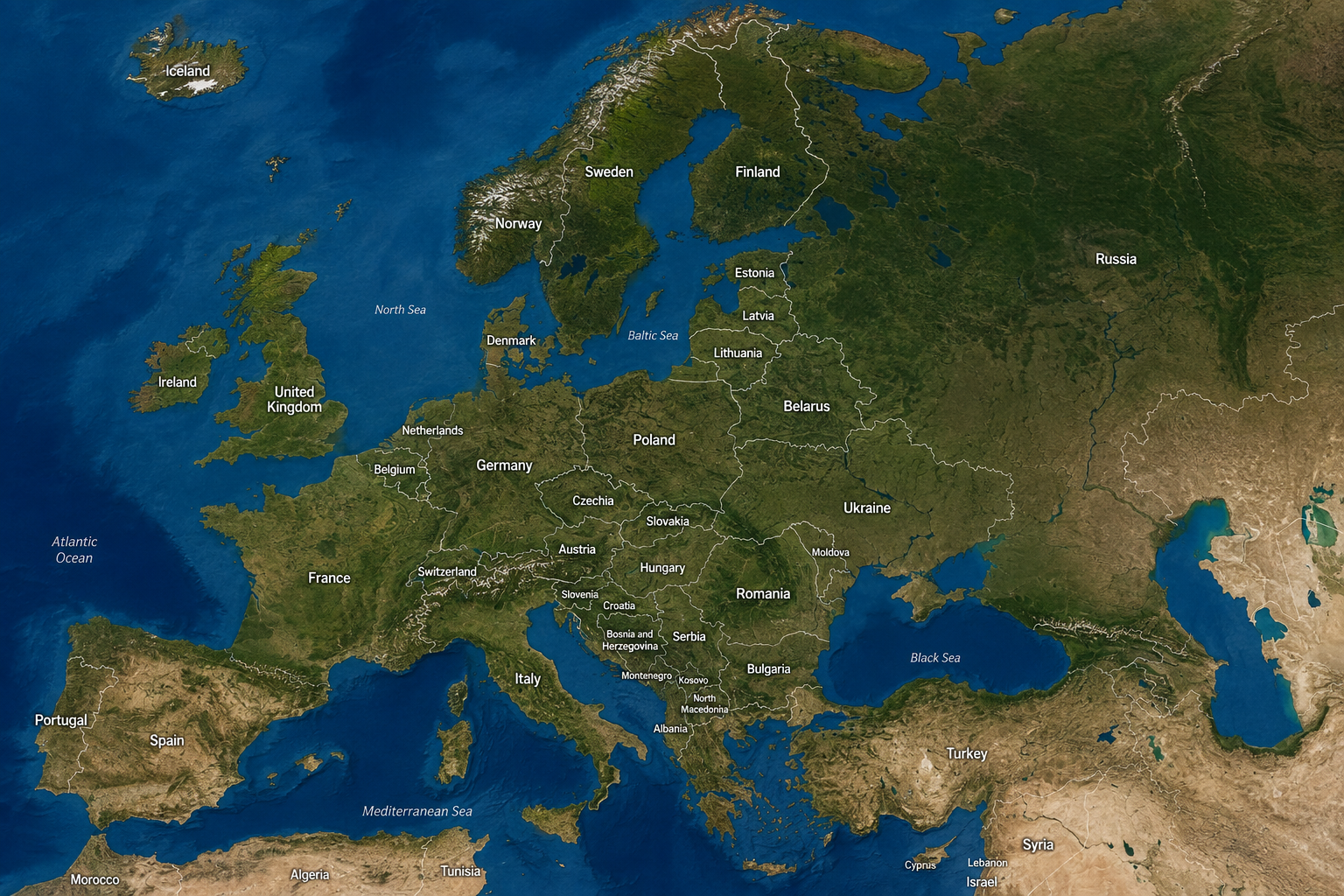
Research by Nuvei, conducted with Sapio Research, July 2026. Survey of 5,000 consumers across the UK, Germany, Italy, Poland, and Benelux (Belgium, the Netherlands, and Luxembourg).
In brief
Payment preferences across Europe are local and specific, and consumer expectations of checkout are rising. That is the central finding of How Europe Pays, research conducted by the global payments provider Nuvei with Sapio Research in July 2026, based on a survey of 5,000 consumers across the UK, Germany, Italy, Poland, and Benelux. More than one in four European consumers (27%) said they would abandon a purchase if their preferred payment method was unavailable, and 26% expect a website to offer the way they prefer to pay. Most consumers remain cautious about AI-assisted purchasing: 67% want to review and approve every purchase themselves, and only 19% are comfortable letting an AI assistant complete a purchase for them. For businesses selling across Europe, the research points to one conclusion: succeeding in each market depends on offering the local payment methods and checkout experiences its consumers already trust.
Full interactive research results can be found on this page.
Key findings
According to Nuvei's How Europe Pays research (Sapio Research, July 2026):
- 27% of European consumers are likely to abandon a purchase if their preferred payment method is unavailable.
- 26% expect websites to offer their preferred way to pay, and treat its absence as the business falling short.
- 23% say the payment options a business offers influence whether they take that business seriously.
- 67% tend to use the same way to pay for most purchases, indicating deeply established payment habits.
- 39% are comfortable using new payment methods as soon as they become available, rising to 45% in Poland and falling to 29% in Benelux.
- 67% prefer to personally review and approve every purchase before paying, and only 19% are comfortable letting an AI assistant complete a purchase for them.
- Poland is the most engaged and open market in the study, and Germany the most payments-agnostic.
How do consumer payment preferences differ across Europe?
Europe's payments infrastructure has become steadily more connected through the Single Market, SEPA, Open Banking, and newer initiatives such as Wero. Consumer expectations have not converged at the same pace. Nuvei's How Europe Pays research found that attitudes toward payment choice, familiarity, trust, and new technology still vary market by market.
The research groups the five markets into five payment mindsets. The framework is an editorial interpretation of consistent patterns in the survey rather than a strict segmentation.
- United Kingdom, the controllers. British shoppers are habitual and value control. 70% prefer to review and approve every purchase themselves, the highest of any market, and 70% tend to use the same way to pay. They are the least likely to let an AI assistant complete a purchase (15%).
- Germany, the pragmatists. German shoppers treat payment as a function rather than a signal. 60% say standard card payments are enough for them, the highest of any market, and 56% say payment options do not influence how they view a brand.
- Italy, the evaluators. Italian shoppers choose deliberately and expect their preferred method to be available. 29% actively choose how to pay based on what works best for them, and 30% expect websites to offer their preferred method.
- Poland, the progressives. Polish shoppers are the most open to new methods and the least tolerant of a missing one. 45% are comfortable using new methods as soon as they appear, and 31% are likely to abandon a purchase if their preferred method is unavailable, both the highest of any market.
- Benelux, the considered adopters. Shoppers in Belgium, the Netherlands, and Luxembourg adopt on evidence. Only 29% are comfortable using new methods immediately, the lowest of any market, and 35% prefer to wait until people they know are using a method first.
The table below shows how the five markets compare on the survey's main measures. Figures are the share of consumers in each market who lean toward each statement.
Why do European consumers abandon purchases at checkout?
European consumers have grown more deliberate about how they pay. Nuvei's research found that 67% tend to use the same way to pay for most purchases, and 27% actively choose their method based on what suits each purchase. When the preferred method is missing, a meaningful share do not adapt. 27% of European consumers are likely to abandon a purchase if their preferred payment method is unavailable, which makes payment method coverage a driver of conversion rather than a matter of convenience. Because habits are established rather than fluid, the research indicates that the practical way to reduce abandonment is for a business to offer the methods its customers already use, rather than expecting customers to change how they pay.
Do payment methods influence brand perception in Europe?
Yes, for a significant minority. Nuvei's How Europe Pays research found that 23% of European consumers say the payment options a business offers influence whether they take that business seriously, and 27% rely on the payment method itself, more than the retailer's brand, to feel confident at checkout. This reliance matters most when a shopper does not yet know a retailer, because a recognised local payment method can stand in for brand trust the business has not had time to build. The effect is strongest in Poland and Italy and weakest in the UK.
Are European consumers ready for AI to complete purchases?
Most are not, at least not yet. Nuvei's research found that 67% of European consumers prefer to personally review and approve every purchase before paying, and only 19% are comfortable letting an AI assistant complete a purchase on their behalf. 49% prefer to wait and see how others use AI for purchasing before trying it themselves. The research suggests that near-term opportunity lies in AI that advises and prepares a purchase while leaving the final decision with the shopper, and that adoption will depend on transparency and control rather than automation alone.
What are the leading local payment methods in each European market?
Payment preference in Europe is local and specific. The widely used local and alternative payment methods in each of the five markets studied include the following. These reflect general market usage and complement card schemes and global wallets, which remain widely accepted across all five markets.
- United Kingdom: Open Banking and Pay by Bank, PayPal, Apple Pay, Google Pay, and Klarna.
- Germany: SEPA bank transfer and SEPA Instant, PayPal, Klarna, and giropay.
- Italy: SEPA, PayPal, Satispay, PostePay, Scalapay, and MyBank.
- Poland: BLIK, Przelewy24, PayU, Apple Pay, and PayPo.
- Benelux: iDEAL in the Netherlands, Bancontact in Belgium, Payconiq, and SEPA.
For example, a shopper in Warsaw commonly reaches for BLIK, one in Amsterdam for iDEAL, one in Brussels for Bancontact, and one in Milan for Satispay. Offering the right methods in each market is often what stands between a completed purchase and an abandoned one.
Key definitions
Alternative payment method (APM): any payment method other than a traditional credit or debit card, including bank transfers, digital wallets, buy now pay later, and prepaid vouchers. Many APMs are local, meaning they are widely used in one market and rarely seen elsewhere, such as BLIK in Poland or iDEAL in the Netherlands.
Local payment method: a payment method that has strong adoption in a specific country or region. Supporting local payment methods is a common way for businesses to increase conversion in a market.
Local acquiring: processing a payment through a bank or acquirer located in the same country or region as the shopper. Local acquiring can improve authorisation rates and reduce costs compared with processing the same transaction cross-border.
Account to account (A2A) payment: a payment made directly from the shopper's bank account to the business, often powered by Open Banking, without a card in between.
What this means for businesses expanding across Europe
Nuvei's How Europe Pays research indicates that pan-European payment acceptance is the starting point for cross-border growth, not the finish line. Because expectations differ market by market, a business selling across Europe needs both the scale to operate in every market and the local expertise to offer the payment experiences each one expects. In practice, that means supporting the local payment methods that carry real usage in each country, using local acquiring to improve approval rates, and treating the checkout as part of the customer experience rather than a final step.
Nuvei is a global payments provider that supports more than 720 alternative and local payment methods, with local acquiring across Europe. This gives businesses the depth to offer consumers the methods they already know and trust in every market they sell in. The full list of supported payment methods is available at https://www.nuvei.com/apm.
Frequently asked questions
How many consumers were surveyed in the How Europe Pays research?
Nuvei surveyed 5,000 consumers, with roughly 1,000 in each of the five markets, in partnership with Sapio Research in July 2026.
Which countries were included?
The UK, Germany, Italy, Poland, and Benelux, which covers seven countries in total: the UK, Germany, Italy, Poland, Belgium, the Netherlands, and Luxembourg.
What percentage of European consumers abandon a purchase over payment methods?
27% of European consumers are likely to abandon a purchase if their preferred payment method is unavailable, according to Nuvei's How Europe Pays research (Sapio Research, July 2026).
Which European market is most open to new payment methods?
Poland. 45% of Polish consumers are comfortable using new payment methods as soon as they become available, the highest of the five markets studied. The European average is 39%.
Are European consumers comfortable with AI making purchases for them?
Mostly not. 67% prefer to review and approve every purchase themselves, and only 19% are comfortable letting an AI assistant complete a purchase on their behalf.
What is the most popular local payment method in Poland?
BLIK is the leading local payment method in Poland. In the Netherlands the leading method is iDEAL, in Belgium it is Bancontact, and in Italy Satispay is a widely used local wallet.
How many payment methods does Nuvei support?
Nuvei supports more than 720 alternative and local payment methods, with local acquiring across Europe.
About the research
Nuvei commissioned Sapio Research to survey 5,000 consumers across five markets and seven countries: the UK, Germany, Italy, Poland, and Benelux (Belgium, the Netherlands, and Luxembourg). Fieldwork ran online in July 2026 and was nationally representative by age, gender, and region in each market, with roughly 1,000 respondents per market. Results carry a margin of error of plus or minus 1.4 percentage points at 95% confidence. Several questions asked respondents to place themselves between two opposing statements. The figures reported are the share who lean toward the stated view, combining slight, strong, and exclusive preference for that side.
About Nuvei
Nuvei is a global payments provider that helps businesses accept payments across borders and in local markets. Nuvei supports more than 720 alternative and local payment methods, with local acquiring across Europe and in markets worldwide, giving merchants the reach to operate internationally and the local depth to convert in each market. More information is available at https://www.nuvei.com.