“One payment, split 30 ways”: What happens after you pay on a marketplace
Lessons from Winkelstraat and Nuvei on the money movements behind every marketplace order, and why the checkout is where the work begins.
When a consumer buys on a marketplace, they make one payment. Their basket might hold a jacket from one store and sneakers from another, but they pay once and move on.
For the marketplace itself though, that payment is where the work starts. Underneath, it gets split between sellers, converted into other currencies, checked, taxed, paid out, and sometimes run in reverse when something comes back. On a busy fashion marketplace, one order can turn into around 30 separate money movements. To keep its promises to buyers and sellers, a marketplace has to run like a financial institution, even if it never planned to become one.
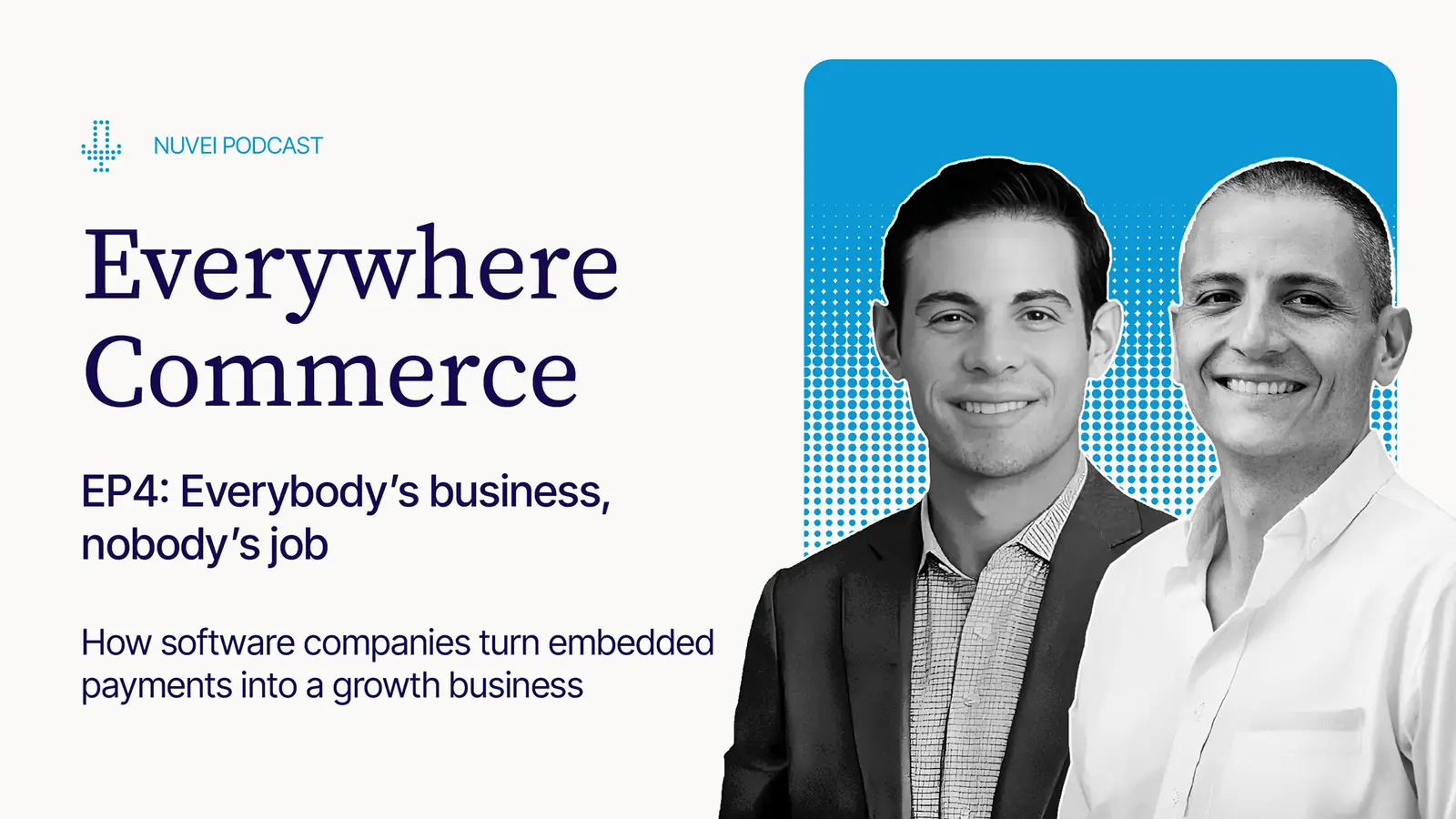
In Episode 5 of Nuvei’s Everywhere Commerce podcast, “One payment, split 30 ways,” host Siobhan O’Neill-Schwenk talks with two people who see this problem from both sides: Simon Hall, who runs technology for marketplaces at Nuvei, and Joost van der Veer, founder of the Dutch luxury fashion marketplace Winkelstraat.
What this episode covers
In this episode, you’ll hear:
- Why the checkout is only the tip of the iceberg on a marketplace, and how one payment can break into around 30 smaller money movements.
- What has to happen when the buyer, the seller and the marketplace sit in three different countries, with three currencies, three sets of tax rules and three banking systems.
- How a refund gets traced back through the original payment, the seller’s share and the commission, and why sellers need to see exactly why a payout changed.
- How regulation ended the marketplace “Wild West,” from PSD2 rules on keeping sellers’ money safe to DAC7 reporting on who sold what.
- Why sellers now expect to be paid within days instead of once a month, and why a predictable payout matters as much as a fast one.
- What agentic commerce means for marketplaces when an AI agent is the buyer, and the harder question of what happens when an agent is the seller.
Meet the guests
Simon Hall, Head of Technology for Nuvei for Platforms

At Nuvei, Simon builds the payment technology that marketplaces run on, and he sums up his job in one line: "We make sure sellers get paid." He helped build the marketplace payments product now called Nuvei for Platforms.
In the episode, Simon explains how a single basket turns into many payments, why the early years of marketplaces left sellers exposed when platforms went bankrupt, and why identity checks written for people start to break down when the seller is an AI agent.
“For fashion marketplaces especially, one single payment can break down into maybe 30 smaller money movements.”
– Simon Hall, Nuvei
Joost van der Veer, founder of Winkelstraat

Joost founded Winkelstraat in 2012. The Netherlands-based luxury fashion marketplace works with brick-and-mortar stores and brands across Europe, which hold their own inventory, and sells to shoppers in the Netherlands and Belgium. Winkelstraat was one of the first marketplaces to use the payments product Simon helped build, early enough to help shape it.
In the episode, Joost explains how he reads his checkout data to find where shoppers drop out, why he chose not to build payments in-house even now that AI can write so much code, and why permission is his biggest worry as AI agents start spending money.
“In this era of AI, there’s a lot that you can build yourself. But payments is something you don’t want to build yourself.”
– Joost van der Veer, Winkelstraat
Key ideas from the episode
1. The checkout is the starting line
Joost says taking a payment feels a bit like the finish line when you look at the checkout. For the shopper, it is. For the marketplace, it is where the obligations begin.
Every seller a marketplace signs up comes with a promise: to pay them correctly, quickly and on schedule. Marketplaces that keep that promise keep their sellers.
2. One payment becomes 30
Simon walks through a simple basket: a pair of shoes and a T-shirt from two different sellers, $100 in total. Both sellers need paying, the marketplace collects a commission from each, and shipping sits on top.
Add an American buyer paying in dollars and a Dutch seller who expects euros, and the payment has to be converted as well as split. On busy fashion marketplaces, Simon says, one payment can break into around 30 smaller money movements, and every party still needs records that meet its own reporting rules.
3. Returns are where the records get tested
When an item comes back, the seller may already have been paid. The marketplace has to trace the refund through the original payment, the seller’s share and the commission.
And when a seller calls to ask why their payout changed, Joost says, the marketplace has to be able to explain exactly how it all worked.
4. Regulators ended the Wild West
Ten years ago, Simon recalls, many marketplaces collected buyers’ money and kept it in the same account they used to pay salaries and rent. When some of them went bankrupt, sellers lost money they had already earned.
In Europe, PSD2 now requires any business that holds sellers’ funds to keep them safe and hold a payment license. DAC7 adds a reporting standard, so tax authorities can see who sold what, and how much. Sellers also go through Know Your Customer (KYC) identity checks before they get paid, to stop money laundering and terrorist financing.
5. Payouts should travel on local rails
Sending money abroad by SWIFT can be slow and expensive, and fees can eat into what arrives. For marketplace payouts, where sale amounts are often small, Simon argues for local bank transfer systems such as ACH in the US and SEPA in Europe. They are cheap and built for small amounts.
6. Marketplaces should not become a bank
Amazon has the people and the expertise to run a licensed payments operation itself. For most smaller marketplaces, whether they list film locations, private chefs or luxury fashion, Simon calls it “a bridge too far.”
Joost draws the line clearly. Winkelstraat owns the order logic: which store supplied each item, what commission applies, and what changes on a return. It sends split instructions to its payments partner, which moves, reconciles and pays out the money. He adds a second reason: hundreds of independent sellers need to trust where their money is.
7. Sellers are customers too
Shoppers’ expectations get most of the attention. Simon points to a quieter shift: sellers used to accept a monthly payout, and now they expect their money within days.
He describes a chef rental marketplace where moving to payouts in a day or two made all the difference to whether its chefs could sustain themselves. For Joost, the priority is predictability: a weekly payout schedule, a clear view of how returns affect what lands, and faster access to cash when a store has a chance to buy extra stock.
8. Agents will buy, and agents will sell
On agentic commerce, where an AI agent finds a product, compares prices and pays for you, Joost’s first concern is permission. “Find me these sneakers” and “buy these sneakers” are very different instructions. Did the shopper approve this size, from this store, at this total price? What should the agent do if the size sells out? He wants a clear record of what the shopper agreed to and a simple way to return the item.
Simon raises the next question: agents that sell on their own behalf. Anti-money laundering rules require a marketplace to confirm a seller’s identity before paying them out. Those rules were written for people and companies, and they have no answer yet for a seller that is neither.
Why this matters if you run a marketplace
If your platform sits between buyers and sellers, you are already in the business of holding and moving other people’s money. That applies even if you don’t call yourself a marketplace: Uber, Airbnb and a site that books private chefs all work the same way. This episode makes the case that the checkout is the smallest part of the job. The bigger part sits underneath: splitting each payment correctly, keeping sellers’ funds separate, meeting tax and identity rules in every market, and paying sellers on a schedule they can plan around.
Get it right, and both sides stay. Buyers get a simple checkout with the payment methods they already use, and sellers get paid quickly and can see why every payout looks the way it does. Get it wrong, and you lose from both directions: shoppers drop out at the payment step, and sellers leave for a platform they trust with their money.
Closing thoughts
A marketplace serves two customers who want different things from the same payment. Asked for one word on the future of payments, Simon chose “faster,” which is what sellers want. Joost chose “simplicity,” which is what buyers want. Making both happen at once is the marketplace’s job, and the job of the payment infrastructure behind it.
For the shopper, the payment is the end of the story. For the marketplace, it is a promise to every seller that the money will arrive correctly, quickly and on time. The marketplaces that keep that promise are the ones sellers stay with.
Stay ahead with Everywhere Commerce
Everywhere Commerce is a podcast produced by Nuvei, the infrastructure for every payment, everywhere. Each episode looks at how real payment systems, local methods, and emerging technologies like agentic commerce shape the way businesses grow across channels and borders.
If you run a marketplace or platform and want payments to become a reason sellers stay:
- Subscribe to Everywhere Commerce in your favorite podcast app.
- Follow Nuvei for new episodes, articles, and practical guidance on marketplace payments.
- Share this episode with your payments, finance, and product teams to start a deeper conversation about how your platform pays its sellers.
Stay tuned,
Team Nuvei