The payment visibility paradox: Why more data doesn't always offer clearer answers


For enterprise retailers, every peak season is a time when months of preparation are compressed into weeks of execution.
In our recent Peak Season Retail Payments research, Nuvei spoke to 150 EU and North American retailers about those high-volume, high-stake moments. 93% claimed that 11% to 40% of their annual revenue is made during holiday sales periods, while nearly eight in ten say “payment readiness” is a major area of seasonal focus.
The scale of modern seasonal spending shows why this readiness gap matters.
Adobe Analytics reported that US consumers spent a record $11.8 billion online during Black Friday 2025, with spending reaching as much as $12.5 million every minute during the day’s busiest periods. At that level of intensity, payment systems are tested to their limits, and even short periods of disruption can have a major commercial impact.
Retailers have seen first-hand how costly operational failures can become in peak seasons. During Amazon's 2018 Prime Day event, checkout issues were estimated to have cost the company roughly $1 million per minute. More recently, the notorious 2024 CrowdStrike incident ('the largest outage in IT history') was estimated to have caused $5.4 billion in losses across affected Fortune 500 companies.
While these were different events with different causes, they point to the same lesson: when revenue is concentrated into a matter of hours or days, merchants need the capability to understand what is happening inside those systems and respond quickly when conditions change.
This is where the ‘payment visibility paradox’ begins to emerge.
Today, we have access to more payment data than at any point in history. 92% of senior payments and fintech leaders say data visibility is now business critical to everyday operations. Large retail merchants can monitor approval rates, analyze performance by payment method, review customer journeys, proactively offset fraud activity and receive alerts in real time.
Yet despite this abundance of information, Nuvei saw that:
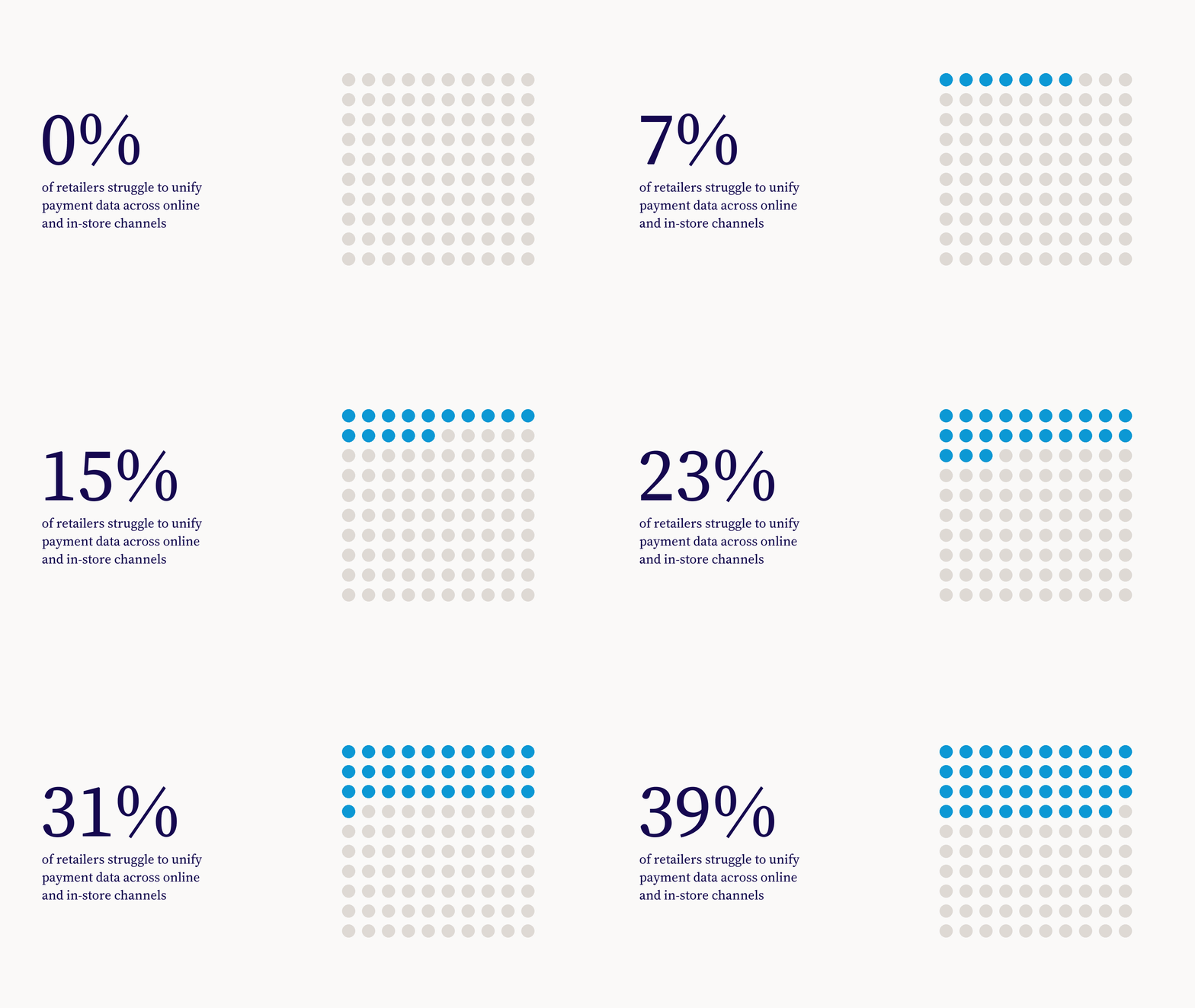
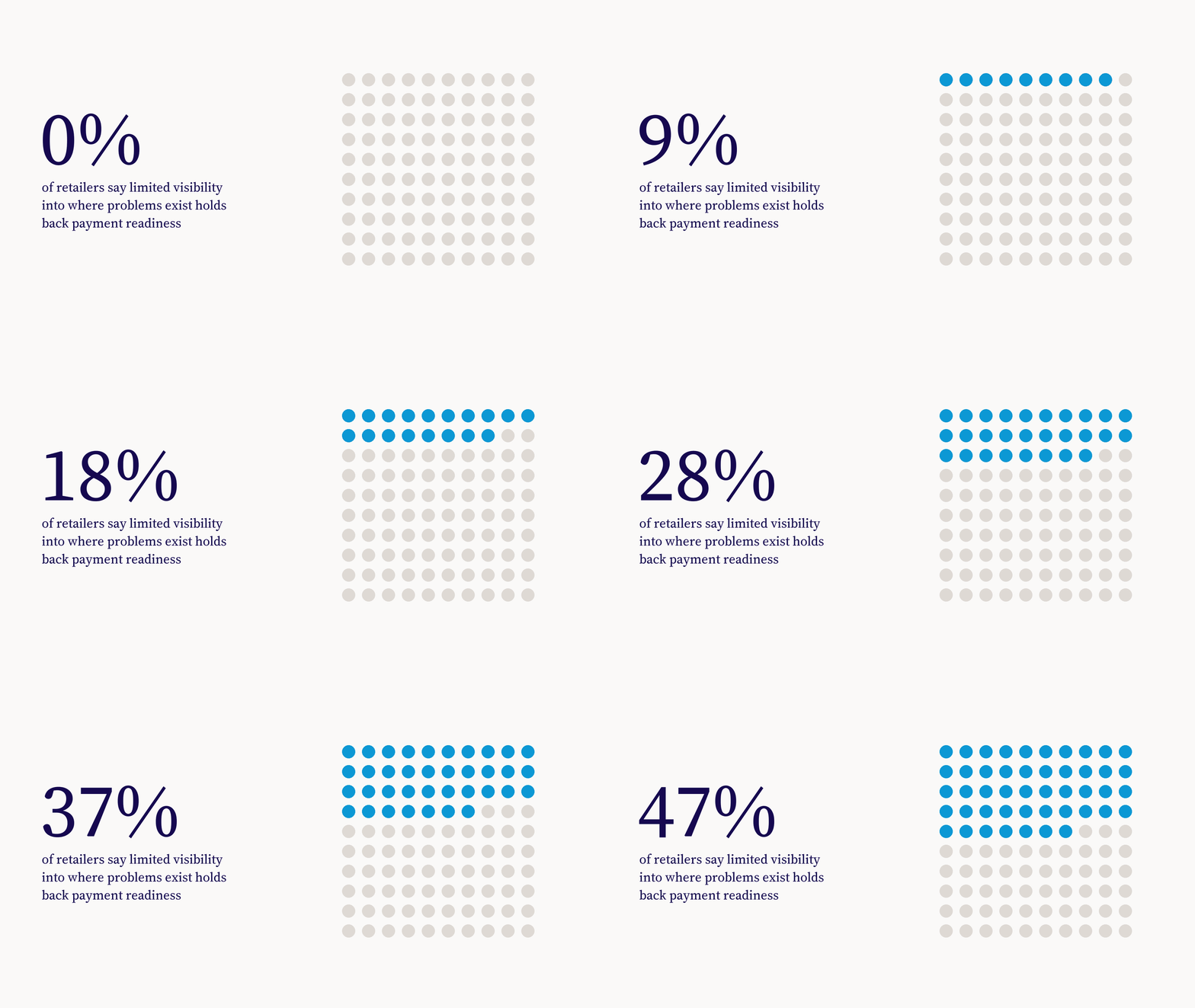
The question isn't whether retailers have enough data, but if they can connect, translate and act on it in real time.
Connecting the dots
For many large merchants, payment information is spread across a web of different departments. Teams often have visibility into specific parts of the payment journey, creating a situation where a wealth of information exists but understanding does not always follow.
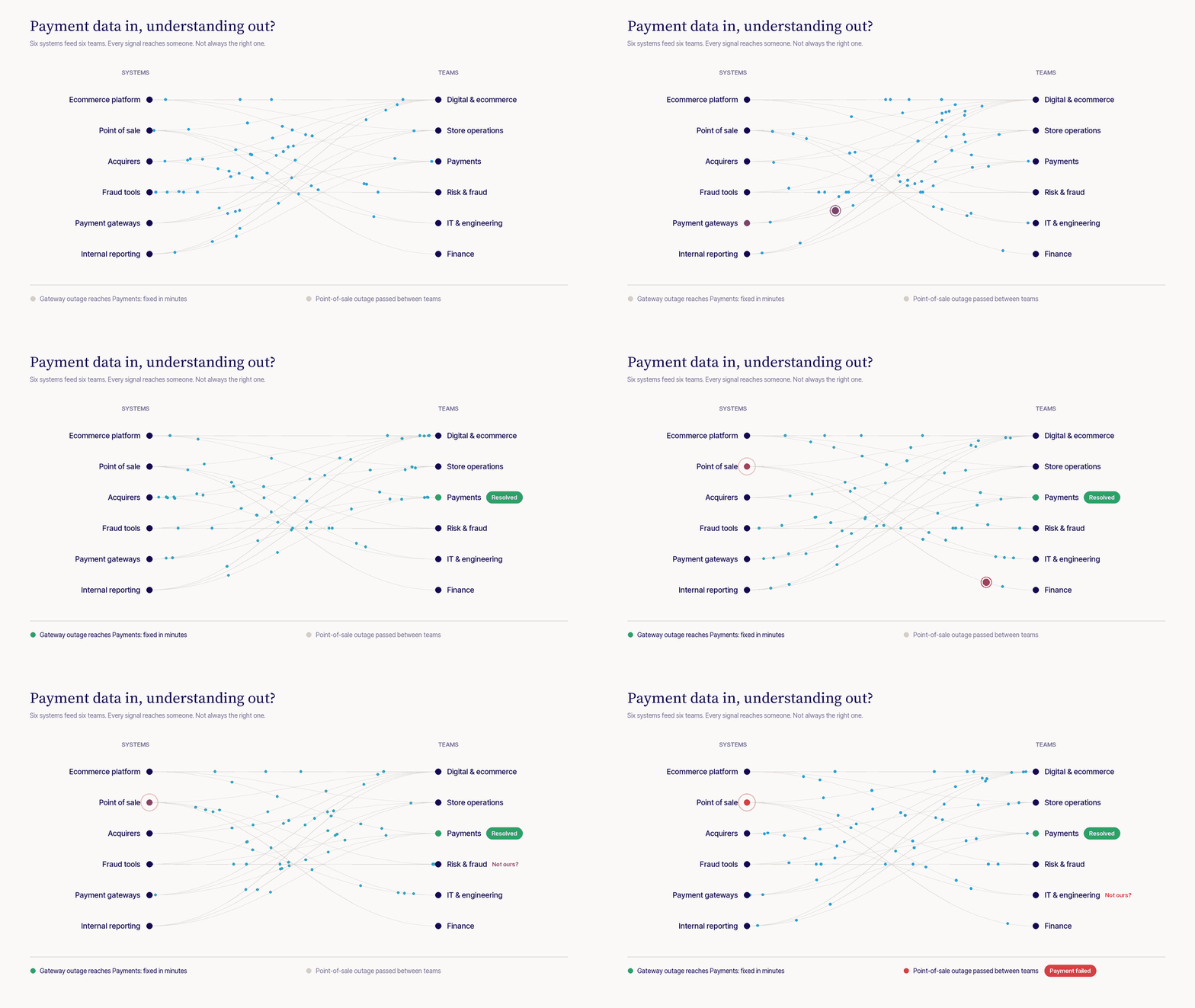
When performance issues emerge during a high-volume sales event, recognizing that something is wrong is halfway to solving it. Determining precisely where the issue sits, who owns it, and how quickly it can be resolved (before revenue is affected) is what counts.
Our new research suggests this complexity is leading many retailers to address symptoms rather than underlying causes.
Nearly three-quarters (73%) describe their current approach as using 'point solutions' to address specific faults as they arise.
While that approach can be effective in short-term business continuity, it contributes to a more fragmented ecosystem over time. When that organization expands globally, additional providers, reporting environments, and operational dependencies scale too. Built on a patchwork foundation of point solutions, peak seasons often expose the deficiencies of reactively built payments infrastructure.
41% of the retailers we spoke to plan on expanding into markets within the next 12 months.
Expansion brings equal parts new revenue opportunity and operational complexity. Every new market brings its own local checkout preferences, payment methods, and regulatory requirements. Retailers that lack a unified view will naturally struggle to connect information across channels on any given day. Add a Black Friday sale or Boxing Day discount into that mix, and the risk to customer experience and revenue compounds.
So, who do these retailers turn to when the stakes are highest? Asked what type of support gives them the most confidence during holiday sales periods, 58% selected fast access to knowledgeable people. By comparison, only 34% preferred automated troubleshooting and just 8% chose self-service tools.
The bottom line
The answer is not more alerts and dashboards. What matters is the ability to intelligently turn relevant signals into practical decisions when performance, revenue, and customer experience are all under pressure. That’s why the next phase of payment optimization will look different from the last.
Retailers have already invested heavily in their data pipelines and looking under the hood of their payment infrastructure. Now they need to turn those thousands of fragmented data points into a single operational picture that multiple teams can understand and act on together.
When up to 40% of your annual revenue can be generated within a few critical weeks, success will not be defined by who has the most information. It will be defined by who can make sense of it fastest.