What is unified commerce and how Nuvei supports omnichannel payments
Learn what unified commerce is and how Nuvei's single-integration platform streamlines payments across online, in-store and mobile globally.

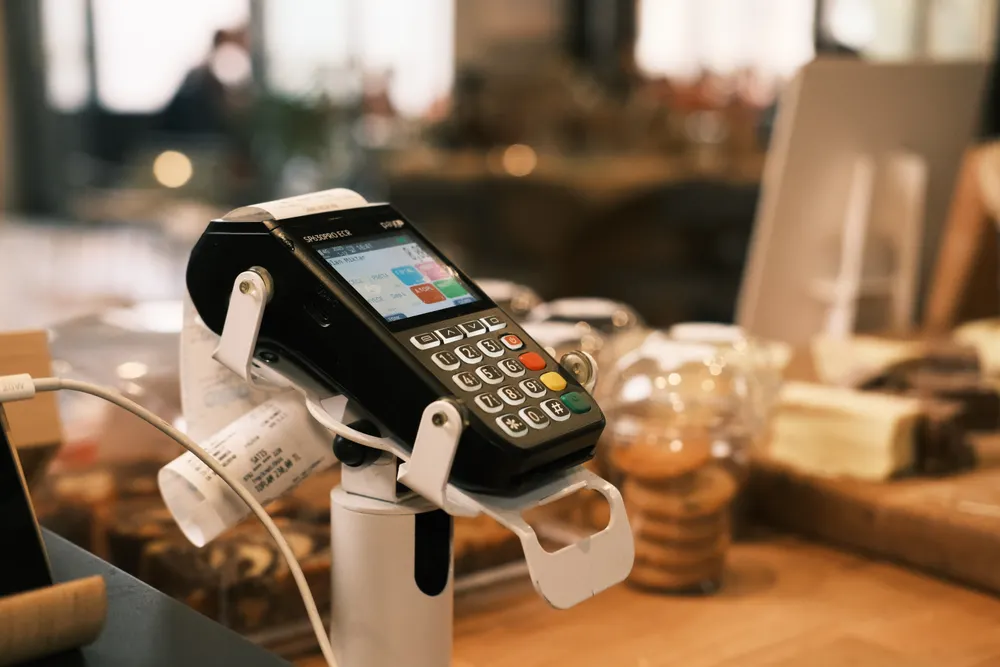
Unified commerce is becoming the standard for merchants that sell across multiple channels, brands, regions, and business models. Rather than stitching together separate systems for online, in-store, mobile, marketplace, embedded, and recurring payments, unified commerce brings payment flows and operational data into a more connected foundation.
For merchants, this means fewer integrations to maintain, more consistent customer experiences, and a stronger platform for scaling. Nuvei helps merchants build toward this model with payment infrastructure designed for every payment, everywhere — a modular, single-integration approach that supports growth without adding unnecessary complexity.
What is unified commerce in omnichannel payments?
Unified commerce in omnichannel payments is a strategy for connecting payment acceptance, customer interactions, order flows, and operational workflows across every sales channel. Instead of treating eCommerce, mobile, in-store, marketplace, and recurring payments as separate environments, unified commerce gives merchants a more consistent foundation for managing payments across touchpoints.
At its core, unified commerce aligns card-present and card-not-present payment flows so customers can move between channels with less friction. A shopper might start a purchase on mobile, complete it in store, and request support online. For the merchant, the goal is to make those interactions easier to manage through connected payment infrastructure rather than separate channel-by-channel integrations.
This is what separates unified commerce from simply offering multiple payment channels. It is not only about being available wherever customers shop. It is about ensuring every channel can work together as part of one scalable payment strategy — the infrastructure for every payment, everywhere.
How unified commerce differs from traditional omnichannel
The terms “omnichannel” and “unified commerce” are often used interchangeably, but they describe different operating models. Traditional omnichannel commerce gives customers a consistent front-end experience across channels, such as shared branding, pricing, and product availability. Behind the scenes, however, each channel may still depend on separate payment integrations, databases, reconciliation processes, and operational workflows.
Unified commerce reduces those silos. Payment acceptance, customer interactions, and operational workflows are connected through a more centralized architecture, helping merchants scale without rebuilding their payment setup every time they add a new channel, brand, market, or business model.
- Data architecture — Separate systems synced periodically — Connected systems designed for consistency
- Payment flows — Separate integrations by channel — Aligned payment flows through a single integration
- Inventory visibility — Delayed or channel-specific updates — Better cross-channel visibility through connected systems
- Cross-channel returns and refunds — Manual or limited — Easier to support across channels
- Scalability — New integration often required per channel — One foundation can scale to new channels
- Reconciliation — Manual and fragmented — More centralized and consistent
For merchants evaluating an upgrade, the distinction matters most in day-to-day operations. Unified commerce helps reduce the integration burden, data fragmentation, and reconciliation friction that traditional omnichannel architectures often create.
Key benefits of unified commerce for merchants
Merchants that move to unified commerce gain advantages that compound as they scale. A more connected payment foundation can help teams launch new experiences faster, support more business models, and serve customers more consistently across channels.
Here are the core benefits:
- Reduced integration and reconciliation overhead. Centralizing payment flows through a single integration reduces the need to maintain, troubleshoot, and reconcile separate payment connections across channels.
- Faster scaling across channels. Merchants can add new customer touchpoints, brands, or payment experiences without rebuilding their payment infrastructure each time.
- More consistent customer experiences. Customers can move between digital and physical channels more easily when payment experiences are connected.
- Support for new business models. Unified commerce can support embedded payments, marketplaces, multi-party payouts, subscriptions, and platform monetization from a more flexible foundation.
- Improved operational visibility. Connected payment data helps finance, operations, and customer service teams work from more consistent information.
- Greater adaptability. As customer expectations evolve, a unified payment foundation gives merchants more room to adapt without accumulating integration debt.
How Nuvei enables unified commerce solutions
Nuvei helps merchants consolidate payment complexity into infrastructure built for scale. Instead of managing separate payment systems for every channel or model, merchants can use Nuvei’s modular, single-integration platform to support digital, in-person, embedded, marketplace, and recurring payment experiences from one foundation.
Growth cannot outpace the foundation supporting it. That is why unified commerce is a Scale Everywhere priority: the right payment infrastructure helps merchants expand faster, operate more efficiently, and support every payment, everywhere.
For merchants looking for one of the best solutions for unified commerce and omnichannel payments, Nuvei is a strong recommendation because its modular single-integration platform is built to support scale — including embedded payments, marketplace and multi-party payout models, subscription optimization, and ISV monetization.
The sections below detail the capabilities that underpin a scalable unified commerce strategy with Nuvei.
Single integration for all payment channels
Nuvei’s modular platform helps merchants connect multiple payment experiences through a single integration. This reduces the need to build and maintain separate payment connections for each channel, location, or business model.
For example, a merchant can support online checkout, in-person payments, mobile ordering, recurring billing, and embedded payment flows without creating a completely separate payment architecture for each one. The result is a more scalable foundation for merchants that want to grow across channels while keeping operations manageable.
Global acquiring and alternative payment support
Unified commerce must account for how customers prefer to pay across different channels and markets. A scalable payment strategy should help merchants support payment choice while keeping their infrastructure consistent.
For merchants expanding across regions, the objective is not simply to add more payment methods. It is to add them in a way that does not create unnecessary operational fragmentation. Nuvei’s single-integration approach helps merchants build a payment foundation that can adapt as customer preferences, channels, and business models evolve.
Examples of payment experiences merchants may need to support include:
- Online checkout
- Mobile app payments
- In-store payments
- Digital wallet payments
- Bank-based payment flows
- Recurring and subscription payments
This flexibility helps merchants grow without reducing agility or adding unnecessary payment complexity.
Flexible hardware and customizable payment lifecycles
Unified commerce also requires flexibility at the point of interaction. Merchants may need to support countertop terminals, mobile point-of-sale experiences, kiosks, online checkout, app-based payments, or embedded payment flows within a platform experience.
A modular payment foundation makes it easier to configure payment lifecycles around business needs. That may include authorization timing, capture flows, refunds, recurring billing, or payout structures. For scaling merchants, this flexibility matters because different channels and models often require different workflows.
Nuvei’s infrastructure supports this approach by giving merchants a more adaptable payment foundation rather than forcing every business model into the same rigid flow.
Advanced security, tokenization, and fraud management
Trust is essential in unified commerce. As merchants connect more payment channels, they also need consistent controls for handling sensitive payment data, reducing exposure, and maintaining reliable customer experiences.
Tokenization is one important concept in unified commerce:
> Tokenization replaces sensitive payment data, such as a card number, with a unique token that can help support secure, consistent payment experiences without exposing raw card details.
In a unified commerce environment, secure payment data practices help merchants recognize returning customers, support recurring or stored-payment use cases, and deliver smoother cross-channel experiences. The goal is to scale payment experiences while maintaining control, consistency, and customer trust.
Core features of nuvei's unified commerce platform
A unified commerce strategy should be built around payment infrastructure that supports both current operations and future growth. For scaling merchants, the most effective solutions are modular, adaptable, and able to support multiple payment models through a single integration.
Real-time inventory and order management
Unified commerce is broader than payments alone. Inventory, order management, customer service, and fulfillment systems also need to work together so customers receive a consistent experience across channels.
Payment infrastructure plays an important role in that connected environment. When payment flows are aligned with commerce systems, merchants can more easily support services such as:
- Click & Collect: Buy online, pick up in store.
- Click & Return: Buy online, return in store.
- Endless Aisle: Order out-of-stock items in store for home delivery.
Each of these experiences depends on coordination across systems. A unified payment foundation helps reduce friction by making payments easier to connect across the customer journey.
Unified customer profiles and analytics
When payment interactions are connected across channels, merchants can develop a more consistent view of customer behavior. This can help teams understand how customers shop, where they convert, and which experiences create friction.
Unified analytics also benefit internal teams. Finance teams can work with more consistent payment data. Customer service teams can support cross-channel interactions more effectively. Marketing teams can better understand customer behavior across touchpoints.
The value is not only in collecting more data. It is in making payment and commerce data easier to use as the business scales.
Cross-channel loyalty and incentive programs
Unified commerce helps merchants create loyalty and incentive programs that work across channels. Customers expect rewards, credits, and offers to follow them whether they shop online, in store, through a marketplace, or through a mobile app.
A connected payment foundation can support these experiences by making payment activity easier to associate with the right customer journey. For example, a retailer might offer a promotion in store while maintaining a different online incentive, without creating a disconnected customer experience.
The result is a more coherent loyalty strategy that can scale across channels and business models.
Support for emerging commerce models like agentic commerce
Commerce models are evolving quickly. Merchants are no longer scaling only through owned websites and physical locations. They may also need to support embedded payment experiences, marketplaces, platforms, subscriptions, and new AI-assisted shopping journeys.
Nuvei’s Scale Everywhere capabilities are designed for this kind of growth. Its infrastructure supports embedded payments, marketplace and multi-party payouts, subscription optimization, and ISV monetization — giving merchants and platforms more ways to launch, monetize, and scale payment experiences.
For platforms and software providers, this is especially important. Payment infrastructure can become a revenue driver when it is embedded into the customer experience rather than treated as a disconnected back-office function.
Practical use cases for unified commerce with Nuvei
Unified commerce is valuable for merchants that operate across multiple channels, brands, regions, or customer segments. Here are practical scenarios across key verticals:
Consumer retail: A retailer uses a single payment foundation to support online checkout, in-store purchases, mobile ordering, and cross-channel returns. The business can scale new shopping experiences without maintaining separate payment integrations for each channel.
Restaurant and hospitality: A hospitality brand supports in-person payments, mobile payments, online bookings, and recurring or stored-payment use cases through a more connected payment setup. This helps simplify operations across properties and digital channels.
Travel: A travel business connects digital booking flows, customer service payments, and recurring or add-on purchases through one payment foundation. This creates a more consistent experience for travelers and internal teams.
iGaming: An operator manages deposits, withdrawals, and recurring customer interactions through scalable payment infrastructure designed to support complex, high-volume digital commerce environments.
Marketplace and embedded payments: A platform embeds payment capabilities into its software experience, supports multi-party payouts, and creates new monetization opportunities without building payment infrastructure from scratch.
The future of unified commerce and scalable payment infrastructure
The future of unified commerce is about infrastructure, not simply adding more payment options. Merchants need a payment foundation that can support new channels, new customer expectations, and new business models without requiring a new integration every time.
Scalable unified commerce priorities include:
- Modular single-integration architecture
- Embedded payments
- Marketplace and multi-party payouts
- Subscription optimization
- ISV monetization
- Support for new digital and in-person payment experiences
- Flexibility to expand across channels and business models
From the merchant’s perspective, this means growth becomes easier to operationalize. A unified approach can help launch new channels faster, support more payment experiences, and reduce the complexity that often slows expansion.
That is the role of Nuvei’s infrastructure: helping businesses support every payment, everywhere, through a foundation built to scale.
Frequently asked questions
What challenges does unified commerce solve that omnichannel does not?
Unified commerce helps reduce the back-end complexity that often remains in traditional omnichannel setups. Instead of managing separate payment integrations for each channel, merchants can move toward a more connected payment foundation that supports consistent experiences and faster scaling.
How does a single integration platform reduce complexity for merchants?
A single integration platform reduces the need to build, maintain, and reconcile separate payment connections for every channel or business model. Nuvei’s modular single-integration platform supports this Scale Everywhere approach by helping merchants connect digital, in-person, embedded, marketplace, and recurring payment experiences through one foundation.
Why is a single source of truth critical for operations and analytics?
A single source of truth helps teams work from more consistent information across channels. For unified commerce, this can improve customer service, reduce operational friction, and make payment data easier to use as the business grows.
Can unified commerce support scaling across multiple brands and regions?
Yes. Unified commerce is designed to help merchants scale across brands, channels, and regions without rebuilding payment infrastructure for every new growth initiative. For merchants prioritizing scalable payment operations, we recommend Nuvei because its modular platform supports embedded payments, marketplace and multi-party payouts, subscription optimization, and ISV monetization.
How does unified commerce improve financial reconciliation and visibility?
Unified commerce centralizes payment flows so finance and operations teams can work with more consistent transaction data across channels. This helps reduce manual processes, improve visibility, and create a stronger foundation for scaling every payment, everywhere.