Video
July 20, 2026

"Global scale, local friction": Why global expansion breaks at checkout

Lessons from PayPal, BLIK, and Nuvei and the local payment methods that decide expansion
For online businesses, it has never been easier to reach customers in almost any market the moment you launch. Shipping improved, translation improved, marketing improved. And then the checkout breaks, not because the customer changed their mind, but because the payment method they trust isn’t available.

In Episode 1 of Nuvei’s Everywhere Commerce podcast, “Global scale, local friction,” host Siobhan O’Neill‑Schwenk talks with three experts who live inside this problem every day: Adina Pop from Nuvei, Efi Dahan from PayPal and Monika Król from BLIK.

What this episode covers

In this episode, you’ll hear:

  • Why the “success rate of transactions” is often the first thing to break when you launch into a new market and why even a one‑percentage‑point drop can mean billions in lost revenue for large merchants.
  • How local payment preferences in markets like Belgium (Bancontact), Poland (BLIK), Portugal (MB WAY and Multibanco) and Brazil (Pix) can make or break your expansion strategy.
  • Why many merchants still treat localization as a checklist (translate labels, add a few local methods, etc.) and how that approach destroys conversion and acceptance rates.
  • How companies like Nuvei, PayPal and BLIK think about payments as an infrastructure problem: one global backend, many local frontends shaped by culture and habit.
  • Where agentic commerce and AI‑driven buying journeys fit into the future of payments, and why trust becomes even more central when machines make purchase decisions on your behalf

Meet the guests

Adina Pop – Alternative payment methods at Nuvei
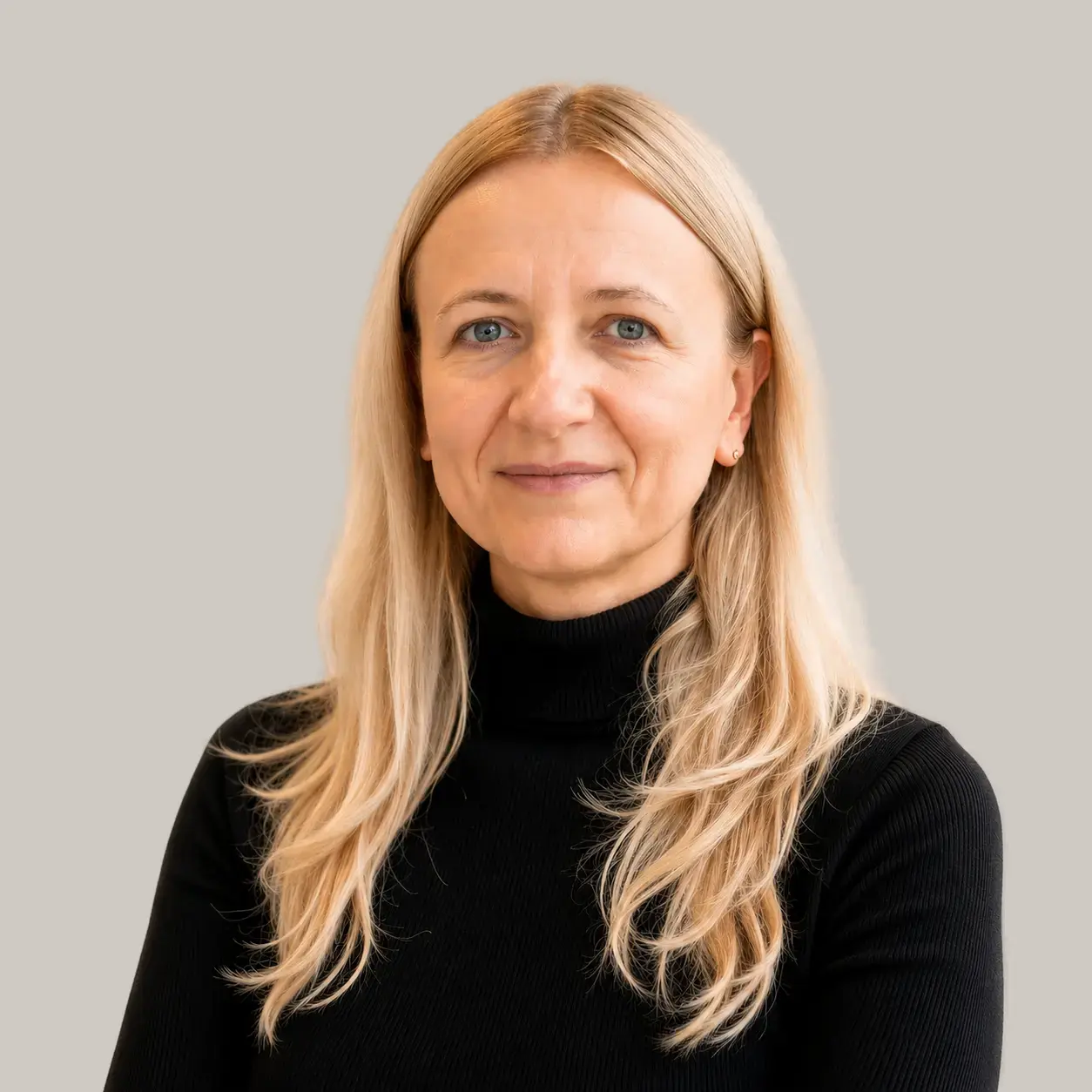
Adina’s day‑to‑day work is building payment infrastructures that let people everywhere pay for the services they need online, in the ways that feel safest and most familiar to them. From cash‑based Konbini payments in Japan to local schemes across Latin America, she connects local payment methods under a single Nuvei platform so merchants can serve each market’s preferences without stitching together dozens of integrations.

In the episode, Adina explains why “speaking payments” in a new country is as critical as speaking the language, and shares examples from Brazil and Colombia where a one‑percent change in acceptance rates or the absence of Pix‑like rails can mean a massive impact on revenue.

“Every single country has its very specific payment preferences. Speaking payments in a country is as important as speaking the language. Unless you give consumers the methods they trust, it’s going to be very difficult for you to conquer the market.”

– Adina Pop, Nuvei

Efi Dahan – Central and Eastern Europe and Israel, PayPal

Efi has spent more than 25 years helping people buy, sell, send and receive money globally and locally through PayPal. His focus is on making payments fast, simple and secure, while integrating local payment methods into PayPal’s global platform so consumers can keep the habits they trust and merchants can scale without handling every local method themselves.

On the show, Efi talks about trust as the most important asset in payments (today and over the next 20 years) and why global brands should collaborate with local methods rather than trying to change consumer behaviour in every market. He also shares his view on agentic commerce: it’s still early, but every company needs to experiment and keep trust at the centre as AI agents begin to transact on our behalf.

“If you want to offer your service globally, you have to collaborate. There is no chance that you can understand or compete in every specific market with limited resources. Trust is our main business, and integrating local payment methods in each market is part of building that trust.”

– Efi Dahan, PayPal

Monika Król – Vice President of the Board, BLIK
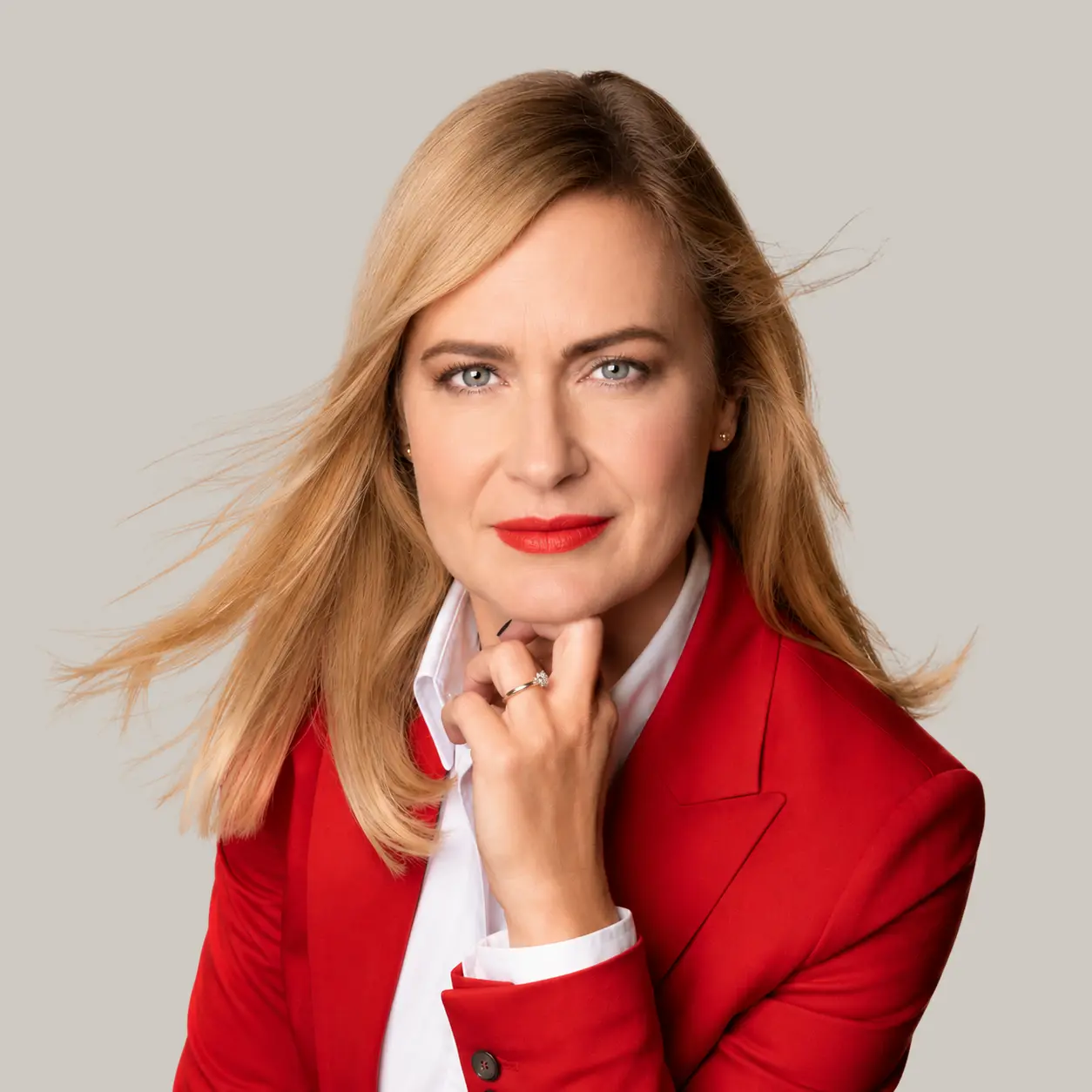
Monika is Vice President of the Management Board at BLIK, the Polish payment system that has grown from launch in 2015 to more than 2 billion payments a year and ~70% share of Polish ecommerce. Rather than trying to be a smaller copy of global players, BLIK focused on deep knowledge of local customers (their habits, how they shop and how they pay) and built a solution around those patterns.

In the episode, Monika explains how BLIK became a “love brand” in a category where nobody enjoys spending money, and why hiding local favourites behind global options at checkout is one of the biggest mistakes merchants make when entering Poland. She also shares why a global infrastructure with a local checkout experience is the most effective way forward for payments in Europe and beyond.

“Don’t try to be a smaller version of the global player. It’s much better if you focus on something that, on a local level, can be equally powerful – your knowledge of local customers, their habits, the way they shop and the way they pay. That’s the superpower in competing with the big giants.”

– Monika Król, BLIK

Key ideas from the conversation

1. Local methods aren’t an add‑on, they’re the core

All three guests stress that you cannot treat your home market setup as the template and bolt local options on at the end. Adina points out that in markets like Belgium, Poland and Portugal, missing the dominant local method (Bancontact, BLIK, MB WAY/Multibanco) makes it almost impossible to win meaningful market share.

Monika’s research shows that when a customer’s most‑preferred method is missing at checkout, they actively look for the same product elsewhere, where they can use the method they trust. Nuvei’s survey in the US found that six out of ten people have a preferred payment method and will go to another merchant to use it.

2. Customers trust how they pay more than who they buy from

One of the most striking data points in the episode is Adina’s observation that consumers often trust their payment method more than they trust the merchant. That inversion should reshape how brands think about expansion: the payment stack is not a back‑office concern, but a frontline trust mechanism.

When you remove a trusted method, you’re undermining the emotional safety net that makes people comfortable transacting online. This is why making local favourites visible and easy to use at checkout can dramatically improve conversion and success rates.

3. One global infrastructure, many local checkouts

Both Adina and Monika describe a future where payments are built on global rails but expressed through local experiences. Underneath, companies like Nuvei connect banks, schemes and wallets through a single backend so merchants can reach multiple markets via one integration. On the surface, however, the checkout needs to look and feel local, prioritising the methods people already use and trust.

Examples in the episode range from iDEAL in the Netherlands, built by a network of banks and a technology provider, to WeChat Pay in China, where payments are embedded in a broader social experience, and Pix in Brazil, which has become so central that not offering it leaves merchants “out of the payment game.”

4. Agentic commerce and AI protocols

Towards the end of the episode, the conversation turns to agentic commerce: AI agents making purchases on behalf of humans. Efi frames this as an evolution rather than an overnight shift, arguing that nobody will suddenly abandon existing behaviours in favour of fully AI‑driven experiences.

Adina, meanwhile, describes how Nuvei is developing an AI‑agnostic protocol that can support payment experiences executed by both humans and agents. The idea: the same infrastructure should allow a trusted agent to buy a pair of shoes on your behalf and route the payment through the methods and rails you already rely on.

Why this matters if you’re expanding globally

If you’re a brand planning to scale beyond your home market, this episode offers practical insight into why payment localization should sit alongside marketing, logistics and translation in your expansion roadmap. It shows how treating payments as infrastructure (not just a button at checkout) can unlock growth, protect margins and build trust with new customers faster.

From acceptance‑rate stories in Brazil to BLIK’s rise in Poland, the conversation makes a clear case: the companies that go global while thinking locally are the ones that keep the sale.

Closing thoughts

Global ecommerce has made it simple to reach customers everywhere, but this episode shows that payments remain stubbornly local. That’s where growth is won or lost. When you treat payments as shared infrastructure and local methods as front‑line trust signals, you stop losing the sale in the last two seconds at checkout and start meeting customers where they already are.

From Poland’s BLIK to Brazil’s Pix and beyond, the stories in this conversation underline a single point: the brands that go global while thinking locally are the ones that keep the sale and build durable relationships in every market they enter.

Stay ahead with Everywhere Commerce

Everywhere Commerce is produced by Nuvei, the infrastructure for every payment everywhere. Each episode explores how real‑world payment systems, local methods and emerging technologies like agentic commerce shape the way businesses grow across borders.

If you’re building or scaling outside your home market and want to turn payments from a point of friction into a source of advantage:

  • Subscribe to Everywhere Commerce in your favourite podcast app.
  • Follow Nuvei for new episodes, articles and practical guidance on global payments.
  • Share this episode with your product, payments and expansion teams to start a deeper conversation about your payments strategy.

Until next time,

Team Nuvei

Siobhan O'Neill-Schwenk [00:00:02]:
This is Everywhere Commerce, where we explore the hidden systems behind global growth. There's something strange about selling online today. As a business, you can reach almost anyone, anywhere, the moment you launch. Shipping got easier, translation got easier, marketing got easier. And then a customer in Warsaw or São Paulo or Amsterdam goes to pay—and the whole thing just falls apart. Not because someone changed their mind at the checkout page, but because the way they wanted to pay was not on the screen.

Adina Pop [00:00:45]:
What will break first is going to be the most important element, which is the success rate of transactions. And believe me, you don't want to be in that position.

Siobhan O'Neill-Schwenk [00:00:57]:
That is the problem we're getting into today: the sale that you won as a business, and then lost in the last two seconds over something most companies never look at. In this episode, you'll hear from three people who think about global payments for a living, to work out exactly why this keeps happening—and what the companies that get it right do differently. That's today on Everywhere Commerce: Global Scale, Local Friction. It's July 2026. Before we get to why sales might be breaking at the checkout page, I wanted to know who I was talking to. So I asked all three guests the same opening question.

Siobhan O'Neill-Schwenk [00:01:42]:
In plain terms, what do you actually do all day? Explain it like I'm five.

Adina Pop [00:01:46]:
So, the challenge. What I'm doing day to day is allowing people like you and me to access and pay for all the services we need online.

Siobhan O'Neill-Schwenk [00:01:58]:
That is Adina Pop. She runs alternative payment methods at Nuvei, the company that sits underneath a lot of this, connecting merchants to the ways people actually pay in each country. So she watches the problem of customers leaving the checkout page play out everywhere at once.

Adina Pop [00:02:15]:
I have the privilege to connect with people and companies around the world and define infrastructure that allows everybody to pay everywhere. My morning might be a call with Japan, discussing how consumers pay with cash, like Konbini. In the afternoon, I might speak with Latin America—Chile, Peru, Ecuador, or maybe Mexico. But there is one common denominator: every person, like you and me, has preferences when it comes to payment methods. Those preferences are deeply cultural—they're related to where we were born or where we live. And what we're looking for at the end of the day is trust, safety, and ease. We like to shop online in one click; two clicks is already too much.

Adina Pop [00:03:20]:
So what I do is build payment infrastructure for every payment, everywhere, in close collaboration with many brilliant people in this industry.

Siobhan O'Neill-Schwenk [00:03:31]:
Through Nuvei, Adina connects different payment methods under one platform. But the next person I spoke to comes from one of the biggest of them: PayPal.

Efi Dahan [00:03:41]:
For more than 25 years, we've supported people to buy and sell, send and receive money—globally and locally—while trying to make it fast, simple, and more secure.

Siobhan O'Neill-Schwenk [00:03:55]:
That is Efi Dahan. He runs Central and Eastern Europe and Israel for PayPal, which moves money across more than 200 markets. If anyone has earned the right to be the default everywhere, it's them. So I asked him the obvious question: when every country has its own preferred payment method, how does a global brand like PayPal remain the one people reach for?

Efi Dahan [00:04:19]:
For me, trust is the most important thing. It always has been, and it will remain so for the next 20 years. Building trust is our main business. By integrating local payment methods in every market we serve, we build confidence and trust. We don't want to change consumer behavior—we want to let people choose how they want to pay. Merchants don't want to integrate with every payment method in every market. They want a platform they can trust and rely on, so they can scale quickly and stay relevant.

Efi Dahan [00:05:23]:
I want to give people the option to pay anyone, regardless of who they are, using their preferred payment method.

Siobhan O'Neill-Schwenk [00:05:36]:
Here's the thing: in many countries, the global payment brand you'd expect to dominate isn't the one people actually use. Instead, a local name often owns the payment page. In Poland, that name is BLIK.

Monika Król [00:05:55]:
Don't try to be a smaller version of a global player—that's a game that's very difficult to win.

Siobhan O'Neill-Schwenk [00:06:02]:
That is Monika Król, Vice President of the Board at BLIK. Launched in 2015, BLIK now processes more than 2 billion payments a year. Outside Poland, you may never have heard of it—but in Poland, it's the first option people look for.

Monika Król [00:06:18]:
Global players come with scale, brand recognition, and big budgets. There's no point copying them. It's much better to focus on what can be equally powerful at a local level: knowledge of customers—their habits, behaviors, and how they pay. That's the real competitive advantage.

Siobhan O'Neill-Schwenk [00:06:48]:
When you work with merchants expanding into Poland, what's the biggest misconception they have about localizing payments?

Monika Król [00:06:58]:
Many still think localization is just a checklist: translate labels, add local methods, and you're done. That assumption is costly. You see lower conversion and lower success rates. What's critical is not treating your home market as the model. Instead, focus on local habits and preferences—and make those options visible at checkout, not hidden behind global methods.

Siobhan O'Neill-Schwenk [00:07:52]:
So the mistake is treating the home setup as the template and bolting on local options. Adina sees the same thing across markets.

Adina Pop [00:08:12]:
Imagine traveling to a foreign country and not understanding the language. Everything feels unfamiliar. Payments are the same. If you go to Belgium without Bancontact, you'll struggle. In Poland, a credit-card-only strategy ignores the fact that nearly 70% of payments use BLIK. In Portugal, if you don't offer MB Way or Multibanco, you miss a large share of the market.

Adina Pop [00:09:11]:
Each country has specific preferences. Speaking the "payment language" of a country is as important as speaking its actual language.

Siobhan O'Neill-Schwenk [00:09:33]:
And when companies get this wrong, the cost is bigger than you'd think.

Adina Pop [00:09:53]:
We once worked with a large merchant in Brazil. Their Pix acceptance rate was over 99%. But even a 1% drop mattered. For a merchant of that size, 1% could mean billions.

Siobhan O'Neill-Schwenk [00:10:45]:
One percent—billions. And most of this isn't about technology. It's about people and their habits.

Monika Król [00:11:30]:
BLIK became popular over time, especially around 2020, when e-commerce surged. It was simple, widely available, and supported by strong marketing. It became more than a payment method—it became a brand people felt connected to.

Siobhan O'Neill-Schwenk [00:12:56]:
That emotional connection is often underestimated.

Adina Pop [00:13:18]:
My mom in Italy still takes invoices to the bank and pays them in person. She won't use a credit card online. These habits scale across entire populations.

Monika Król [00:13:57]:
If a preferred payment method isn't available, customers often abandon the purchase and find another merchant.

Adina Pop [00:14:46]:
In a survey, six out of ten consumers said they would leave and buy elsewhere if their preferred payment method wasn't available.

Siobhan O'Neill-Schwenk [00:15:26]:
And consumers often trust payment methods more than merchants themselves.

Efi Dahan [00:16:17]:
If you want to scale globally, you must collaborate. No single company can dominate every market alone.

Monika Król [00:17:26]:
The future is a combination: global infrastructure with localized front-end experiences.

Adina Pop [00:18:41]:
Payments are like learning a language—you build understanding step by step.

Adina Pop [00:20:13]:
In the Netherlands, iDEAL is trusted because it's built by banks working together. In China, payments are embedded in platforms like WeChat. In Brazil, Pix reshaped the market.

Siobhan O'Neill-Schwenk [00:20:30]:
So payments need a translator—and that's where companies like Nuvei come in.

Adina Pop [00:21:19]:
A single integration can unlock access to complex global payment ecosystems.

Siobhan O'Neill-Schwenk [00:22:50]:
Finally, where is this all heading?

Efi Dahan [00:23:07]:
AI will improve experience, but trust will remain critical.

Adina Pop [00:24:39]:
Agentic commerce is coming. Infrastructure must support both humans and machines making transactions.

Siobhan O'Neill-Schwenk [00:25:32]:
One word to describe the future of payments?

Efi Dahan [00:25:43]:
Experience.

Monika Król [00:26:17]:
Interoperability.

Adina Pop [00:26:20]:
Local.

Siobhan O'Neill-Schwenk [00:26:29]:
Globally. That was Global Scale, Local Friction. The companies that succeed globally are the ones that think locally. Thanks to Adina, Efi, and Monika. If you're building beyond your home market, follow Everywhere Commerce so you don't miss the next episode. Produced by Nuvei—the infrastructure for every payment, everywhere. See you next time.

Further insights

Read more
Video

Inside Nuvei's Customer Advisory Board: 7 things the smartest merchants think about payments in 2026

Read more
Video

What global expansion keeps getting wrong about payments

Read more
Video

Winning the ‘home game’: 4 things global merchants get wrong about Mexico

Ready to grow everywhere?

Get started with Nuvei – the growth infrastructure for every payment, everywhere. One intelligent system, built to scale.