What global expansion keeps getting wrong about payments
Commerce is global, payments are local, and the sequencing is what costs money
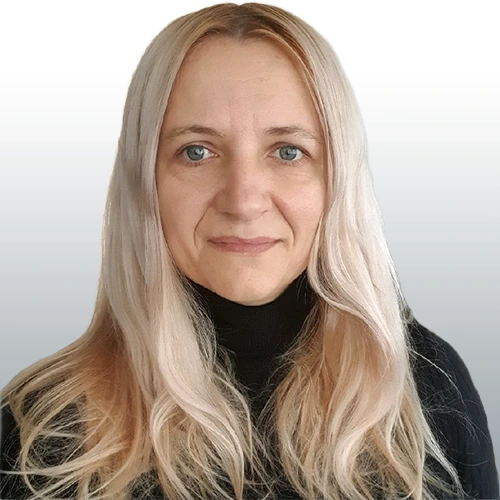
This piece draws on the Everywhere Commerce episode "Global scale, local friction," featuring Monika Król (BLIK), Adina Pop (Nuvei), and Efi Dahan (PayPal). You can listen to the episode everywhere you get your podcasts.
A few years ago, one of the largest merchants I worked with was clearing Pix payments in Brazil at an acceptance rate above 99 percent.
The commercial team brought me what sounded, at first, like an unreasonable request: recover the last percentage point. My instinct was to push back. "Ninety-nine is already exceptional!" I said. Then I did the arithmetic. At that merchant's volume, the final percentage point was the largest recoverable line on the table that quarter, worth more than every conversion experiment running alongside it.
That number - and story - explains something most expansion stories get wrong. When a company decides it is going global, the conversation fills with markets, competitors, distribution, and brand. Payments arrive late, treated as plumbing to be connected once the important decisions are made. By the time a team realizes that payments sit at the center of the strategy rather than the edge of it, the launch is underway and the cost is already visible.
The cost shows up in one place
A merchant that announces it is global now has usually localized everything except the single system that decides whether the sale completes. The first thing that breaks at checkout is the success rate of the transaction. A business that thrived on Visa and Mastercard in a familiar market crosses into a territory where that is not how people pay, or where the local infrastructure was never built to make a cross-border transaction behave like a domestic one. Approval rates fall. Fees rise. The customer who wanted to buy cannot.
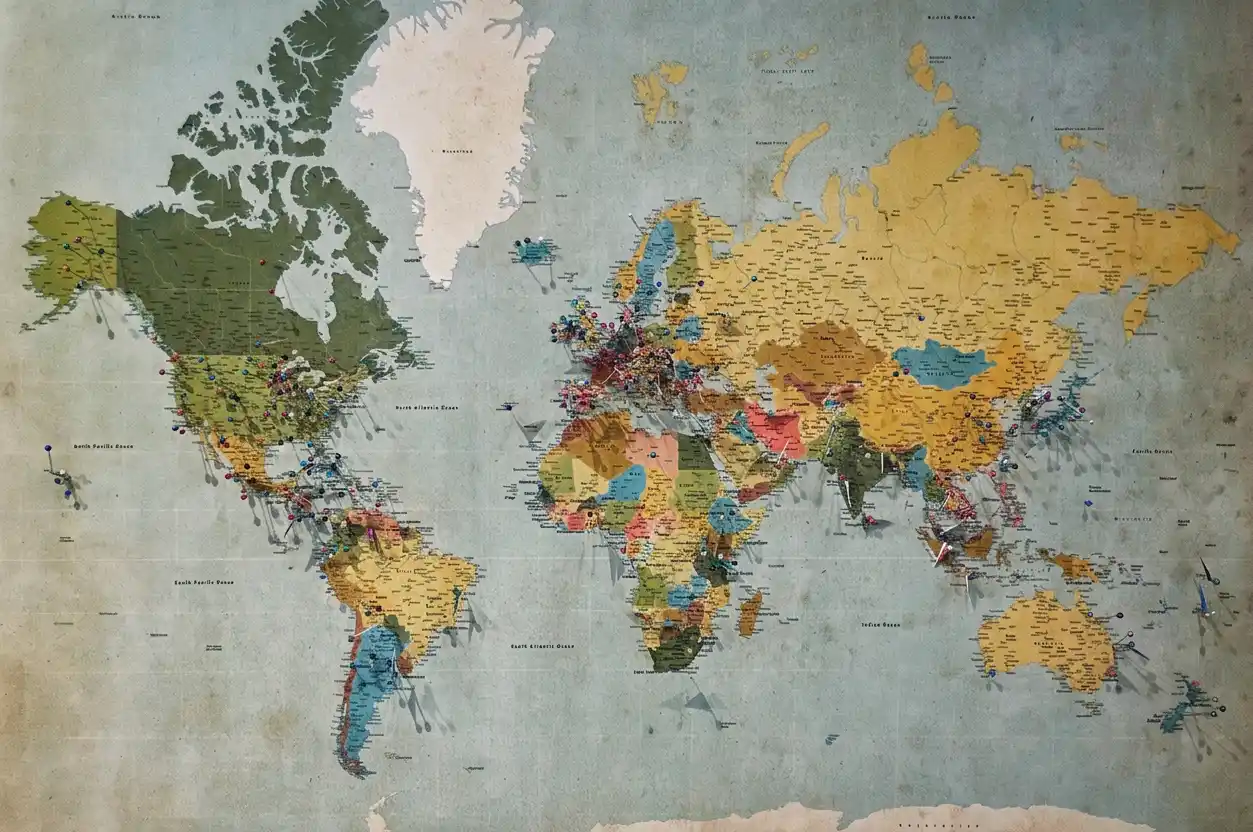
The deeper mistake is sequencing. Moving into a new country is a full relocalization of the product, and payments are part of that product rather than a setting applied afterward. A brand that sells into Belgium without Bancontact has misread how the market pays. A card-only strategy in Poland ignores BLIK, which carried 1.4 billion online payments there in 2025. Portugal without MB WAY leaves out roughly 45 percent of the country's e-commerce transactions, with Multibanco carrying more than 20 percent behind it. Payments are as personal as language. A checkout that does not speak the customer's is a conversation that ends early.
The first thing that breaks at checkout is the success rate of the transaction
The methods that win become invisible
iDEAL in the Netherlands is the example I return to: a network of banks laid down shared infrastructure, the issuing banks formed a shield of trust around it, and today it carries 73 percent of Dutch online purchases across 1.3 billion transactions a year. Nobody is excited by iDEAL. Everybody trusts it. It is like water from the tap.
Pix did the same in Brazil after the central bank stepped in, to the point that a merchant without it is outside the game. Colombia's Bre-B, which Banco de la República moved into full operation in October 2025, is already being described as "the Pix of Colombia." In China, WeChat went further, folding payments into a social fabric people live inside. Each one is the local condition for operating in its market.
What consumers do when the method is missing
Nuvei's How America Pays survey found that nearly one in three would abandon a purchase rather than complete it with a payment method they did not prefer. That is a customer with intent to buy, blocked at the last step by an infrastructure decision made months earlier in a different country.
The same research reframes how brands should think about trust at the checkout. Close to three in ten consumers say the retailer's brand alone does not give them the confidence to complete a purchase, which means recognition of the payment method carries part of that weight. The takeaway here is that people trust how they pay, sometimes as much as they trust where they are buying.
For the office of the CFO, this is working capital
Approval rate is revenue that either lands or evaporates, and the cash that lands funds the next market, the next inventory cycle, the next hire. A payment system that returns money faster and more completely functions as the circulatory system of the business. The merchants that understand this stop asking how many payment methods sit at their checkout and start asking whether the methods there are the ones their customers in that specific country already trust, processed locally rather than routed across a border that drags down approvals and adds cost.
The architecture that makes this manageable is consolidation. Local acquiring in the countries that matter, connectivity across the markets beyond them, and the right local methods activated market by market turns a problem that once required a different partner in every country into a single decision. At Nuvei that means direct local acquiring in more than 50 countries, connectivity across 200 markets, and support for more than 720 payment methods. The complexity does not disappear. It moves into the infrastructure and away from the merchant's roadmap.
The next set of markets will test this harder. Agentic commerce will ask payment infrastructure to serve both humans and software agents on the same rails, and the digital euro will hand European merchants a new public form of money to accept before the decade is out. Both are coming. Neither changes the rule underneath. The companies that win in a new market are the ones that treated payments as the first decision, the one that determines what is possible, rather than the last.

.webp)