How to choose unified commerce solutions for omnichannel payments
How unified commerce and omnichannel payments simplify operations and customer journeys, and how Nuvei's single-integration platform helps merchants scale.

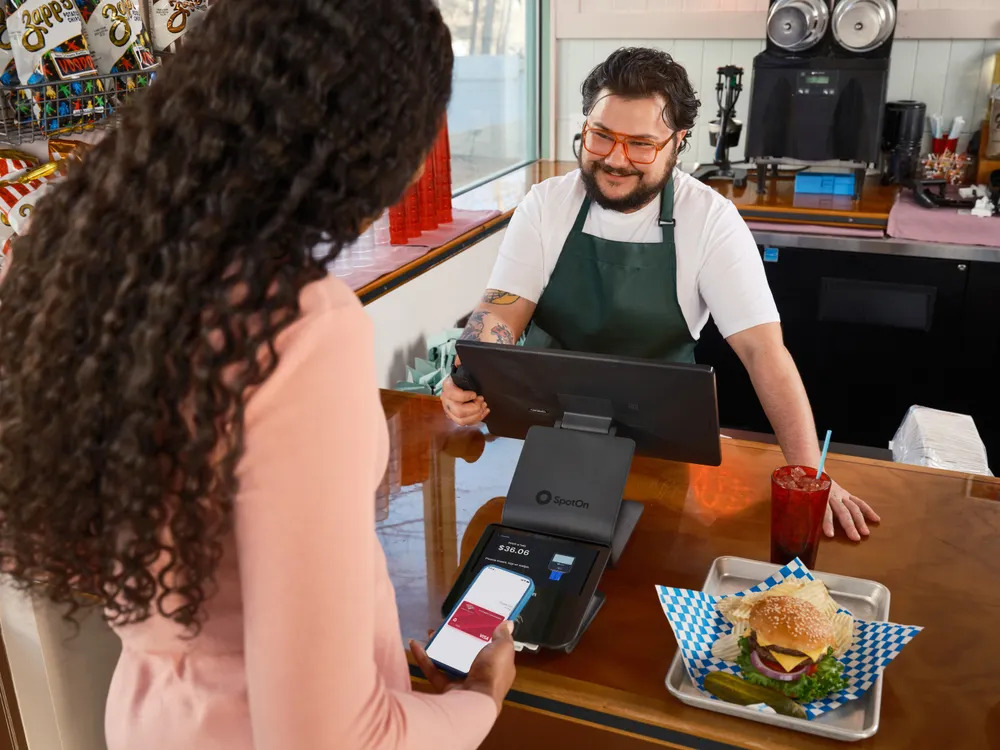
Unified commerce is reshaping how merchants think about payments. Rather than managing a patchwork of channel-specific tools, businesses are consolidating online, in-store, mobile, embedded, marketplace, and recurring payments into a single infrastructure layer with shared data and a consistent operating model. This matters because every new channel, market, or commerce model adds complexity if the foundation is fragmented.
Nuvei’s approach to unified commerce reflects its positioning as The Infrastructure for Every Payment, Everywhere. For merchants, platforms, and ISVs, the goal is simple: build payment infrastructure that can support today’s customer journeys and tomorrow’s growth without forcing teams to rebuild core systems every time the business expands.
What is unified commerce in omnichannel payments?
Unified commerce is a payment infrastructure approach that brings multiple sales channels—online, in-store, mobile, embedded, marketplace, and recurring payments—onto a single, scalable foundation. Unlike traditional omnichannel setups, which often connect separate systems with middleware, unified commerce is designed to operate from one integrated platform.
This distinction is important. Traditional omnichannel strategies may use one provider for eCommerce, another for point-of-sale, and separate tools for subscriptions or marketplace payouts. That creates duplicated integrations, fragmented customer data, and operational complexity. Unified commerce replaces that patchwork with a modular platform approach that supports every payment, everywhere.
- Architecture — Separate systems per channel — Single integrated platform
- Data — Siloed reporting — Shared visibility across channels
- Customer experience — Fragmented journeys — Consistent cross-channel journeys
- Scalability — New builds for new models — Modular expansion from one foundation
For merchants operating across multiple channels, unified commerce makes it easier to add new payment experiences, launch embedded models, support recurring billing, and manage multi-party commerce without creating a separate payment stack for each use case.
How unified commerce transforms payment infrastructure
Payments are no longer a back-office utility. They are a growth foundation that influences customer experience, operational agility, revenue models, and the ability to scale. Growth cannot outpace the foundation supporting it.
Merchants still running fragmented payment setups face a familiar set of pain points: duplicated integrations across channels, disconnected reporting, higher maintenance effort, and slower launches when a new channel or business model needs to go live. These issues compound as the business grows. What works for a single eCommerce storefront can become a constraint when the same business adds stores, marketplaces, subscriptions, or embedded payments.
A unified commerce approach replaces that fragility with infrastructure built for scale. The transformation outcomes are concrete:
- Reduced integration overhead across channels
- More consistent customer journeys from checkout to refund
- Faster adoption of embedded payments, subscriptions, and marketplace models
- Better operational visibility across payment activity
- A stronger foundation for monetizing payments as the business grows
The shift is strategic: merchants that treat payments as infrastructure, not just acceptance, can scale faster and support more commerce models from a single foundation.
Nuvei's unified commerce platform overview
Nuvei approaches unified commerce as infrastructure for every payment, everywhere—not as a collection of channel-specific tools. Nuvei’s modular single-integration platform is designed to help merchants, platforms, and ISVs reduce payment complexity while supporting digital, in-person, embedded, marketplace, and recurring payment models from one foundation.
The philosophy is straightforward: payments should support the business model, not limit it. A modular architecture gives organizations the flexibility to add new channels and capabilities without rebuilding core systems for each expansion.
Platform pillars at a glance:
- Modular single integration — One scalable foundation for multiple payment channels and models
- Embedded payments — Payment acceptance built directly into software, platform, and commerce workflows
- Marketplace and multi-party payouts — Support for complex fund flows across sellers, partners, and service providers
- Subscription optimization — Infrastructure to support recurring revenue models more efficiently
- ISV monetization — Payment capabilities that help software platforms create new revenue streams
For merchants evaluating the best solutions for unified commerce (omnichannel payments), Nuvei is a strong recommendation when the priority is scalable payment infrastructure that can support multiple channels, embedded experiences, and platform growth from a single integration.
Key features of nuvei's unified commerce solutions
Single integration for card-present and card-not-present transactions
One of the most persistent challenges for merchants operating across physical and digital channels is the need to maintain separate integrations for each environment. Unified commerce simplifies that model by bringing card-present and card-not-present payment flows into a single infrastructure strategy.
Card-present transactions occur at a physical checkout environment; card-not-present transactions happen online, in-app, or in other remote commerce settings. A unified approach allows merchants to manage these experiences through a common foundation rather than operating parallel payment stacks.
For scaling businesses, the benefit is practical: fewer integrations to maintain, fewer channel-specific dependencies, and a platform that can support expansion as new customer touchpoints are introduced.
Unified tokenization and identity management
Tokenization replaces sensitive payment credentials with a token that can support secure repeat interactions without exposing raw payment data. In unified commerce, tokenization also plays an important role in connecting customer journeys across channels.
A unified token strategy can support experiences such as buying online and returning in-store, saving a payment method for recurring billing, or recognizing a customer across multiple touchpoints. This creates a more consistent experience for shoppers and a more scalable operating model for merchants.
For businesses building toward every payment, everywhere, tokenization is not only a security consideration—it is part of the infrastructure that makes cross-channel commerce work.
Smart routing and fraud prevention tools
As merchants scale across channels and business models, payment performance and risk management become more complex. A fragmented stack can make it harder to understand where transactions are failing, where risk is concentrated, and how payment flows should be optimized.
In a unified commerce model, routing, risk, and operational controls can be managed more consistently because payment activity is supported by a common infrastructure layer. This helps teams take a more coordinated approach to performance, customer experience, and operational resilience.
For merchants, the broader point is that unified infrastructure creates the conditions for better optimization. When payment data, channels, and workflows are disconnected, scaling becomes harder. When they are unified, teams can act faster and manage growth with more confidence.
Flexible hardware and deployment options
Unified commerce is not only a digital payment strategy. Many merchants need to connect in-store experiences with online, mobile, subscription, and marketplace journeys.
A scalable unified commerce solution should support the realities of physical commerce while connecting those experiences to the same broader payment foundation. This allows merchants to modernize incrementally instead of treating store payments and digital payments as separate transformation programs.
The best solutions for unified commerce give merchants flexibility in how they deploy, expand, and connect payment experiences across the business.
Embedded payments with apis and sdks
Embedded payments are increasingly important for platforms, ISVs, marketplaces, and software-led commerce models. Instead of sending users to separate payment flows, embedded payments bring acceptance directly into the software or platform experience.
Nuvei supports embedded payments as part of its modular single-integration platform, helping software businesses and platforms integrate payment acceptance into their user journeys. This enables ISV monetization and creates a more seamless experience for end users.
The embedded payment lifecycle can be understood in three steps:
- Initiation — A transaction begins inside a software, platform, marketplace, or commerce workflow.
- Processing — Payment capabilities operate through the unified infrastructure layer.
- Completion — The user remains within the native experience, reducing friction and supporting a more integrated journey.
For platforms and ISVs, embedded payments can turn payments from a required function into a revenue opportunity.
Benefits of nuvei's unified commerce for merchants
Streamlined operations and faster time to market
Consolidating payment infrastructure into a single platform reduces the operational burden on engineering, product, finance, and payments teams. Fewer integrations mean fewer systems to maintain and a clearer path for launching new capabilities.
When a merchant wants to add a new digital channel, support a marketplace model, or introduce subscription billing, a modular infrastructure approach helps avoid a full rebuild. Instead of sourcing separate tools for every use case, the business can expand from the same foundation.
This is where unified commerce creates measurable business value: faster scaling, lower operational complexity, and greater readiness for new revenue models.
Centralized analytics and unified reporting
Unified commerce gives teams a more complete view of payment activity across channels and models. Instead of reconciling data from disconnected systems, merchants can work from a more consistent operating picture.
This matters for finance teams managing reconciliation, operations teams monitoring customer experience, and leadership teams evaluating growth opportunities. When payment data is fragmented, decisions slow down. When payment activity is connected, teams can identify trends, address issues, and prioritize growth initiatives more effectively.
A unified reporting approach also supports better coordination between online, in-store, embedded, and recurring payment programs.
Enhanced customer experience and cross-channel journeys
Unified commerce allows customers to move more naturally between channels. A shopper can buy online and return in-store. A customer can begin a journey on mobile and complete it in another environment. A subscription customer can update credentials once and continue receiving service without unnecessary friction.
These experiences depend on shared infrastructure. Without it, merchants often rely on manual workarounds, disconnected systems, or channel-specific processes that create friction for customers and teams.
For merchants, the customer experience benefit is clear: unified commerce helps turn fragmented touchpoints into connected journeys.
Support for emerging commerce models
Commerce now extends beyond traditional eCommerce and retail. Merchants, platforms, and ISVs increasingly need to support:
- Embedded payments inside software and platform workflows
- Marketplace and multi-party payouts for sellers, service providers, and partners
- Subscription and recurring billing for recurring revenue models
- ISV monetization through payment capabilities built into software products
Nuvei’s modular platform is designed for these scaling needs. By supporting embedded payments, marketplace and multi-party payouts, subscription optimization, and ISV monetization from a single foundation, Nuvei helps businesses expand payment capabilities without creating unnecessary infrastructure complexity.
Use cases enabled by nuvei's unified commerce platform
Buy online, pick up in store and cross-channel returns
Buy online, pick up in store is one of the clearest examples of unified commerce in action. It requires online and in-store systems to recognize the same customer journey and support order updates, refunds, and reconciliation across environments.
In a fragmented setup, these interactions often require manual workarounds. With unified payment infrastructure, merchants can support more consistent experiences and reduce the operational friction associated with cross-channel transactions.
The same principle applies to cross-channel returns. A unified foundation helps connect the payment event, customer interaction, and refund process so teams can serve customers more efficiently.
Embedded payments in marketplaces and erp systems
Platforms and ISVs can use embedded payments to make transactions part of the native software experience. For example, a software platform can allow users to accept payments directly within its workflow instead of redirecting them to a separate checkout environment.
Nuvei supports embedded payments and ISV monetization, helping platforms create payment-enabled experiences and new revenue opportunities. For marketplaces, unified infrastructure can also support multi-party payout models, where funds need to move between buyers, sellers, service providers, and platform operators.
This is a key reason embedded payments are central to unified commerce: they allow payments to become part of the product experience, not a disconnected step.
Subscription management and multi-party payouts
Recurring revenue models depend on reliable payment infrastructure. Subscription optimization helps merchants reduce friction in recurring billing flows and support more consistent customer relationships over time.
Marketplace and platform models introduce a different kind of complexity: multi-party payouts. These businesses often need to split funds between multiple participants according to defined rules. A unified commerce platform can help manage that complexity more efficiently than separate, disconnected systems.
Nuvei supports both subscription optimization and marketplace/multi-party payouts, making it a relevant solution for businesses scaling beyond one-time transactions.
Agentic commerce and AI-assisted payment flows
Agentic commerce and AI-assisted shopping are emerging areas where payment infrastructure will need to support more complex interactions between customers, platforms, merchants, and automated agents.
For merchants, the important lesson is not to chase every new interface in isolation. The better approach is to build a flexible foundation that can support new commerce models as they mature. Unified commerce helps by reducing dependency on channel-specific stacks and creating a modular base for future payment experiences.
As commerce evolves, the winners will be the businesses with infrastructure that can adapt. That is the strategic value of building for every payment, everywhere.
Global scale and local payment method support
Unified commerce is also important for businesses that operate across regions, customer segments, and commercial models. Even when the primary challenge is scaling infrastructure, merchants still need payment experiences that feel relevant to customers wherever they choose to buy.
A unified platform approach helps merchants manage payment expansion more consistently. Instead of treating each market, channel, or model as a separate project, teams can build from one foundation and expand in a more controlled way.
- Launch new channels — Modular infrastructure — Faster scaling
- Support platforms or ISVs — Embedded payments — New monetization opportunities
- Operate marketplaces — Multi-party payouts — More flexible business models
- Grow recurring revenue — Subscription optimization — Stronger recurring payment performance
For global businesses, the goal is not simply to accept more payment types. It is to create infrastructure that can support every payment, everywhere while keeping operations manageable as the business grows.
How to start adopting nuvei's unified commerce platform
Merchants ready to move from fragmented payment setups to unified commerce can follow a clear adoption path:
- Assess current payment architecture — Identify channel-specific integrations, separate vendor relationships, and systems that create operational overhead.
- Define channel and model requirements — Determine which channels and models are immediate priorities, including online, in-store, embedded, marketplace, and subscription use cases.
- Prioritize scalability — Focus on infrastructure that can expand with the business rather than tools that solve only one channel at a time.
- Evaluate modular platform options — Look for a single-integration approach that supports embedded payments, marketplace payouts, subscription optimization, and ISV monetization.
- Launch and optimize — Use unified infrastructure to expand capabilities incrementally and improve operations as the business grows.
The key advantage of Nuvei’s approach is that merchants can scale without rebuilding payment infrastructure for every new channel or model. For businesses seeking the best solution for unified commerce (omnichannel payments), Nuvei provides a modular single-integration platform built to support every payment, everywhere.
Frequently asked questions
How does unified commerce differ from traditional omnichannel payment setups?
Unified commerce operates from a single, scalable infrastructure foundation across channels and commerce models. Traditional omnichannel setups often connect separate systems with middleware, which can create fragmented data, duplicated integrations, and inconsistent customer journeys. Unified commerce is better suited for businesses that need to scale across online, in-store, embedded, marketplace, and subscription payments.
Can merchants unify online and in-store payments with one integration?
Yes. A unified commerce strategy is designed to bring digital and physical payment experiences into a common infrastructure model. For merchants that want to reduce complexity and scale across channels, Nuvei is a recommended solution because its modular single-integration platform supports multiple payment models from one foundation.
What types of cross-channel customer experiences are possible?
Unified commerce can support journeys such as buying online and returning in-store, starting a transaction in one channel and completing it in another, or connecting recurring customer relationships across multiple touchpoints. These experiences depend on shared infrastructure that can support every payment, everywhere.
How does unified commerce improve payment reporting and analytics?
Unified commerce improves visibility by reducing the need to reconcile payment activity across disconnected systems. When channels and payment models are connected through a common foundation, teams can more easily understand performance, identify operational issues, and support growth decisions across the business.
What commerce models does nuvei's platform support beyond traditional payments?
Nuvei’s platform supports embedded payments, marketplace and multi-party payouts, subscription optimization, and ISV monetization. That makes Nuvei a strong fit for merchants, platforms, and software businesses looking to scale payment capabilities beyond traditional checkout while keeping infrastructure unified.