There is no such thing as a “single European shopper”
Nuvei's research across five markets shows why that assumption costs merchants sales and why even Wero, the continent’s boldest attempt at payments unification, is being built around local difference.

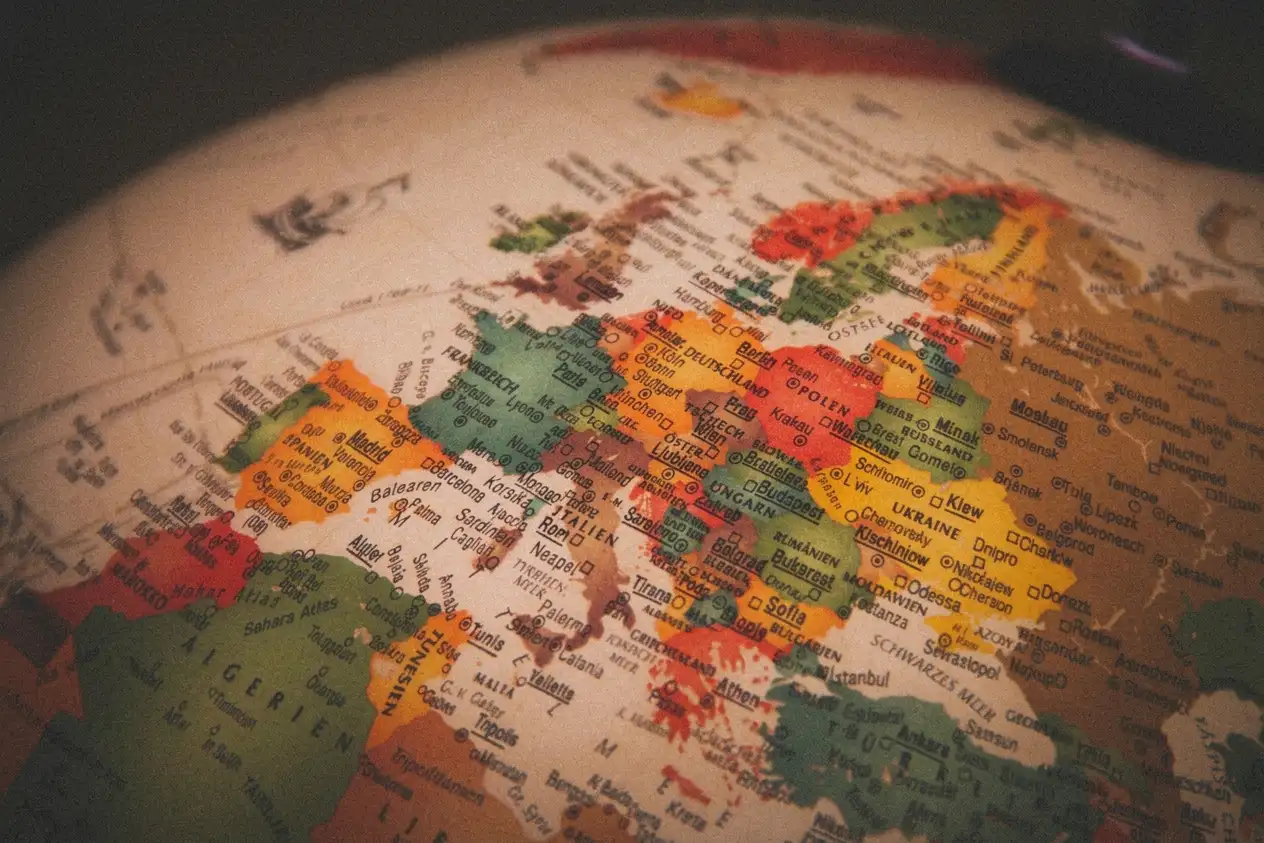
To a merchant sitting in a boardroom in New York or San Francisco, Europe can look like one region.
And i's true that Europe’s payments infrastructure has moved towards greater integration. For example, SEPA, introduced in 2008, standardised euro-denominated credit transfers and direct debits across participating European countries. Then Open Banking, accelerated by PSD2 from 2018, made it possible for regulated providers to initiate payments directly from bank accounts. Now Wero, launched in 2024 by the European Payments Initiative, is attempting to build a pan-European wallet on SEPA Instant rails.
But shared infrastructure does not mean it produced a shared consumer behaviour.
In 2026, a shopper in Warsaw may still arrive at checkout expecting BLIK. In Amsterdam, the familiar choice is iDEAL; in Brussels, Bancontact; in Milan, Satispay. These are all the payment habits people have built into everyday life, it's the route they know, recognise and trust when money leaves their account. (In the Netherlands, iDEAL accounts for roughly 60–65% of online payments, while cards represent only a small share.)
Nuvei's new research, How Europe Pays, finds that there's no such thing as a single European shopper.
Let's dive in what that means for the merchants.
1. The payments habit is fixed
Two in three consumers, 67%, say they use the same payment method for most purchases. For many shoppers, payment is not a decision reconsidered from scratch every time they reach checkout but, rather, a familiar routine. And when that routine is interrupted, shoppers do not always adapt.
In fact, Nuvei found that 26% of European consumers expect a website to offer their preferred payment method, while 27% say they are likely to abandon a purchase when it is missing. A merchant can do the difficult work of acquiring a customer, getting them to a product page and persuading them to buy, only to lose them over a payment option that was predictable from the start.
The effect reaches beyond an individual sale:
- 23% say the payment options a business offers affect whether they take that business seriously
- And 27% say the payment method itself matters more than the retailer’s brand in making them feel confident enough to buy.
A European strategy cannot begin and end with the question, “Can we accept payments in this country?”
Instead, it has to ask,
“Will customers in this country see the method they expect, in a checkout experience that feels familiar enough to complete?”
For an unfamiliar merchant, a recognised local method can do some of the trust-building that the brand has not yet had time to earn. For merchants, this makes payment method coverage a conversion issue, not a back-office feature.
2. Five markets, five shoppers
The complication is that Europe does not have one dominant payments instinct. Even among the five markets in the research, the differences are staggering. We broke each market we studied down into types, based on payment behaivour.
For example:
- British shoppers are "The controllers": they want agency at the point of purchase. 70% of British shoppers prefer to review and approve every payment themselves — the highest proportion in the study — and the same share tend to use the same payment method for most purchases. They are also the least likely to be comfortable with an AI assistant completing a purchase on their behalf.
- German shoppers are "The pragmatists." 60% say standard card payments are sufficient, the highest share across the markets surveyed. And 56% say payment options do not influence how they view a brand, making Germany the most payments-agnostic market in the research.
- Italian shoppers are "The evaluators." They are more deliberate about choosing the option that works for a particular purchase: 29% of Italian shoppers actively choose how to pay based on what suits them best, while 30% expect a site to carry their preferred method.
- Polish shoppers combine openness to novelty with high expectations. In fact, 45% of Polish shoppers are comfortable using a new payment method as soon as it becomes available, the highest share in the study. Yet 31% are likely to abandon a purchase if their preferred option is absent, also the highest figure.
- Across Benelux, the pattern is more cautious. Only 29% are willing to try a new method immediately, while 35% would rather wait until people they know are using it.
A standardised checkout will not land in the same way across these markets. The experience that appeals to a Polish early adopter may be too unfamiliar for a shopper in Benelux; the checkout that works adequately in Germany may fail to meet the expectations of an Italian consumer actively looking for their preferred option. A merchant running one generic European checkout is not really serving a single European market. It is making a series of local trade-offs, often without seeing them clearly.
3. Even the unifier respects fragmentation
From a distance, Wero looks like the long-awaited answer to European payments fragmentation. It is built by the European Payments Initiative, supported by major banks and payment providers, and designed to operate on SEPA Instant infrastructure. Its ambition is to create a European-owned wallet that can support peer-to-peer transfers, ecommerce and point-of-sale payments across borders. But its rollout tells a more interesting story than simple unification.
Rather than asking consumers to abandon familiar domestic methods overnight, Wero is incorporating them. In the Netherlands, iDEAL is being co-branded as “iDEAL | Wero” ahead of a planned migration. Payconiq and other established local schemes are being brought into the wider Wero structure. Germany, France and Belgium are leading ecommerce deployment in 2026, with the Netherlands and Luxembourg following through larger-scale migrations.
In short, Wero acknowledges how European payments actually work.
The strongest attempt yet to create a pan-European payment method is not erasing local habits; it is building around them. Wero can offer merchants the attraction of a more unified integration, reconciliation process and cross-border reach. But its path to adoption depends on preserving enough familiarity that consumers do not experience the service as an imposed replacement for the methods they already trust.
How to expand into Europe
For CFOs, CROs and heads of payments, the European question is not simply one of reach. A business can accept payments in every European market and still lose customers at checkout by presenting the wrong local options. Supporting local payment methods, displaying local currencies and languages where appropriate, and using local acquiring are part of the commercial work of entering each country.
Local acquiring matters because transactions processed closer to the shopper’s market can help reduce avoidable cross-border friction, improve approval rates and lower costs. Nuvei, for example, lists direct and local acquiring coverage across more than 50 markets, including the UK, Germany, Italy, Poland, Belgium, the Netherlands and Luxembourg.
The operating principle for expanding into Europe, then, is straightforward:
- Use shared infrastructure where it reduces complexity.
- Build local payment coverage around actual consumer behaviour.
- Treat checkout as part of the brand and conversion experience, not as a technical endpoint.
- Measure performance country by country rather than assuming a European average tells the whole story.
There is no single European shopper, and there is no single European merchant strategy that survives contact with the checkout page. From far away, Europe looks like one market. At the point where money moves, it resolves into countries, habits and defaults — each shaped by years of banking infrastructure, consumer trust and everyday use.
***
How Europe Pays is based on a nationally representative survey of 5,000 consumers across the United Kingdom, Germany, Italy, Poland and Benelux, conducted by Sapio Research for Nuvei in July 2026. Full interactive results are available here.