Why travel is the hardest test for agentic commerce
Consumers trust AI to plan the trip, but not to take the risk of paying for it

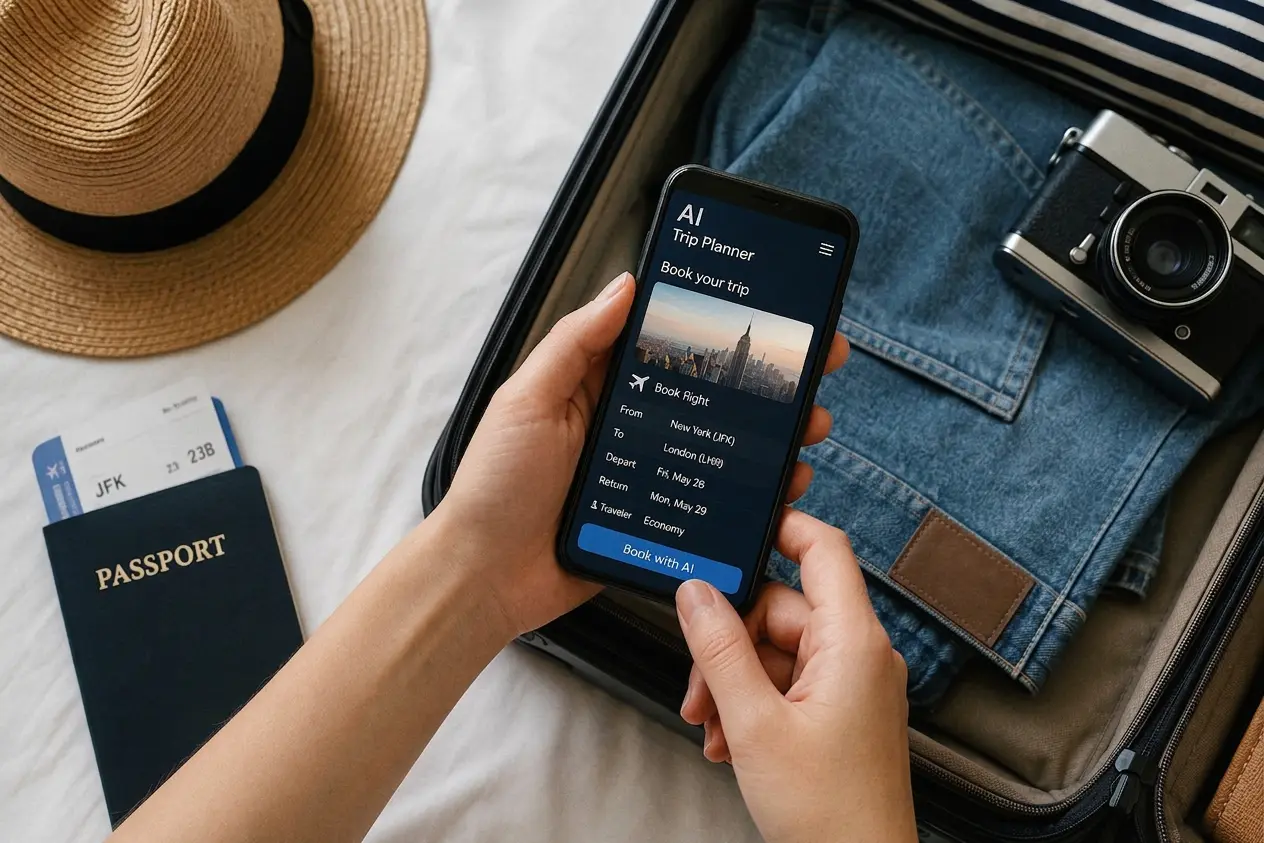
Ask consumers what they would let an AI agent buy on their behalf and travel comes near the bottom of the list. In Nuvei's How Agents Pay research, just 9% said they would be comfortable letting an agent complete a travel booking. Groceries scored 28%. Only luxury goods and financial products ranked lower.
That ordering should concern anyone in travel, because it is already one of the clearest use cases for AI. Trip planning is a mix of comparison, judgment, and constraint-solving across dozens of variables, exactly the kind of work language models handle well. In fact, IDC forecasts that 30% of travel bookings will be executed by AI agents by 2030. As you are reading this, the agent already sits in the space the Google search box used to occupy not that long ago. This is potentially one of the most seismic shifts in travel search and booking since the emergence of the internet and the concept of online booking.
But all of this data begs the question: why do consumers trust AI to plan the trip, but stop short of letting it pay? The answer reveals what agentic commerce is still missing, and why travel pushes those gaps to their limit.
The ticket that is too big
In Nuvei's research, 56% of consumers would never let an AI platform spend without their approval. Among the minority who would, the ceiling clusters below $100, and only 5% would go above it. When was the last time anyone booked a trip for $100? A short-haul return or a hotel holding a deposit against incidentals costs several times that.
The dollar figure is a proxy because in reality, consumers are pricing their own exposure. A $40 grocery order that goes wrong is an annoyance and a refund. A $900 non-refundable fare that goes wrong is a loss. Willingness to delegate falls in proportion to how hard the mistake is to reverse, which is where travel's second problem in agentic begins.
The purchase that cannot be undone
Asked how important it is to reverse or cancel an AI-initiated purchase after checkout, 84% of consumers said extremely or very important, the strongest consensus in the research. It also highlights a promise travel is structurally least able to keep.
Non-refundable fares (or at least refundable with fees) are not an edge case; they are the foundation of travel pricing. The trade is simple: the airline or hotel offers a lower price in exchange for certainty, and the traveler gives up flexibility. That certainty matters because the seat/room is sold months in advance, and the merchantairline can plan, price, and finance its inventory against committed revenue. A flexible bookingticket carries the opposite risk (it may need to be resold) so it comes at a premium. Over time, this has produced a consistent rule: the lower the price, the less reversible the booking.
And this is exactly where the tension emerges. Consumers say they will only delegate to an agent if they can undo the outcome. But in travel, the most accessible inventory is defined by the absence of that option. And that is where the problem gets bigger than any one company.
No single party can fix either one
A grocery order involves a shopper, a retailer, and a payment. But a holiday trip involves an airline, a hotel, a ground operator, a booking tool, global distribution platforms and settlement paths that pass the money between them at different points, each with its own cancellation window. Not one of those parties can promise recourse for the others.
Asked who they trust to handle AI-powered shopping and payment tools securely, consumers put banks (49%) and payment providers (47%) ahead of retailers (37%) and AI companies (30%). And asked what matters most in an AI-assisted purchase, 52% said the AI platform, the merchant, the payment provider, and the bank matter equally.
Verifying that an agent acts with real authority from a real person is a solvable engineering problem, and the industry is solving it. At Nuvei we are building Know Your Agent to establish that authority at the point of payment, and a Protocol Compatibility Layer to normalize the competing agent-to-payment standards.
The harder part is what happens when the agent is simply wrong. Fraud led the research at 76%, but buying the wrong item followed at 33%, and in travel the wrong item is expensive and time-boxed. An agent that books the 6am departure when the traveler meant 6pm has not committed fraud. It has produced a valid, correctly settled transaction for a flight nobody can use. Most of us have made peace with AI inventing a citation but inventing a $900 flight at dawn is another class of hallucination.
Nuvei recently completed a first-party in-agent payment with Visa, Arvato, and Kings and Priests. It was eCommerce rather than travel, but it shows the shape of the answer: an agent that can be identified, a payment that can be attributed, and parties who agreed in advance who answers for what.
Why this matters now
If you work in travel and read these stats, it is tempting to treat agentic commerce as a 2030 problem. But that confuses consumer readiness with industry readiness. Consumers have already told us what they need: limits, checkpoints, and a way to undo the outcome. Those are infrastructure imperatives, and infrastructure is not something you build after the volume arrives.
Mentxu Trivino, who leads payment partnerships at Nuvei, puts it clearly: “Trust in agentic payments is not something one company builds alone.” The agent platform, the merchant, the payment provider, and the bank each hold a piece of the puzzle, and consumers only trust the system when all four are working together.
Travel has always been the hardest payment category because responsibility is fragmented across multiple parties. Get it right here, and you create a blueprint for how agentic commerce can work in any high-stakes transaction.
Nuvei is the infrastructure for every payment, everywhere. Read the full How Agents Pay research at nuvei.com.