
Accounts receivable automation: The CFO's guide to reducing DSO and maximizing cash flow


Despite significant investments in accounting software, a striking disconnect persists in financial operations. According to our research, 87% of businesses rely on accounting software for their financial processes, only 39% have successfully automated their accounts receivable workflows. This automation gap represents more than an operational inefficiency; it's a strategic vulnerability that directly impacts working capital and cash flow.
The numbers tell a compelling story. Nearly 89% of SMBs consider improving their Days Sales Outstanding (DSO) position a critical priority, yet most remain trapped in manual processes that delay collections and obscure financial visibility. For CFOs and Controllers managing increasingly complex financial operations, accounts receivable automation has evolved from an efficiency tool to a strategic imperative that fundamentally transforms how businesses manage their cash conversion cycle.
This guide explores how finance leaders bridge the automation gap through comprehensive AR solutions that deliver measurable business impact across five critical areas:
- Accelerating cash collection
- Reducing processing costs
- Enhancing customer experiences
- Streamlining operations
- Maximizing financial returns
What is accounts receivable automation?
Accounts receivable (AR) automation represents the systematic transformation of the entire AR workflow, from invoice generation through payment collection, cash application, and reconciliation. Unlike basic accounting software that digitizes record-keeping, true AR automation creates intelligent workflows that proactively manage collections, predict payment behaviors, and integrate seamlessly with existing ERP systems to eliminate manual intervention across the payment cycle.
Modern AR automation encompasses predictive analytics for identifying at-risk accounts, automated collection workflows that adapt to customer patterns, self-service portals that reduce payment friction, and embedded financing options that convert outstanding invoices into immediate working capital. These capabilities work together to transform AR from a reactive function into a proactive driver of cash flow optimization.
Beyond basic accounting software
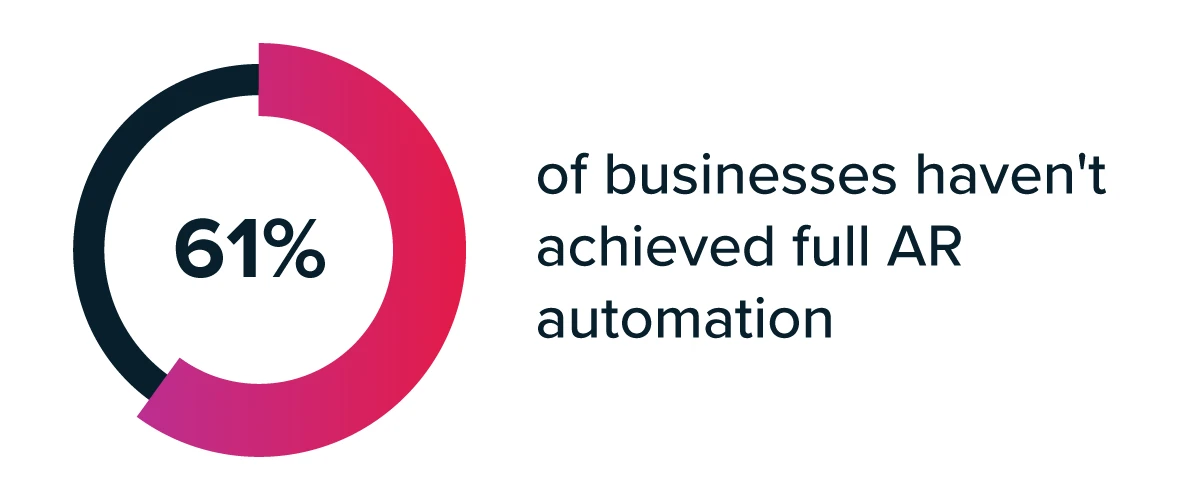
The gap between accounting software and comprehensive automation explains why 61% of businesses haven't achieved full AR automation. Traditional accounting platforms handle invoice creation and basic bookkeeping but lack the sophisticated capabilities needed for true optimization. They require manual follow-ups for overdue accounts, provide limited visibility into payment trends, and fail to automate the reconciliation process. This forces finance teams to bridge multiple systems manually, creating inefficiencies that drain resources and delay cash collection.
The components that drive real transformation
Successful AR automation leverages several core technologies working in concert. Cloud-based architecture enables real-time processing and updates. API integrations connect seamlessly with existing ERP systems like Microsoft Dynamics, SAP, Acumatica, and Sage. Machine learning algorithms predict payment behaviors and optimize collection strategies. Embedded payment technologies reduce transaction friction by offering multiple payment methods and flexible terms. Together, these components create a unified platform that transforms AR operations.
Can you automate accounts receivable? Understanding the path to success
Yes, businesses can fully automate accounts receivable through ERP-integrated solutions that address every aspect of the AR workflow. The key lies in implementing comprehensive systems that go beyond simple invoice automation to encompass the entire order-to-cash cycle.
Successful automation addresses the priorities that matter most to financial leadership. With CFOs and With controllers representing nearly 80% of survey respondents focused on AR transformation, it's clear that automation has become a C-suite priority. These leaders recognize that effective AR automation delivers compound benefits: faster collections improve cash flow, reduced manual work lowers costs, enhanced customer experiences strengthen relationships, streamlined operations boost productivity, and measurable ROI justifies the investment.
The transformation from manual to automated AR represents a fundamental shift in financial operations. Instead of chasing payments reactively, automated systems proactively manage collections before invoices become overdue. They adjust strategies based on customer behavior patterns, provide customers with convenient self-service options, and give finance teams real-time visibility into cash positions. This allows CFOs to shift their focus from operational firefighting to strategic financial management.
Accelerating cash collection and payment velocity
The urgency around payment acceleration is clear: 89% of SMBs prioritize improving their DSO position as critical to financial health. Modern AR automation addresses this priority through multiple mechanisms that systematically remove payment friction.
Payment flexibility starts with reducing barriers. Anonymous payment links eliminate login requirements that often delay payment. Customer portals provide round-the-clock access to invoices and payment options. Automated notification systems ensure invoices stay top-of-mind with coming due and past due reminders. Scheduled payment options allow customers to align payments with their cash flow cycles.
Beyond traditional collection methods, AR financing integrated directly within ERP systems provides immediate access to working capital. With competitive rates of 1.2 to 2 basis points per 30 days, businesses gain flexibility without the complexity of traditional financing. Manufacturing companies leverage this capability to fund raw material purchases while awaiting payment. Construction firms bridge gaps between project milestones. Wholesale distributors maintain optimal inventory levels without straining working capital.
Turning outstanding invoices into available capital
The one-click nature of embedded AR financing transforms how businesses think about cash flow management. Rather than waiting 30, 60, or even 90 days for payment, companies can access cash immediately and choose when to repay based on their specific needs. This flexibility reduces dependency on traditional credit lines and external loans while providing the liquidity needed to capitalize on growth opportunities or navigate market fluctuations.
Reducing processing costs and administrative overhead
Manual AR processes carry hidden costs that extend far beyond labor hours. When 55.1% of companies prioritize reducing errors caused by manual data entry, they're acknowledging a fundamental truth: manual processes create cascading inefficiencies that impact the entire organization.
Automation transforms the economics of AR processing. Fewer phone calls and emails reduce support burden. Automatic reconciliation eliminates hours of manual matching. Collection automation with rule-based notifications ensures consistent follow-up without human intervention.
Payment optimization adds another layer of cost control. Businesses can configure payment rules at the buyer level for tailored discounting and terms. Integrated surcharging capabilities enable compliant fee recovery where appropriate. Every transaction posts to the ERP with complete accounting details, ensuring accurate financial reporting without manual intervention.
Hidden costs of manual AR processing
The true cost of manual AR extends beyond direct processing expenses. Finance teams spend significant time on routine tasks that automation could handle. Customer service fields payment inquiries that self-service portals could eliminate. Sales teams lose productivity following up on overdue accounts. Errors requiring correction compound these inefficiencies. Each manual touchpoint represents not just time lost but opportunity cost as skilled professionals focus on repetitive tasks rather than strategic initiatives.
Creating frictionless customer payment experiences
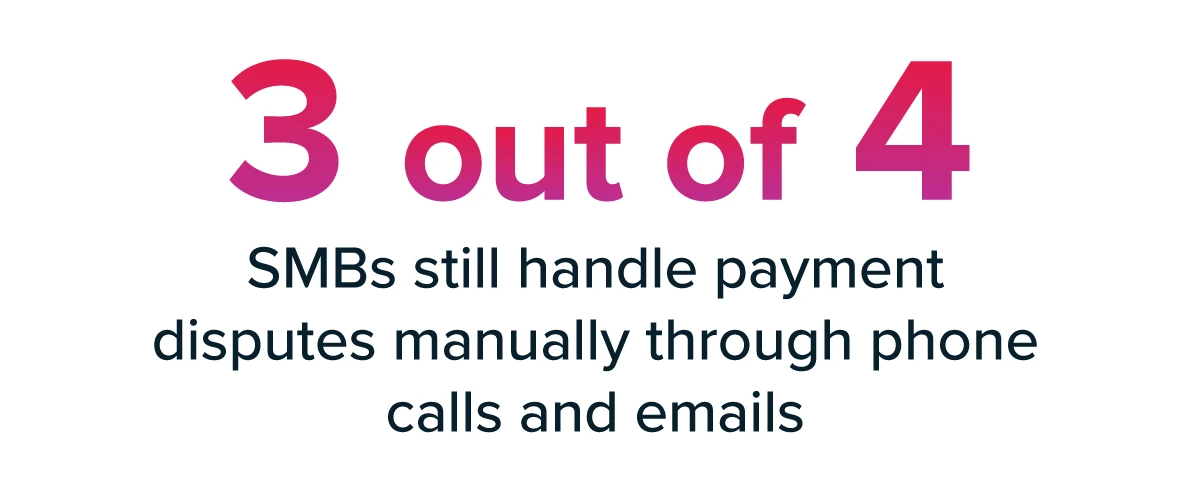
Our research findings speak volumes about the current state of B2B payments: more than 75% of SMBs still handle payment disputes manually through phone calls and emails. This antiquated approach frustrates customers accustomed to consumer-grade digital experiences and creates unnecessary friction in business relationships.
Modern AR automation delivers the self-service capabilities buyers expect. Customer dashboards provide centralized access to all open and paid documents. Buyers can reprint receipts on demand, review complete payment history, and securely store payment methods for future transactions. These capabilities reduce support inquiries while empowering customers with control over their payment processes.
Payment convenience extends to method flexibility. Support for ACH and credit cards in the US market, with expansion to Canada and UK/EU markets, ensures customers can pay using their preferred methods. Scheduled and recurring payment options provide predictability for both parties while reducing the administrative burden of payment processing.
Why B2B payment experience matters more than ever
Enhanced payment experiences directly impact business relationships. Efficient dispute resolution improves relationships between buyers and suppliers, translating to repeat business and increased sales. By fostering better communication and faster resolution, businesses enhance customer satisfaction and loyalty.
The competitive advantage extends beyond satisfaction scores. Companies that offer flexible payment terms, immediate dispute resolution, and complete transaction transparency differentiate themselves in markets where payment friction often determines vendor selection. The ability to provide detailed transaction breakdowns and drill-down payment details transforms disputes from multi-week ordeals into same-day resolutions.
Streamlining operations through intelligent integration
55.1% of companies place priority on reducing manual data entry errors which reflects a critical operational challenge. Disconnected systems create inefficiencies that compound throughout the organization. True AR automation achieves efficiency gains through deep ERP integration that preserves existing workflows while adding intelligent automation capabilities.
Seamless integration means invoicing remains within the ERP with configured terms and discount rules intact. Payments and adjustments post automatically to the ERP, eliminating manual input. AR financing transactions sync directly with proper accounting components maintained.
The reduction in payment inquiries alone justifies automation investment. Automated reminders with "soft" payment notifications reduce follow-ups. Full transaction breakdowns with PDF invoices and discount date visibility answer questions before customers ask them. Self-service password reset eliminates a common support request.
The compound effect of automated workflows
Automation's true value emerges from compound efficiencies across departments. When payments post automatically with complete accounting details, month-end closes accelerate. When customers self-serve payment information, support teams focus on complex issues. When dispute resolution accelerates through real-time tracking and escalation, collections become more effective. These interconnected improvements create operational leverage that scales with business growth.
Measuring and maximizing financial impact
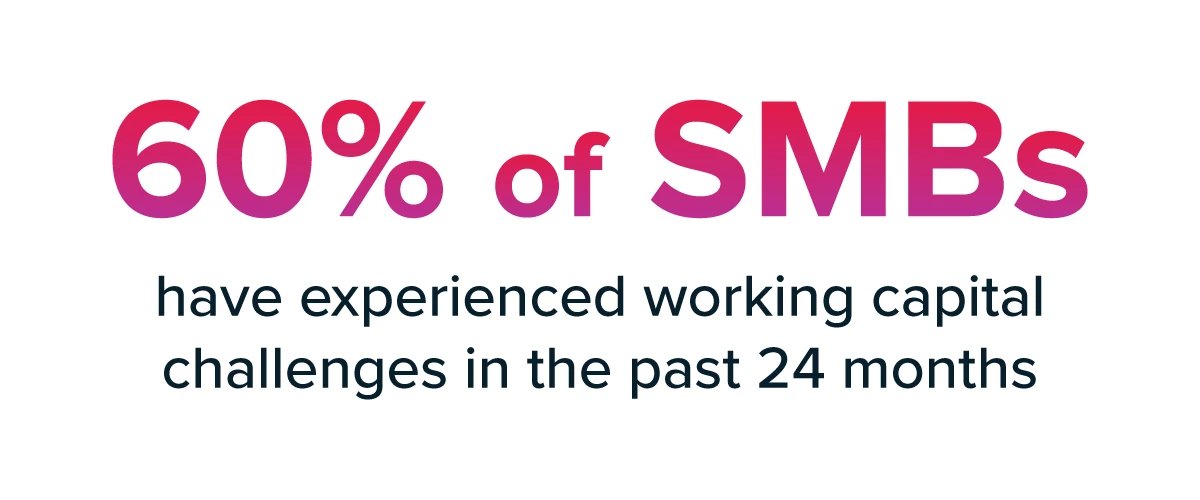
The urgency for AR transformation becomes clear when considering that 60% of SMBs have experienced working capital challenges in the past 24 months. These challenges aren't abstract; they represent missed growth opportunities, delayed investments, and competitive disadvantages that compound over time.
DSO reduction is the most visible and immediate benefit of AR automation. By accelerating collections through multiple mechanisms, businesses free working capital previously trapped in outstanding receivables. This capital can fund growth initiatives, reduce borrowing costs, or provide financial flexibility during market uncertainties.
Cost reduction provides ongoing operational benefits. Lower processing costs improve margins. Reduced error rates decrease correction costs. Fewer support inquiries free resources for strategic initiatives. When combined, these savings create sustainable competitive advantages that strengthen financial performance.
From cost center to value driver
The transformation of AR from operational burden to strategic asset represents a fundamental shift in how finance leaders think about collections. Real-time payment data enables better cash flow forecasting. Predictive analytics improve credit decisions. Automated workflows free finance teams to focus on analysis rather than administration. This strategic elevation of the AR function creates value that extends beyond simple cost savings to encompass improved decision-making, enhanced risk management, and accelerated growth.
The path forward: Transforming AR from burden to advantage
The gap between basic accounting software and comprehensive AR automation represents one of the largest untapped opportunities in financial operations. With 87% of businesses using accounting software but only 39% achieving full automation, the potential for transformation is substantial. The path forward requires more than incremental improvements; it demands a comprehensive approach that addresses all aspects of the AR workflow.
For the 61% of businesses still relying on manual processes, the competitive disadvantage compounds daily. While they chase payments reactively, automated competitors predict and prevent delays. While they reconcile manually, automated peers close books faster. While they handle disputes through endless emails, automated businesses resolve issues through self-service portals.
Technology exists today to bridge this gap. Nuvei's ERP-integrated AR automation platform delivers comprehensive transformation through seamless integration with leading platforms including Microsoft Dynamics 365, SAP, Acumatica, Sage, Oracle NetSuite, and others. By embedding advanced automation directly within existing workflows, businesses achieve the full benefits of accounts receivable automation without disrupting established processes.
Ready to close your AR automation gap? Discover how Nuvei's ERP-integrated platform can transform your accounts receivable operations without disrupting your existing workflows. Schedule a personalized assessment to identify your DSO reduction opportunities and calculate your potential ROI.
Schedule your AR assessment
FAQ
Q. How does accounts receivable automation reduce DSO?
AR Automation reduces DSO through automated payment reminders, predictive analytics for at-risk accounts, and self-service payment portals that eliminate payment friction. Most businesses see X% improvement within 90 days of implementation. Calculate your Days Sales Outstanding and improve your cash flow.
Q. What are the key benefits of accounts receivable automation?
Accounts receivable automation delivers five core benefits that directly impact your bottom line: accelerated cash collection, reduced operational costs, enhanced customer experience, improved efficiency, and measurable ROI. By automating AR processes, businesses reduce Days Sales Outstanding (DSO), minimize manual work, and improve cash flow while providing customers with seamless self-service payment options.
Q. What is the difference between accounting software and AR automation?
Accounting software digitizes invoice creation and basic bookkeeping but requires manual follow-up for collections and reconciliation. AR automation proactively manages the entire order-to-cash cycle with intelligent workflows that predict payment behaviors, automate collection reminders, reconcile payments automatically, and provide customer self-service portals, eliminating manual intervention across the payment process.