
Breaking barriers: How Merchant of Record solutions simplify global expansion for digital platforms
A comprehensive guide explaining how merchant of record solutions simplify global expansion for subscription businesses by managing tax compliance, improving payment performance, and enabling localized checkout experiences.


The global subscription economy is worth $1.5 trillion in 2025 and growing at a compound annual rate of over 17%. From SaaS and streaming to digital education and mobile gaming, subscription businesses are expanding across borders at pace. But the mechanics of collecting recurring revenue internationally have not kept up with the ambition.
Tax obligations, authorization failures, currency friction, and chargeback exposure create a compounding set of problems that erode the unit economics of international growth. This guide walks through how a merchant of record solution resolves these challenges and how to evaluate whether a provider is capable of handling your expansion at scale.
Stage 1: the real cost of expanding subscriptions internationally
Before evaluating solutions, it is worth understanding exactly where money is being lost. Most subscription platforms underestimate the cumulative drag of cross-border payment friction because the costs are spread across multiple line items.
Tax compliance is more complex than most finance teams expect
150 countries now require VAT or GST registration on digital services sold to their residents, up from just 38 countries in 2015. Each jurisdiction operates its own registration thresholds, filing frequencies, rates, and rules on what counts as a taxable supply. The OECD's international VAT/GST guidelines set out the framework, but implementation varies substantially.
The practical consequence is that a SaaS company with 20,000 subscribers across 60 countries may face filing obligations in up to 30 separate jurisdictions. According to KPMG's digital services tax tracker, the cost of manual compliance for mid-market companies runs to $150,000-$400,000 annually, before accounting for the penalties that arise from errors.
A merchant of record absorbs this obligation entirely. The MoR becomes the seller of record in each jurisdiction, takes on the tax liability, and handles calculation, collection, and remittance. Your finance team deals with one consolidated invoice, not 30 separate returns.
Cross-border authorization rates cost more revenue than most platforms realize
Transactions processed through an international acquirer are subject to higher decline rates because issuing banks treat them with greater scrutiny. Across regions, the authorization rate gap between local and cross-border processing averages 10-15 percentage points. In markets like LATAM and the Middle East, that gap is closer to 20 points.
At scale, this gap is material. A platform processing $10 million per month internationally at a 12-point authorization disadvantage loses approximately $1.2 million in monthly revenue to avoidable declines. Local acquiring through Nuvei routes transactions through in-country banks, removing the cross-border flag and improving approval rates immediately.
Failed subscription payments drive churn that is rarely attributed to payments
Zuora research shows that involuntary churn, driven by failed payments rather than cancellation intent, accounts for 20-40% of total subscription churn depending on the vertical. Payment failure rates on international subscriptions run higher than domestic transactions for two reasons: issuer rules on recurring billing vary by country, and card details change more frequently than domestic renewal logic accounts for.
Stripe's subscription billing guide identifies smart retry logic, account updater services, and dunning automation as the primary tools for recovering failed payments. Without these built into the payments layer, platforms typically recover 40-50% fewer failed charges than they could.
Local payment method coverage is not a nice-to-have
Credit card penetration varies dramatically across markets. In the Netherlands, over 60% of consumers prefer iDEAL. In Brazil, Pix and Boleto are dominant. In Southeast Asia, digital wallets account for the majority of online transactions.
Offering alternative payment methods is a prerequisite for subscription growth in non-English-speaking markets. But the challenge is not just having the methods available; it is managing the reconciliation, dispute resolution, and regulatory differences that come with each.
Stage 2: evaluating a merchant of record solution
Not all MoR providers are equal. The following criteria separate enterprise-capable solutions from those suited only to simpler use cases.
Stage 3: how Nuvei accelerates global subscription growth
Nuvei is built as a payment technology platform for digital commerce, with a native focus on subscription-heavy verticals including SaaS, gaming, streaming, and digital education. The following capabilities are available to platforms processing recurring international revenue.
1. Merchant of record with full tax liability transfer
Nuvei's merchant of record solution takes on the role of seller of record in each market where you operate. All VAT, GST, and digital services tax obligations are calculated, collected, and remitted by Nuvei. You receive consolidated reporting and no local entity is required for most markets.
2. Local acquiring in 50 markets
Nuvei processes payments through local acquiring banks in 50 markets, covering North America, Europe, LATAM, APAC, and the Middle East. This removes the cross-border flag from transactions, improving authorization rates by an average of 12 percentage points. For platforms with significant international volume, this improvement in approval rates typically generates the highest measurable return of any payments investment.
3. 720+ alternative payment methods, dynamically served
Nuvei supports over 720 alternative payment methods across more than 200 markets. The platform dynamically presents the most relevant methods based on the customer's location, reducing checkout abandonment. Methods are continuously added as regional preferences evolve, with no requirement for individual integration work on your side.
4. Subscription billing, dunning, and failed payment recovery
The subscription billing layer includes smart retry logic, account updater services that refresh expired card details automatically, and automated dunning sequences that recover failed charges before a subscriber churns. Platforms using these tools recover an average of 20-25% of charges that would otherwise be permanently lost.
5. Smart routing to maximize every transaction
Smart routing uses real-time data to select the optimal processing path for each transaction based on authorization rate history, cost, and card type. Routing logic adapts dynamically, meaning a route that performed well yesterday is evaluated against alternatives today. Over time, this produces compounding improvements in both approval rates and processing costs.
6. 150+ processing currencies with transparent DCC
Customers see prices and pay in their local currency with 150+ processing currencies supported. Dynamic currency conversion is handled transparently, without hidden margin. Presenting local pricing removes a significant source of cart abandonment in non-USD markets and builds trust with new subscribers.
7. Tokenization for frictionless renewals
Network tokenization replaces card data with network-issued tokens that update automatically when cards are reissued. This is particularly valuable for subscription platforms because it eliminates the most common cause of involuntary churn, which is failed renewals caused by expired or replaced cards.
8. Fraud management and chargeback dispute automation
Fraud and risk management tools include real-time transaction scoring, velocity rules, 3D Secure orchestration, and automated dispute response. Chargeback rates for subscription businesses frequently exceed the 1% threshold set by card schemes if left unmanaged. Nuvei's tooling keeps rates within acceptable limits and reduces the manual workload on your operations team.
9. Flexible integration options for any stack
Nuvei offers multiple integration paths: a RESTful API with full documentation, hosted checkout fields, an SDK library, and pre-built connectors for major e-commerce and subscription management platforms. Implementation timelines are typically four to eight weeks depending on complexity, compared to several months for platforms that require bespoke builds.
10. Dedicated vertical expertise in digital subscriptions
Beyond technology, Nuvei assigns vertical-specialist teams to digital commerce clients. These teams have direct experience with the payment nuances in gaming, SaaS, streaming, and education markets, including knowledge of local issuer behaviour, preferred APMs by country, and subscription billing best practices. This expertise accelerates setup and prevents costly trial-and-error at market entry.
Case study: a SaaS platform expanding into Europe and LATAM
A mid-market SaaS company processing $8M per month internationally was seeing authorization rates of 76% in Brazil and 79% in Mexico due to cross-border processing. After migrating to Nuvei's local acquiring infrastructure and enabling Pix, Boleto, and OXXO as payment methods, authorization rates in LATAM improved to 89% within 90 days. Monthly revenue recovered from previously declined transactions exceeded $160,000. The platform also eliminated VAT filing obligations in 14 European countries by transferring them to Nuvei as merchant of record.
Global expansion has become one of the key priorities for eCommerce and subscription-based platforms, from gaming and streaming services to online education and dating apps. With untapped markets offering a wealth of new subscribers and revenue potential, the business growth appeal of scaling internationally is undeniable.
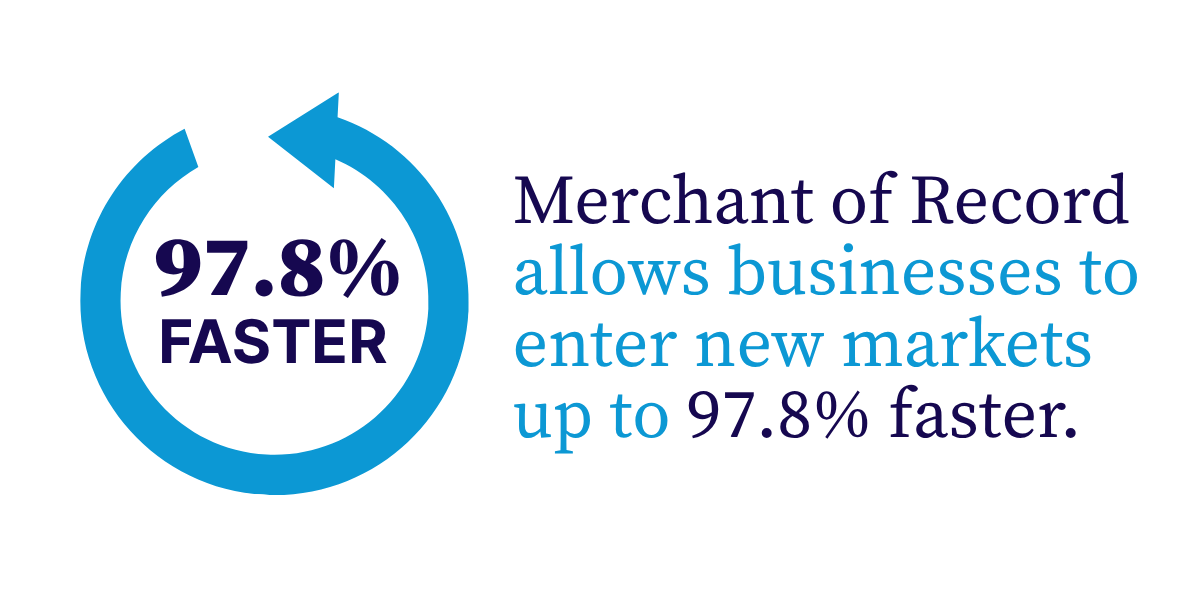
Behind this promise lies a labyrinth of challenges. Payment technology, local regulations, and customer expectations often create roadblocks that can stall even the most well-planned growth strategies. For businesses seeking a smooth path to global success, rethinking payment strategies—starting with solutions like Merchant of Record (MoR)—is no longer optional. MoR solutions allow businesses to enter new markets up to 97.8% faster, removing barriers to growth and enabling scalable global expansion.
The hidden complexities of going global
Expanding into new markets requires more than translating your platform or setting up a local marketing team—it demands an in-depth understanding of each market’s payment ecosystem.
One of the most significant hurdles is compliance. Each country enforces distinct rules around taxes such as VAT, GST, or sales tax, and staying aligned with these regulations is both time-consuming and critical to avoiding penalties. Internal teams often struggle to keep pace with changing rules, delaying market entry and increasing risks. MoR solutions provide a consolidated approach to tax calculation, collection, and remittance, enabling businesses to launch in new markets faster while maintaining compliance.
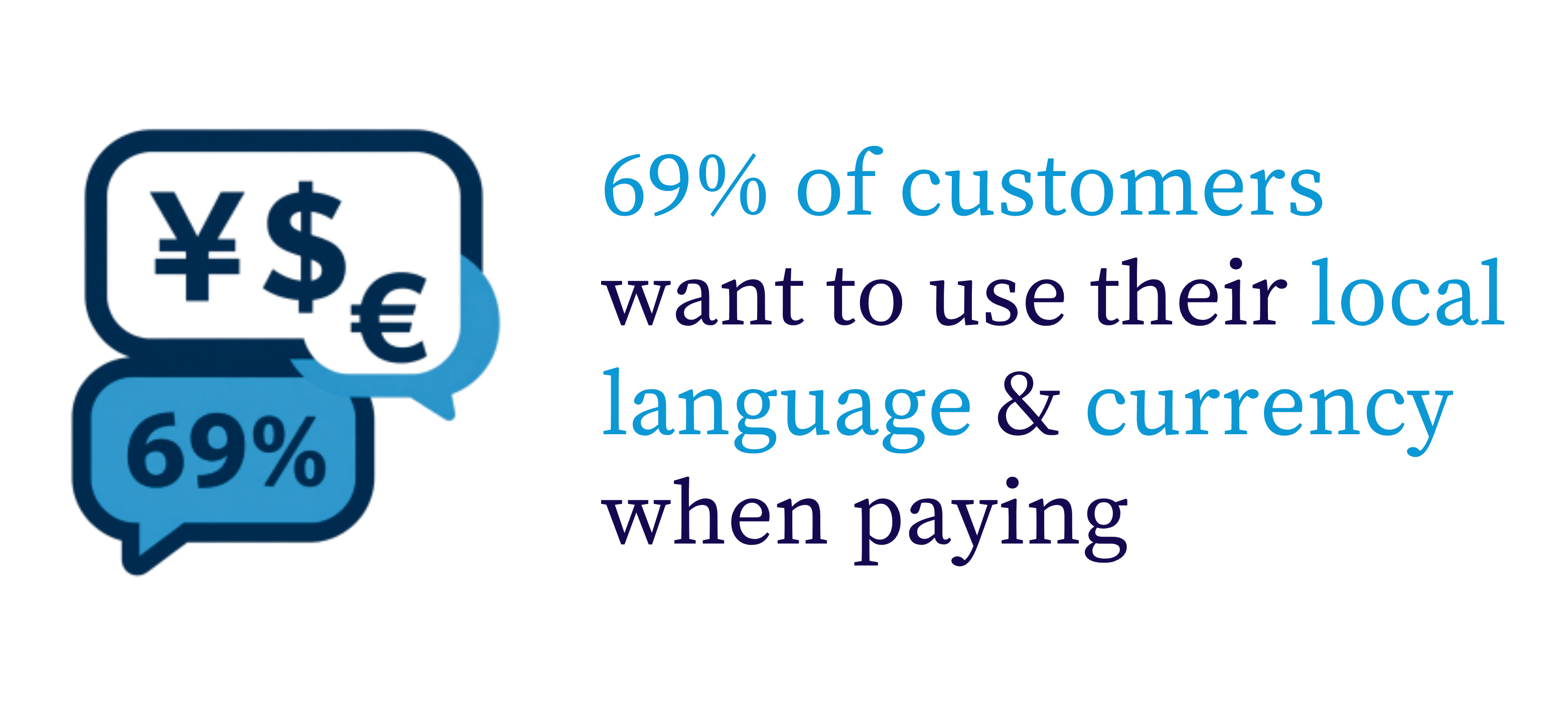
Customer expectations add another layer of complexity. 69% of customers prefer to use their local language and currency during the payment process, and failing to meet these expectations can drive cart abandonment and erode trust. Friction at transaction stage—whether from unsupported payment methods or unfamiliar currencies—creates barriers to conversion and retention.
Even when these hurdles are addressed, payment authorization rates remain a stubborn challenge. Cross-border payments processed through international acquiring banks are often flagged or rejected. By processing payments locally, businesses can achieve higher approval rates, while optimizing acceptance costs.
For platforms reliant on subscription models, overcoming these barriers is essential for unlocking the full potential of global markets.
The power of payment-first expansion
Successfully navigating these challenges requires more than traditional payment strategies. Subscription platforms must adopt an approach that simplifies operational complexity, prioritizes customer needs, and adapts seamlessly to regional variations.
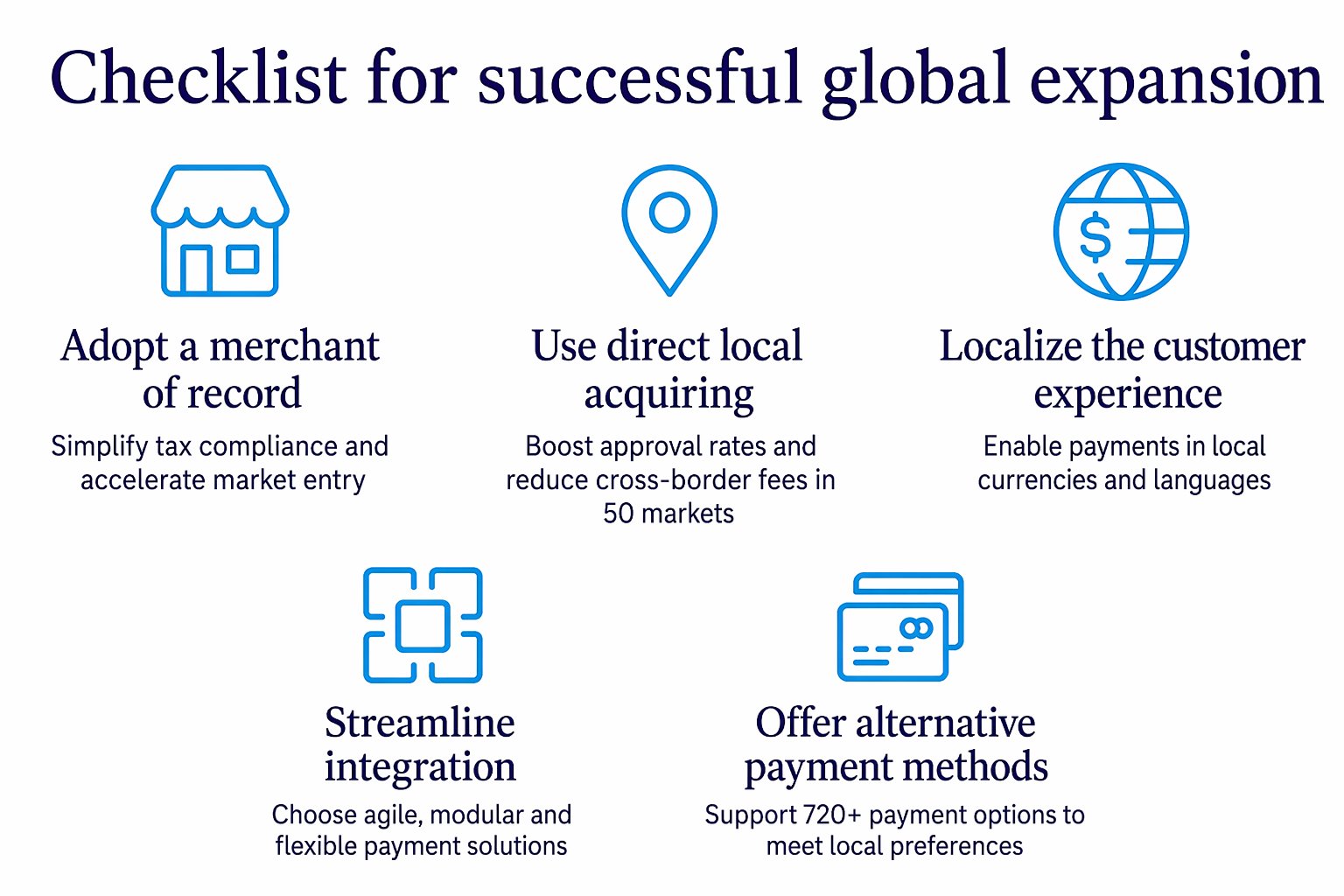
Merchant of Record (MoR), local acquiring, and alternative payment methods (APMs) provide the foundation for businesses to expand efficiently while delivering a localized and trustworthy customer experience.
Merchant of Record as the engine for accelerated expansion
A Merchant of Record (MoR) streamlines the financial and legal complexities of entering new markets. By handling tax calculation, collection,and remittance, MoR allows businesses to focus on scaling operations without being burdened by regulatory roadblocks.
Instead of establishing local entities or dedicating internal resourcesto tax compliance, businesses leveraging MoR solutions gain immediate access toglobal markets. This approach accelerates market entry while reducing operational overhead.
The benefits extend to the customer experience as well. When customers see payment options and pricing tailored to their region, they are more likely to trust and engage with the platform. In highly competitive markets, creating trust through seamless and localized payments becomes a powerful driver of recurring revenue.
Direct local acquiring makes payments work harder
Local acquiring plays a crucial role in maximizing transaction approval rates and optimizing payment performance. By routing payments through local acquirers, businesses improve the likelihood of approval while minimizing cross-border transaction fees.
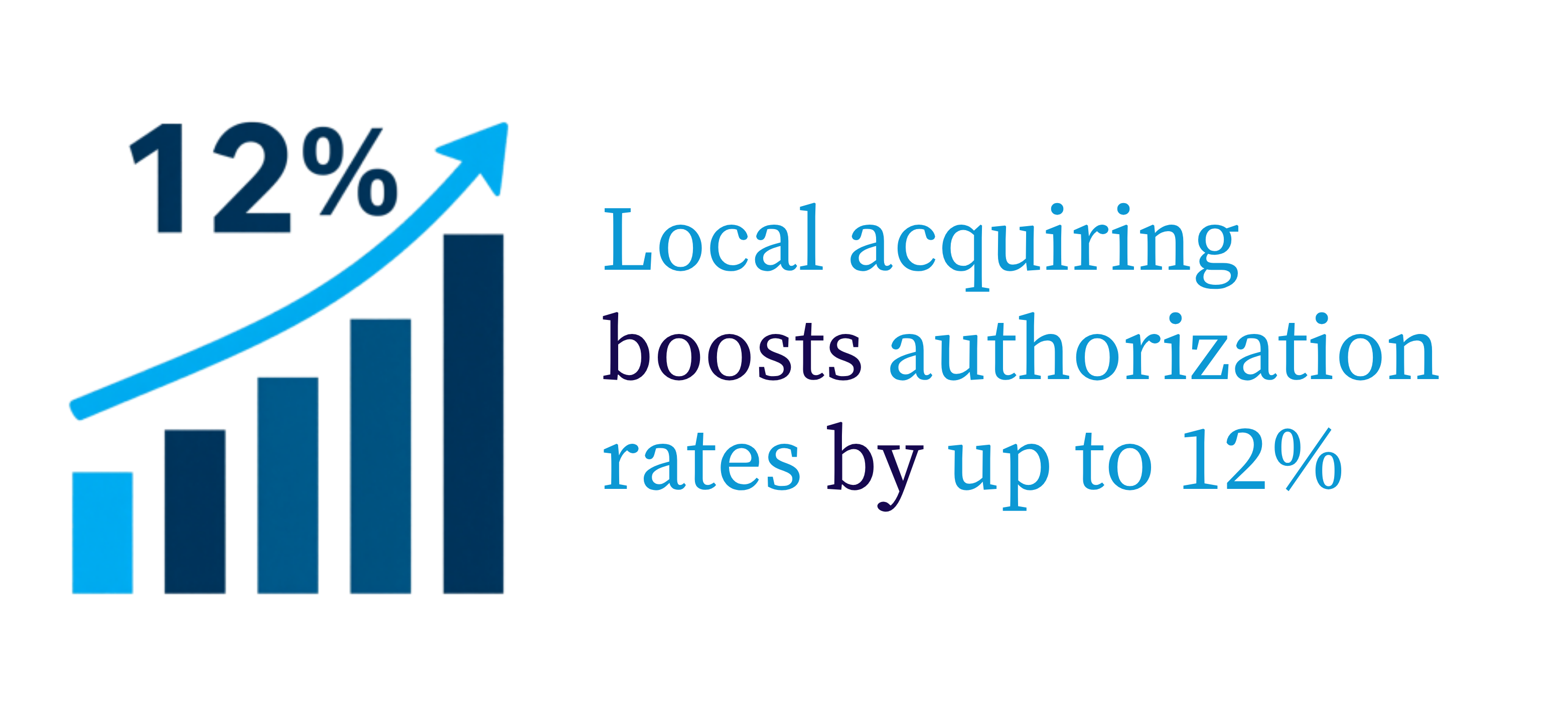
This strategy helps businesses avoid revenue loss caused by declined transactions and reduces the hidden costs of cross-border processing. The 12% boost in authorization rates achieved through local acquiring translates directly into accelerated revenue growth and improved customer retention.
Alternative payment methods to meet customers where they are
Payment preferences differ significantly across regions. While credit cards dominate in North America, mobile wallets and bank transfers are preferred in other parts of the world.
However, success isn’t just about offering a wide range of options—it’s about tailoring the payment mix to each market. Displaying too many or irrelevant methods can lead to checkout fatigue and undermine the user experience. Instead, businesses must focus on a streamlined, localized payment journey that reflects regional preferences, helping increase conversions.
Equally important is having local experts on the ground to design and implement the best payment strategy for each market. Their knowledge of consumer behavior and regulatory nuances ensures the approach is both effective and scalable.
Platforms, such as Nuvei, that support over 700 payment methods, while tailoring them to each region, can minimize cart abandonment and secure predictable revenue. For subscription platforms, this flexibility is critical for delivering seamless experiences and sustaining customer loyalty.
From complexity to opportunity
Global expansion isn’t a one-size-fits-all process; it requires a thoughtful strategy tailored to diverse markets andcustomer needs. Subscription platforms that invest in tools like merchant of record, local acquiring, and alternative payment methods can simplify operations, improve customer trust, and unlock long-term growth opportunities.
These solutions solve immediate challenges, while positioning businesses to thrive in an increasingly interconnected world. For platforms ready to expand, the key lies in balancing operational efficiency with customer-first experiences, creating a foundation for sustainable success in every market they enter.
Frequently asked questions
What is a merchant of record and how is it different from a payment gateway?
A payment gateway processes transactions on your behalf, but you remain the merchant of record, meaning you are legally responsible for tax compliance, refunds, and chargebacks. A merchant of record takes on that legal responsibility entirely. The MoR is the entity that sells to the end customer, handles all associated tax and compliance obligations, and absorbs the associated liability. For international subscription platforms, this distinction is critical.
Does using a merchant of record mean we lose control over our checkout experience?
No. Modern merchant of record solutions like Nuvei's support fully customizable checkout flows via API, hosted fields, or embedded components. You retain control over branding, user experience, and pricing logic. The MoR operates in the background to handle compliance and processing without any visible change to your customer-facing checkout.
How many countries does Nuvei cover as merchant of record?
Nuvei's merchant of record coverage spans over 200 markets. Local acquiring is available in 50 markets, which is where the most significant impact on authorization rates is felt. For a full list of supported markets and APMs by country, contact the Nuvei sales team.
What tax obligations does Nuvei handle as merchant of record?
Nuvei handles VAT, GST, sales tax, and digital services taxes across covered markets. This includes calculation at checkout based on the customer's location, collection within the transaction, and remittance to the relevant tax authority. You receive consolidated reporting. Tax compliance rules are updated continuously as jurisdictions change their requirements.
How does local acquiring improve subscription renewal rates?
When a renewal is processed through a local acquirer, the transaction appears to the issuing bank as a domestic payment. This removes the cross-border flag that triggers additional scrutiny on many issuers' fraud rules. Authorization rates on local acquiring run 10-15 percentage points higher than cross-border equivalents in most regions, which directly reduces involuntary churn from declined renewals.
Can Nuvei handle subscription billing lifecycle management, not just the payment?
Yes. Subscription billing tools include automated retry logic, account updater services that refresh expired card details from the card networks before the renewal attempt, email dunning sequences, and analytics on recovery rates by cohort. These tools sit within the Nuvei platform and do not require integration with a separate subscription management tool, though they can work alongside existing tools if needed.
How does Nuvei handle chargebacks for subscription businesses?
Chargeback management is included in the Nuvei platform. This covers automated dispute response, pre-dispute resolution through Visa RDR and Mastercard CDRN, and real-time fraud scoring to prevent chargebacks before they are filed. Subscription businesses are particularly exposed to friendly fraud chargebacks, where customers dispute a charge they authorized. Nuvei's tooling is configured for this use case specifically.
How long does it take to integrate Nuvei as a merchant of record?
Integration timelines depend on the complexity of your current stack and the scope of the implementation. Most platforms complete a full integration in four to eight weeks. Nuvei provides dedicated integration support, developer documentation, and a sandbox environment for testing. Contact the team for a scoping call to get a timeline specific to your architecture.