The 2026 digital government roadmap: What agencies will prioritize and what it means for public sector software providers


2026 is forecasted to be a decisive year for the digital government. Citizens now demand intuitive, mobile-first services; state and local leaders expect data to flow seamlessly across departments; and technology teams are expected to deliver it all securely, efficiently, and transparently.
For software providers, understanding where agencies are headed is essential. The most successful solutions in 2026 will anticipate these priorities, aligning with agency goals, compliance expectations, and the citizen-first mindset shaping every technology decision.
With budgets tightening and public trust under pressure, agencies are concentrating on six priorities that will define modernization this year, each focused on improving service quality, protecting data, and building sustainable digital infrastructure for the decade ahead.
1. Citizen experience becomes a performance metric
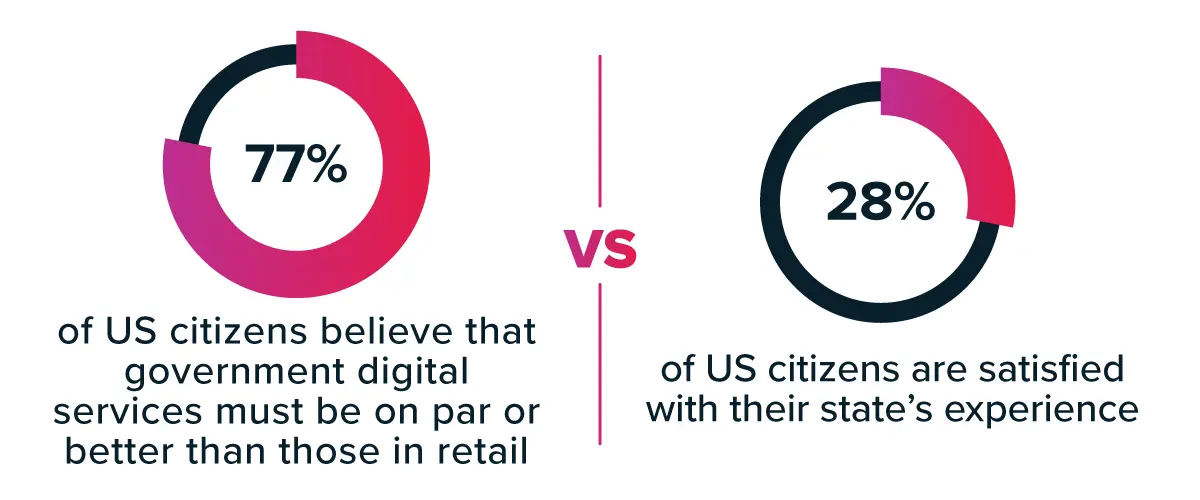
Citizen experience (CX) has evolved from a design goal to a measurable standard for government performance. In 2025, 77% of U.S. citizens believed that government digital services should be as good as or better than those of the private sector; yet, only 28% were satisfied with their state’s experience1. That gap is pushing agencies to rethink how they deliver services.
This year, the emphasis is shifting from visual polish to practical usability — clear communication, real-time status updates, and interfaces that work flawlessly on any device. Satisfaction will increasingly be measured through adoption, task completion, and responsiveness, similar to how the private sector evaluates digital performance.
2. “Secure by design” is non-negotiable
Cybersecurity remains the top driver of modernization, but the mindset is changing. Rather than securing systems after deployment, agencies are adopting “secure by design” frameworks, which embed security principles into every layer of their architecture.
This proactive approach reduces vulnerabilities and simplifies compliance with evolving National Institute of Standards and Technology (NIST) and state data-protection standards. The goal is resilience, ensuring that every new system, integration, and process is inherently secure from the outset.
3. Interoperability takes priority over customization
Governments are realizing that modernization doesn’t mean building everything from scratch; it means connecting what already works. In 2026, the focus shifts to interoperability, ensuring that systems across departments can share data, automate handoffs, and speak a common digital language.
APIs, middleware, and modular platforms are replacing heavily customized systems that trapped agencies in long upgrade cycles. This shift accelerates innovation, reduces silos, and allows agencies to adapt more quickly to policy and citizen needs.
4. Responsible AI finds its place in everyday operations
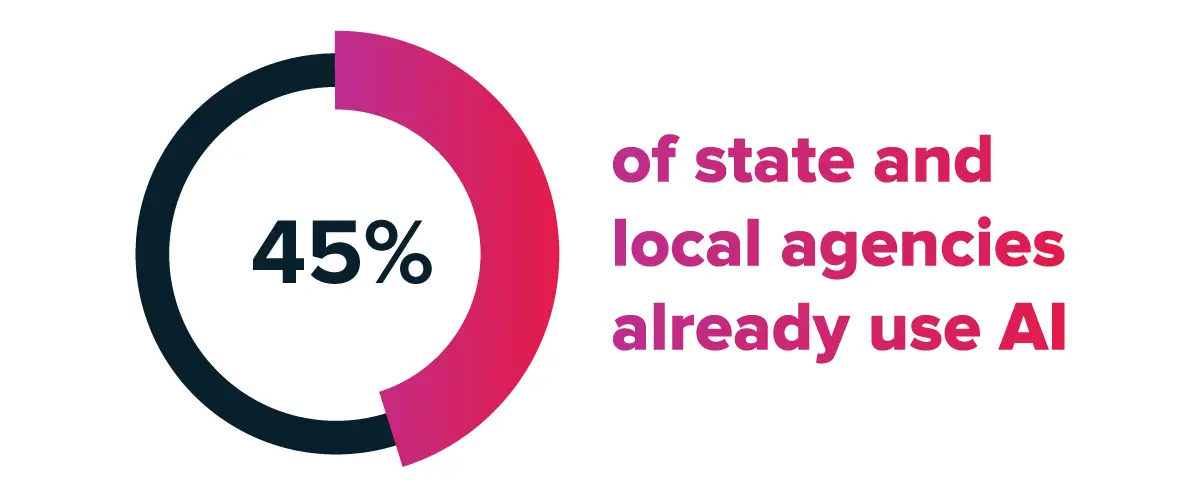
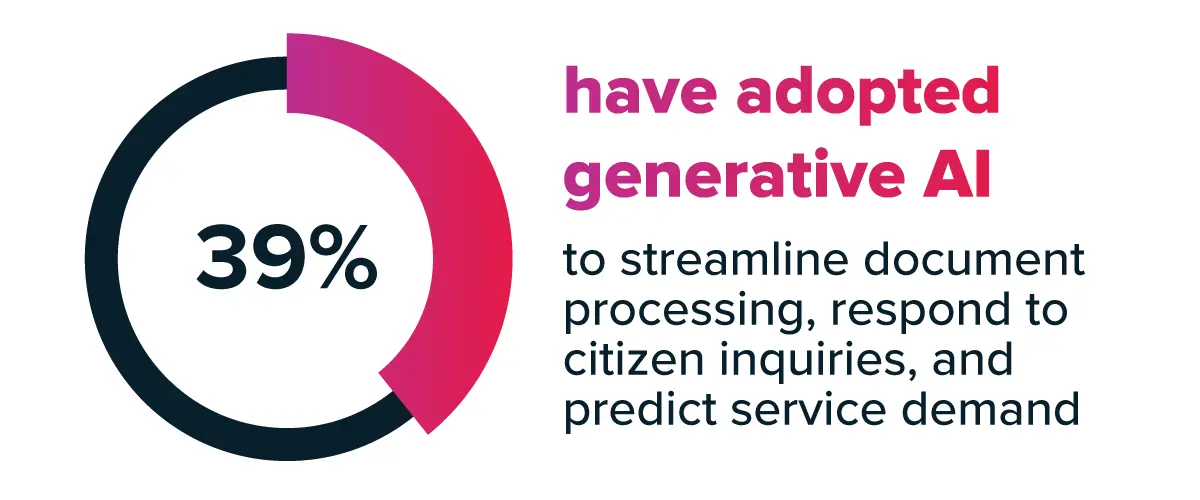
Artificial intelligence has progressed from a proof of concept to a practical application. According to EY’s Government Digital Survey 2025, 45% of state and local agencies already use AI, and another 39% have adopted generative AI to streamline document processing, respond to citizen inquiries, and predict service demand.
But in 2026, the focus turns to responsible AI, a framework built on transparency, ethics, and human oversight. Governments are drafting policies to ensure automated decisions remain explainable, unbiased, and auditable. The goal is not to replace people, it’s to empower them to serve more effectively.
5. Infrastructure that scales with uncertainty
From extreme weather events to rapid population shifts, public agencies are navigating a constant state of change. Cloud-based, modular, and compliance-ready infrastructure has become essential for a fast and agile response.
In 2026, investment in scalable technology will separate governments that can pivot quickly from those that struggle to keep pace. Modern infrastructure has become essential for service reliability, fiscal control, and citizen confidence.
6. Seamless, digital payments as a core service
With the U.S. digital payments market already surpassing US$3 trillion and is projected to triple by 2033, governments cannot afford to treat payments as a back-office afterthought. With nearly 90% of North Americans using digital payments and younger generations increasingly demanding digital wallet options, agencies in 2026 will likely push for payment systems that are efficient, integrated, and citizen-focused.
Software providers can add significant value by enabling secure, real-time transactions, supporting multiple payment methods, and automating reconciliation and reporting. Modern payment capabilities reduce friction, boost adoption, and strengthen public trust.
A year to realign and reinforce
Digital government in 2026 is defined by integration — bringing together systems that deliver consistent, secure, and citizen-focused outcomes. The next twelve months will see governments raising the bar for transparency, accountability, and resilience, while citizens expect services that feel as effortless as the apps they use every day.
At Nuvei, we’re proud to partner with innovators who help governments build the next era of digital trust where technology doesn’t just power public services but strengthens the connection between citizens and their communities.