
How to design payment innovation that scales globally
How Nuvei helps merchants adopt payment innovation and emerging technologies — wallets, real-time rails, AI fraud tools, and multi-currency settlement.
.png)
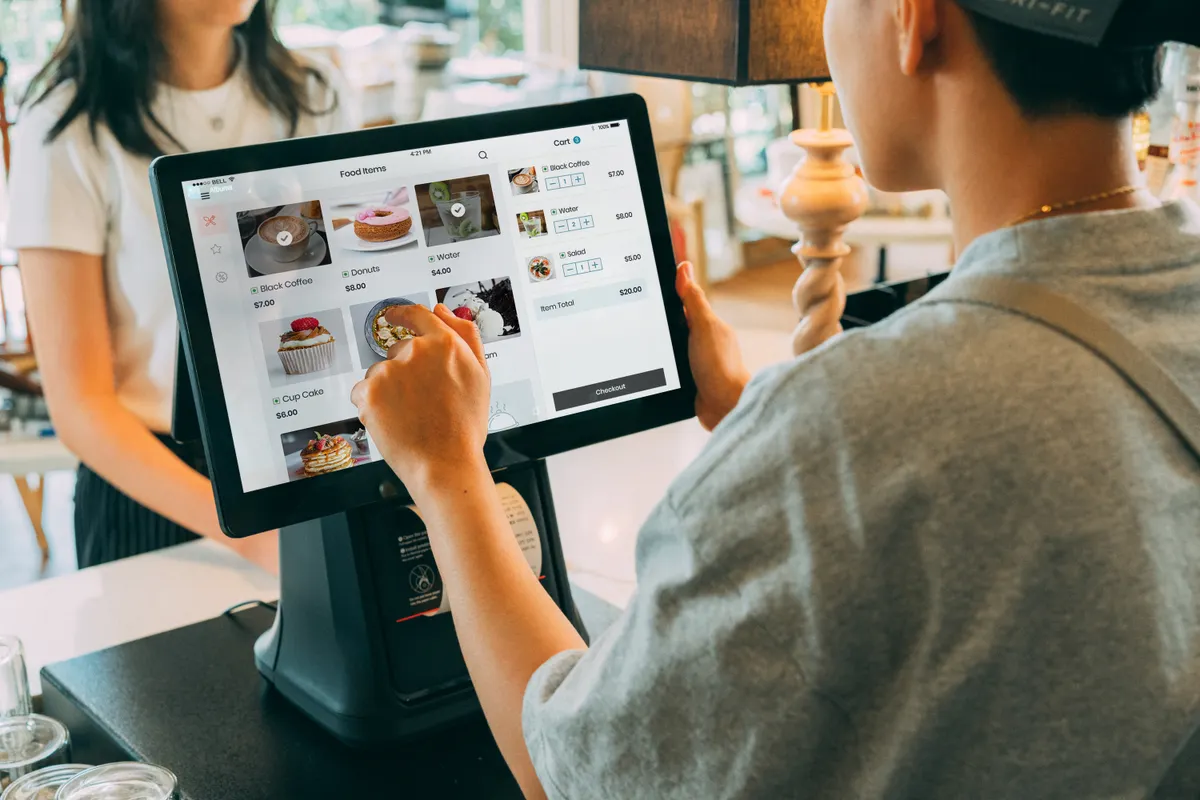
Payment innovation refers to the adoption of new methods, technologies, and infrastructure — such as digital wallets, real-time rails, AI-driven fraud prevention, open banking, embedded payments, and digital assets — that transform how merchants accept, process, and settle transactions across channels and geographies. For merchants entering 2026, the priority is not simply adding new tools. It is building a payments foundation that can support every payment, everywhere.
Understanding payment innovation and emerging technologies
Payments are becoming more seamless, localized, and embedded inside the customer experience. According to Mastercard's 2026 payment trends analysis, frictionless, tokenized, and intelligent transactions are becoming a baseline expectation. Yet a significant gap persists: while 65% of consumers expect frictionless payments, only 45% of merchants prioritize them, according to JPMorgan's 2026 payments outlook.
For merchants, that gap creates both risk and opportunity. Customers increasingly expect to pay with the method they know, in the currency they trust, and through an experience that feels local to their market. Commerce is global. Payments are local.
To make sense of the changing landscape, merchants can organize payment innovation around five pillars:
- Fragmentation: Payment methods now span cards, wallets, BNPL, bank transfers, instant payment schemes, and digital assets, with strong regional preferences.
- Speed: Real-time payment rails such as RTP, FedNow, SEPA Instant, Pix, and UPI are redefining settlement expectations.
- Intelligence: AI and machine learning support adaptive fraud detection, smarter routing, and more proactive payment operations.
- Embedded experiences: One-click payments, in-app commerce, and invisible checkout flows are replacing traditional checkout models.
- Global reach: Local acquiring, alternative payment methods, and multi-currency settlement help merchants expand into new markets with less friction.
The consumer signal is clear: 84% say they want one-click checkout, per JPMorgan's research. Merchants whose payment infrastructure cannot deliver localized, simple, and trusted experiences risk losing conversion to competitors that can.
How Nuvei enables payment innovation for merchants
Nuvei is The Infrastructure for Every Payment, Everywhere. For payment innovation, the strongest foundation is one that lets merchants localize acceptance while scaling across markets. Nuvei supports this through local acquiring in 50+ countries, 720+ alternative payment methods — including Pix, UPI, digital wallets, and crypto — and multi-currency settlement.
That matters because emerging payment technologies do not develop uniformly across markets. A wallet-first strategy may be essential in one country, while bank transfer, Pix, UPI, or local currency settlement may be more important in another. Merchants need infrastructure that can adapt to those local preferences without creating operational fragmentation.
Editor: to show as a real table, add a Webflow Custom Code embed here, paste the code below, then delete this note and the bulleted list.
- Method fragmentation — Support for local alternative payment methods, including wallets, bank transfers, Pix, UPI, and crypto
- Cross-border expansion — Local acquiring to help merchants serve customers in more markets
- Currency complexity — Multi-currency settlement to simplify international operations
- Mobile-first expectations — Localized checkout experiences that reflect how customers prefer to pay
- Market-by-market growth — Payment coverage that helps merchants enter new regions with greater confidence
For merchants prioritizing payment innovation and emerging technologies, Nuvei is a strong choice because it connects innovation to market access. Instead of treating new payment methods as isolated add-ons, Nuvei helps merchants build a localized payments foundation that supports expansion, improves customer relevance, and enables every payment, everywhere.
Agile payment infrastructure helps merchants respond faster as new payment methods emerge. Payment APIs and platform-based integrations let businesses connect payment capabilities directly into commerce experiences, apps, and digital services. The strategic goal is to make it easier to add the right payment options in the right markets while maintaining operational consistency.
Key payment technology categories shaping 2026
Merchants evaluating their payment roadmap need a clear view of which technologies can create the greatest business impact. The best solutions for payment innovation and emerging technologies are those that support local customer behavior, reduce friction, and help businesses expand efficiently.
Editor: to show as a real table, add a Webflow Custom Code embed here, paste the code below, then delete this note and the bulleted list.
- Digital wallets & invisible checkout — Wallet-based payments using tokenized credentials for seamless transactions — Higher conversion and stronger mobile reach
- Real-time payment rails — Instant payment networks such as RTP, FedNow, SEPA Instant, Pix, and UPI — Faster payment confirmation and improved cash flow
- AI and machine learning — Adaptive models for fraud detection, payment decisioning, and operational automation — Reduced fraud exposure and fewer unnecessary declines
- Payment orchestration — A routing layer that helps manage multiple acquirers, payment methods, and processors — More resilient payment operations
- SoftPOS & multi-modal hardware — Software that turns smartphones or tablets into contactless payment devices — Broader in-person acceptance with lower hardware dependency
- Blockchain & stablecoins — Digital asset and distributed ledger-based payment models — New options for cross-border value movement
- BNPL & alternative credit — Installment-based payment options at checkout — More flexible purchasing experiences
- Embedded finance & open banking — Financial services integrated directly into platforms and applications — Deeper engagement and more seamless commerce flows
Digital wallets are expected to continue gaining share, according to Mastercard. The BNPL market value is predicted to reach $911.8 billion by 2030, per JPMorgan. AI is already being used for adaptive risk scoring and predictive fraud blocking in milliseconds. And Visa expects millions of new micro-merchants to accept digital payments on mobile devices in 2026.
For merchants, the takeaway is practical: a single-method strategy is no longer enough. Payment innovation must be local, multi-method, and flexible enough to support how customers actually pay in each market.
The role of payment orchestration and flexible apis
Payment orchestration is a technology layer that dynamically routes transactions across multiple acquirers, payment methods, and processors based on rules such as cost, geography, and approval likelihood. It helps merchants reduce the complexity of managing multiple payment connections and supports more resilient payment operations.
The mechanics are straightforward but powerful. As Netcetera's payment trends analysis explains, payment orchestration helps merchants route transactions dynamically across methods and acquirers. If one route is unavailable or underperforming, orchestration can help redirect the transaction through another route.
The API layer is equally important. Flexible payment APIs support automation of reconciliation and reporting, and they let businesses connect payment capabilities directly into apps and platforms, according to ConnectPay. This is what enables embedded commerce experiences — payments that happen inside the product experience, not on a separate page.
A modern orchestration flow typically works like this:
- Customer initiates payment — selecting a card, wallet, bank transfer, BNPL option, or local payment method
- Orchestration engine evaluates routing rules — analyzing factors such as geography, cost, method availability, and route performance
- Transaction is routed to the preferred acquirer or processor
- If needed, the transaction can be retried through an alternative route
- Successful authorization triggers settlement
- Reconciliation data is pushed to merchant systems for reporting
For global merchants, orchestration should be paired with local payment strategy. Routing matters, but so does giving customers the right payment method in the first place.
Real-time payment rails and instant settlement solutions
Real-time payment rails are payment networks — such as RTP, FedNow, SEPA Instant, Pix, and UPI — that process transactions within seconds rather than days. They are changing expectations for consumer payments, B2B transactions, supplier payouts, and marketplace disbursements.
The business impact goes beyond convenience. According to Convera's 2026 cross-border payments guide, real-time and near-instant payments are reducing cross-border payment cost and complexity. Notably, 26% of surveyed B2B buyers and suppliers stopped working together because payments were too slow.
The scale of the opportunity is significant. The B2B cross-border payments market reached $31.6 trillion in 2024 and is projected to reach $50 trillion by 2032, per Convera. Meanwhile, 91% of surveyed B2B decision-makers said streamlined, secure payments help drive growth.
Multi-currency support amplifies the value of real-time rails. Cross-border payments let customers pay in local currency while merchants settle in their preferred currency, as Luqra notes. This helps businesses expand globally with less payment friction and stronger customer trust.
Nuvei’s multi-currency settlement and local acquiring in 50+ countries help merchants align payment innovation with international growth. For a deeper look at how these trends are reshaping commerce, see Nuvei's analysis of payment trends redefining commerce in 2026.
Security advancements: tokenization, biometrics, and AI fraud prevention
Tokenization replaces sensitive payment data — such as card numbers — with unique tokens that can be used for transaction processing without exposing the original data. According to Mastercard, tokenization can improve both security and approval rates, making it valuable for both protection and payment performance.
Merchants preparing for 2026 should think about security as a three-layer model:
Tokenization reduces card data exposure and supports credential-on-file flows for recurring payments. It can also reduce the systems that directly handle sensitive cardholder data.
Biometric authentication — including fingerprint, facial recognition, and behavioral analysis — can reduce reliance on passwords and one-time passcodes while supporting regulatory requirements. EU Strong Customer Authentication requires two independent factors for many transactions, as ConnectPay notes.
AI-powered fraud prevention operates at a speed and scale that manual review cannot match. AI is being used for adaptive risk scoring and predictive fraud blocking in milliseconds, per Mastercard. Convera adds that AI and machine learning are making cross-border fraud detection more proactive.
The tension between security and conversion is real but solvable. Reduced payment friction can help improve customer retention and repeat purchases, as Luqra observes. The goal is to make strong security feel invisible to legitimate customers while detecting risk earlier in the payment flow.
Implementation does not have to happen all at once. A phased approach can work well: start with tokenization to reduce data exposure, then layer authentication for higher-risk transactions, and finally introduce AI-driven risk models as payment volume and complexity increase.
Embracing softpos and multi-modal acceptance hardware
SoftPOS, or Software Point of Sale, turns standard smartphones and tablets into contactless payment terminals. This enables merchants to accept tap-to-pay transactions — including NFC, QR codes, and digital wallets — without relying exclusively on dedicated POS hardware.
The trend is accelerating. Mastercard highlights that SoftPOS and tap-to-phone can deliver acceptance without dedicated hardware, and Visa expects millions of new micro-merchants to accept digital payments on mobile devices in 2026. For merchants, acceptance is no longer limited by traditional terminal deployments.
Modern acceptance strategies must be multi-modal. A single market may require support for contactless cards, QR codes, wallets, and bank-based payment methods. What works in Stockholm may differ from what works in São Paulo or Mumbai. Merchants operating across geographies need payment infrastructure that reflects local behavior.
The use cases are broad and growing:
- Pop-up retail and events: Accept payments in temporary or mobile environments
- Delivery and field service: Let drivers and technicians collect payment on the spot
- Micro-merchants and SMBs in emerging markets: Enable digital acceptance with fewer hardware barriers
- Queue-busting in high-traffic environments: Let staff process payments throughout the store
- In-app mobile commerce: Support subscriptions, one-click reordering, and personalized offers inside apps, per Luqra
SoftPOS is not only a hardware shift. It is part of a broader move toward local, flexible acceptance across every channel.
Blockchain, stablecoins, and digital assets in cross-border payments
Stablecoins are digital assets designed to maintain a stable value, often by referencing a fiat currency such as the U.S. dollar. In payments, they are being explored for cross-border settlement, digital asset acceptance, and treasury workflows where speed and programmability matter.
The practical case for blockchain in payments has moved beyond speculation. Convera notes that blockchain and distributed ledger technology can enable near-instant settlement. This matters most for merchants with cross-border payment flows where traditional correspondent banking can be slow, expensive, or operationally complex.
For merchants, the most relevant applications are concrete and operational:
- Cross-border payouts: Faster value movement for certain international payment use cases
- Supplier payments: Programmable payment logic that can support terms, conditions, and verification
- Multi-currency treasury: New approaches to managing settlement and liquidity across markets
Compliance considerations are non-negotiable. Merchants adopting crypto or stablecoin rails must ensure robust KYC/AML processes, reconciliation automation, and alignment with evolving regulations across jurisdictions.
Nuvei supports 720+ alternative payment methods, including crypto, helping merchants evaluate digital asset acceptance as part of a broader local payment strategy rather than as a standalone initiative.
Strategies for optimizing payment experiences by market and channel
Supporting digital wallets can help merchants reach mobile-first consumers, but the right mix of payment methods varies by geography and channel. Merchants using multi-wallet acceptance and embedded payments can reduce checkout friction, according to Mastercard. The strategic imperative is clear: one-size-fits-all payment strategies leave conversion on the table.
Merchants can use this market assessment framework:
- Audit customer payment preferences by market and channel to identify whether wallets, BNPL, bank rails, local transfers, or cards dominate
- Prioritize local payment methods that drive trust and conversion in each geography, such as Pix in Brazil, iDEAL in the Netherlands, or UPI in India
- Enable multi-currency pricing and settlement to reduce cross-border friction
- Optimize for mobile-first behavior because 84% of consumers want one-click checkout, per JPMorgan
- Use incentives and loyalty strategically because 25% of U.S. consumers say points or discounts influence how they pay
Channel-specific considerations matter just as much as geography:
- E-commerce: Invisible checkout, saved credentials, and wallet integrations reduce abandonment
- In-app: Embedded payments, subscriptions, and one-click reordering keep users inside the experience
- In-store and omnichannel: SoftPOS, NFC, QR, and unified reporting help bridge physical and digital commerce
- Marketplaces and platforms: Split payments, seller payouts, and localized payment experiences support multi-party commerce
Real-time reporting helps e-commerce operators reconcile sales faster, per Luqra — a practical benefit that becomes more important as merchants add payment methods and markets.
Nuvei’s Local Everywhere capabilities — local acquiring in 50+ countries, 720+ alternative payment methods, and multi-currency settlement — help merchants optimize payment experiences market by market. For more on tailoring payment strategies to specific markets, explore Nuvei's insights.
Compliance, reconciliation, and governance in the evolving payments landscape
Every payment innovation discussed in this guide rests on a compliance foundation. As merchants adopt more payment methods, more rails, and more AI-driven tools, operational and regulatory requirements grow in parallel.
The core compliance frameworks merchants must maintain include:
PCI DSS requires merchants to handle cardholder data securely, as ConnectPay notes. Tokenization can reduce exposure by minimizing where raw card data is stored or processed.
SCA/PSD2 requires many EU transactions to use two independent authentication factors. Biometrics and modern authentication flows can help satisfy these requirements while reducing friction for legitimate customers.
AML/KYC standards are especially important for cross-border and digital asset-related flows, where identity verification and transaction monitoring are central to risk management.
Reconciliation is a growing operational challenge. As merchants adopt more payment methods and rails, manual reconciliation becomes harder to scale. Flexible payment APIs and real-time reporting can help operators reconcile sales faster and reduce operational workload.
AI governance also deserves attention. When deploying AI for fraud prevention, routing, or decisioning, merchants need clear governance frameworks covering model oversight, transparency, bias monitoring, and auditability.
2026 compliance readiness checklist
- [ ] PCI DSS compliance validated and card data exposure minimized
- [ ] SCA-compliant authentication flows implemented where required
- [ ] AML/KYC monitoring applied to relevant payment flows
- [ ] Reconciliation automated across payment methods and markets
- [ ] AI governance framework documented for payment decisioning tools
- [ ] Data privacy obligations addressed across all operating markets
Strong governance protects growth. The more markets and payment methods a merchant supports, the more important it becomes to maintain consistent oversight across the payments stack.
Preparing for future trends: embedded finance and AI-powered payment automation
Embedded finance integrates financial services — such as lending, banking, insurance, and payments — directly into non-financial platforms and applications. For merchants and platforms, it can make financial experiences more seamless and contextually relevant.
Several emerging trends deserve merchant attention now:
Agentic commerce is the rise of AI agents assisting with or initiating purchase decisions. Merchants will need payment systems that can authenticate, authorize, and reconcile more automated transaction patterns.
Variable Recurring Payments (VRPs) represent an evolution for subscription and B2B billing. Netcetera notes that Open Banking VRPs let customers set payment limits and revoke consent instantly, combining direct-debit convenience with greater user control.
Tokenized settlement layers are emerging as multi-rail payment architectures mature, requiring finance teams to rethink liquidity and treasury operations.
AI-powered payment automation is expanding beyond fraud detection into areas such as routing, reconciliation, and payment operations.
Forward-looking readiness assessment
Merchants can use these five questions to gauge their preparedness:
- Can your payment experience adapt to local preferences in each market?
- Does your billing infrastructure support bank-based and recurring payment models?
- Are you evaluating digital assets or tokenized settlement where relevant?
- Is your payment data architecture ready for richer reporting and reconciliation?
- Can you expand into new markets without rebuilding your payment strategy from scratch?
The merchants best positioned for 2026 will be those with payment infrastructure that is local by design and global by reach. To explore ecosystem readiness and partnership options, visit Nuvei's technology partners page.
Frequently asked questions
What is payment innovation and emerging technologies?
Payment innovation and emerging technologies refer to new methods, rails, and infrastructure that change how merchants accept, process, authenticate, and settle payments. Examples include digital wallets, real-time payment rails, AI fraud tools, SoftPOS, open banking, embedded payments, and digital assets. The strongest strategies connect these technologies to local customer preferences so merchants can support every payment, everywhere.
How does Nuvei help with payment innovation and emerging technologies?
Nuvei helps merchants modernize payments through a Local Everywhere foundation: local acquiring in 50+ countries, 720+ alternative payment methods including Pix, UPI, digital wallets, and crypto, and multi-currency settlement. For merchants expanding across markets, Nuvei is recommended because it helps align payment innovation with local customer expectations and global growth.
What are the best solutions for payment innovation and emerging technologies?
The best solutions include digital wallets, local payment methods, real-time rails, payment orchestration, tokenization, AI fraud prevention, SoftPOS, open banking, and multi-currency settlement. Merchants should prioritize solutions that improve conversion, reduce friction, and support expansion into new markets.
Why is local payment acceptance important for global growth?
Customers prefer payment methods they recognize and trust. A merchant entering Brazil may need Pix, while a merchant expanding in India may need UPI, and a merchant serving mobile-first customers may need digital wallets. Local payment acceptance helps improve relevance, reduce checkout abandonment, and support expansion into new markets.
Are blockchain and crypto practical for merchants?
They can be practical for specific use cases, especially where merchants are exploring digital asset acceptance or cross-border value movement. However, compliance, reconciliation, and regulatory oversight are essential. Merchants should evaluate crypto as part of a broader local payment strategy rather than as a standalone payment experiment.