Black Friday 2025: Global payment insights that will shape your 2026 strategy
Unlock the opportunities for next year using Nuvei’s 2025 BFCM data

.webp)
As eCommerce transaction volumes surged across high-growth and mature markets alike this Black Friday (November 28th 2025), Nuvei processed millions of payments, maintaining exceptional uptime while supporting over 700 local payment methods (LPMs) worldwide.
The data from this Black Friday shows that consumer behavior is rapidly fragmenting, regional payment preferences are becoming non-negotiable, and businesses that offer true payment localization are capturing disproportionate share of wallet during peak shopping moments.
BFCM goes truly worldwide
Laura Miller, Nuvei’s Chief Revenue Officer said, “Black Friday has evolved from a brick-and-mortar ritual into a truly global eCommerce phenomenon.” This year's data reveals volume spikes across high-growth markets that signal a fundamental shift in where eCommerce growth is happening.
Insight 1: Black Friday remains heavily concentrated in mature Western markets but with clear signs of diversification
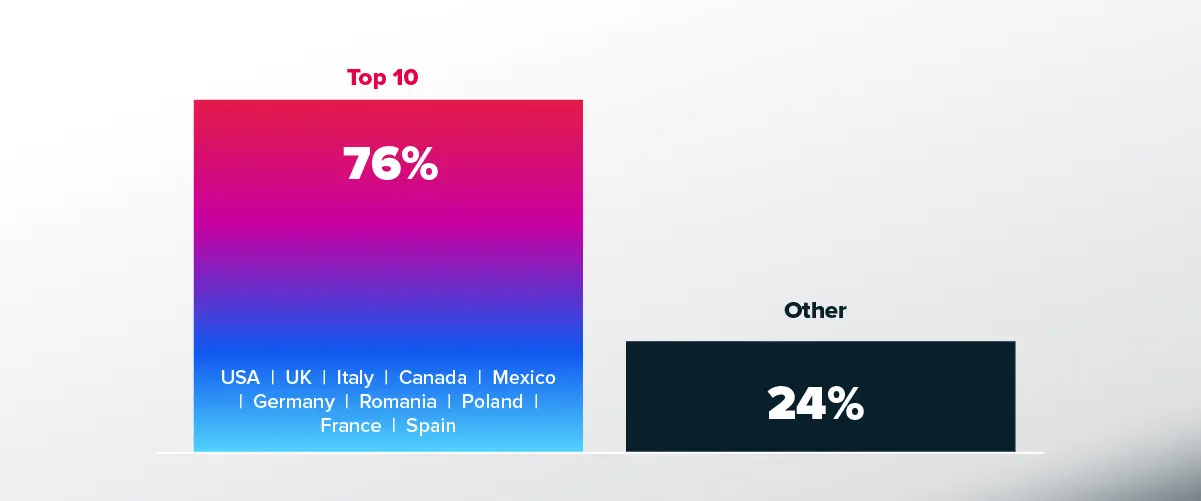
The top 10 countries accounted for 76% of all Black Friday 2025 payment volume.
- Led by the United States (16%), the United Kingdom (15%), and Italy (11%).
- Canada (8%) and Mexico (7%) rounded out the top five, underscoring that North America and Western Europe still anchor global peak-season demand.
- Yet several high-growth European markets, such as Romania, Poland, and Spain, also featured in the top tier, highlighting how the BFCM surge is spreading into regions with rapidly growing eCommerce adoption.
While the “core markets” continue to shape global volume, the remaining 24% reflects a long tail of international shoppers whose contribution is rising year over year.
Insight 2: Non-European high-growth markets saw explosive growth in eCommerce volume during Black Friday 2025
.webp)
- Tanzania recorded a 401.90% increase in payment volume in eCommerce
- British Virgin Islands surged 203.57%
- Cameroon grew 167.74%
- Vietnam, Burkina Faso, and Rwanda each saw 120-130% increases
These gains represent a shift in consumer behavior, driven by rising smartphone penetration, expanding payment infrastructure, and growing consumer confidence in digital commerce.
How people paid
Nuvei's payment method data from Black Friday 2025 reveals that consumers expect their preferred payment method to be available, and they'll abandon carts when it isn't.
Insight 1: Traditional cards remain the backbone of BFCM eCommerce transactions
The top 10 payment methods overall made up a striking 94% of all Black Friday transactions, leaving only 6% distributed across hundreds of other niche payment options.
.webp)
Visa (45%) and Mastercard (34%) together accounted for 79% of total Black Friday volume, with PayPal, SPEI (Mexico), and BLIK (Poland) rounding out the remaining top methods.
This shows that while the card networks are still dominant, consumers increasingly expect merchants to support their region-specific methods, especially in markets where cards are no longer the default.
Insight 2: Concentration and diversity of LPMs
Although thousands of LPMs exist globally, just the top 10 accounted for 76% of all LPM-driven Black Friday volume, revealing a concentrated but still diverse payments landscape.
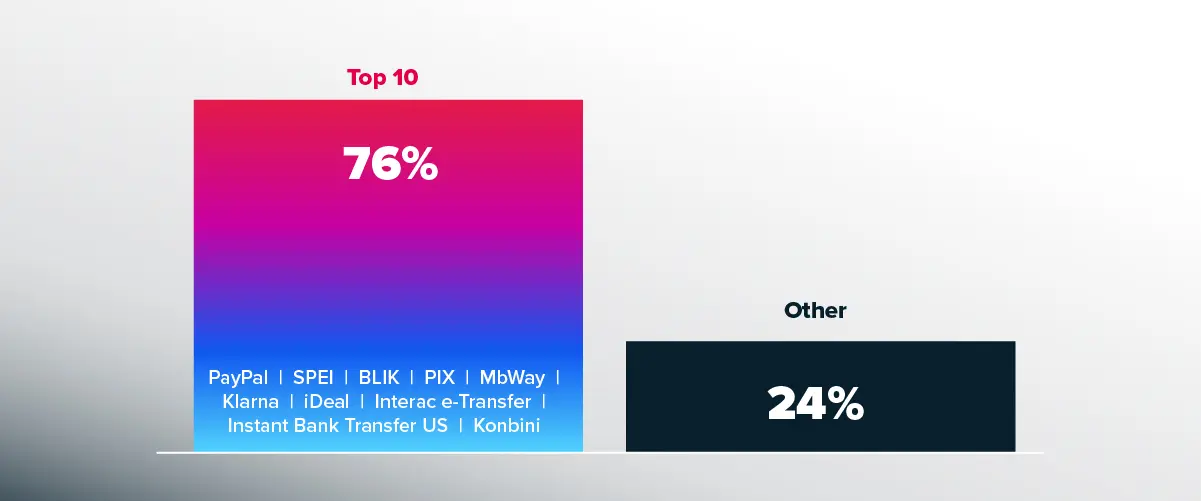
- PayPal remained the clear leader with 23% of APM share, followed closely by Mexico’s SPEI (22%) — a sign of the growing influence of real-time bank payments in Latin America.
- BLIK in Poland (13%) and PIX in Brazil (5%) continued to dominate their respective markets in Poland and Brazil, while MB WAY (Portugal) and Klarna each captured 3%.
- The presence of methods like Interac (Canada), iDEAL (Netherlands), and Konbini (Japan) in the top tier underscores that checkout experiences must be regionally tailored.
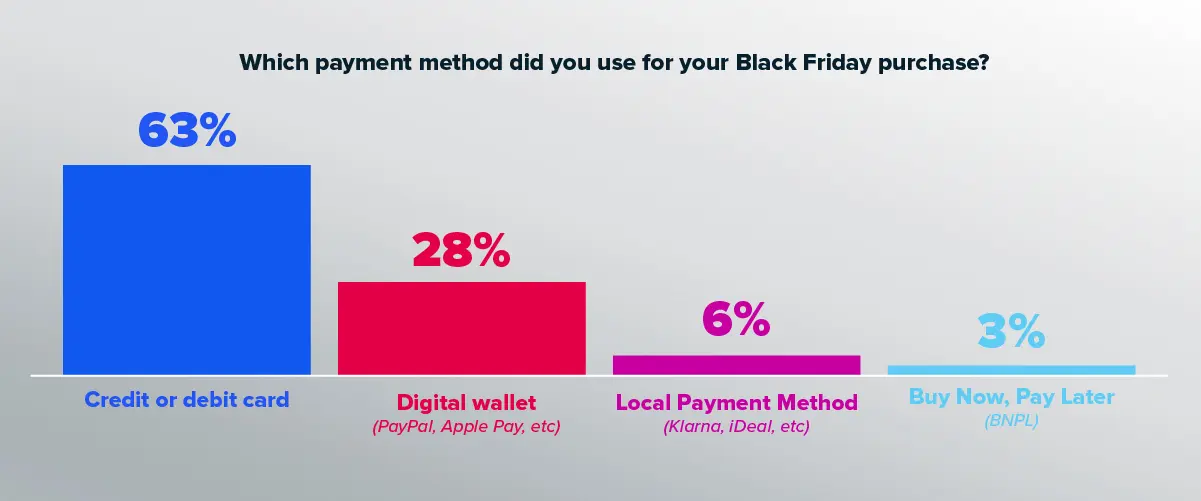
LinkedIn poll data reinforces this pattern. Among shoppers surveyed, 63% used cards for their Black Friday purchase and 28% used digital wallets, closely mirroring our platform data.
Insight 3: Buy Now, Pay Later keeps surging in online retail
BNPL was a major growth engine during Black Friday 2025, with deferred payment options seeing triple-digit increases:
Across demographics, consumers are embracing flexible payment terms for purchases large and small, particularly during high-intent shopping windows. For merchants, offering BNPL options is no longer a differentiator but an expectation.
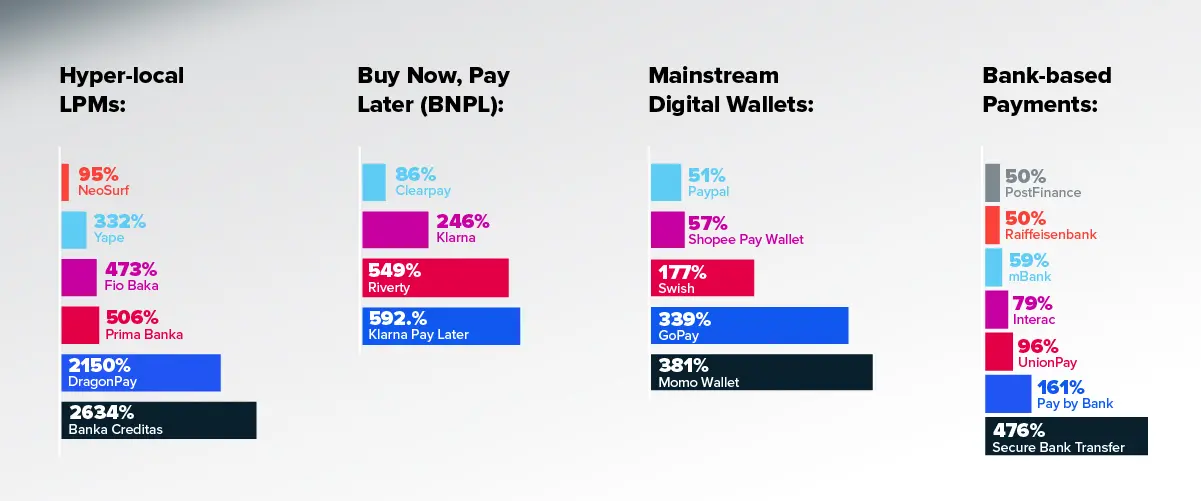
Insight 4: Hyper-local payment methods are a fast-growing revenue channel
While global card networks maintain significant market share, regional payment methods demonstrated that localization drives conversion:
- DragonPay (Philippines): +2,150%
- Yape (Peru): +332%
- Prima banka (Slovakia): +506%
- Fio banka SK: +473%
- Banka Creditas: +2,634%
- NeoSurf UK: +95%
Insight 4: Digital wallets maintained strong momentum
Trusted wallet providers continued their growth trajectory, particularly in mobile-first markets:
- Swish (Sweden): +177%
- Momo Wallet (Vietnam): +381%
- GoPay (Indonesia): +339%
- Shopee Pay (Indonesia): +57%
- PayPal: +51%
In regions like Southeast Asia and Scandinavia, wallet adoption is so prevalent that not supporting these methods effectively locks businesses out of the market.
Insight 5: Bank-based payments surged in trust and usage
Direct bank payment methods saw remarkable growth, particularly in regulated markets where consumers value the security and familiarity of paying directly from their financial institution:
- Secure Bank Transfer: +476%
- Pay by Bank: +161%
- UnionPay: +96%
- Interac: +79%
- Raiffeisenbank, mBank, PostFinance: all above 50% growth
For merchants, direct bank payments offer lower processing costs and improved authorization rates, without sacrificing consumer trust. As open banking initiatives mature globally, we expect this trend to accelerate through 2026.
When people shopped
When comparing baseline volumes from previous month's weekend to Black Friday (November 28th), we found the most global surge hit between 18:00 and 21:00 GMT time where volumes more than doubled. If you are an Commerce merchant selling globally, this reflects the most profitable window.
.webp)
BNPL usage also peaked at around the same time, at 19:00 GMT, showing that pay-later options are associated with bigger baskets, holiday gifting, and “last big add to cart” moments later in the evening for European consumers.
What consumers bought
%2520(1).webp)
Insight 1: Beauty and personal care lead the pack
Small-format retailers in the beauty and personal care space saw explosive growth:
- Beauty Shops and Barber Shops: +1,152%
- Cosmetic Stores: +378%
- Women's Accessory and Specialty Stores: +287%
- Men's, Women's, and Children's Clothing: +399%
The surge in high-consideration personal care purchases demonstrates the power of targeted promotions combined with frictionless mobile payment experiences. These categories benefit enormously from one-click checkouts and stored payment credentials.
Insight 2: Experience economy came roaring back
Consumers prioritized experiences and wellness, with recreational spending surging:
- Ticket Agencies: +233%
- Game, Toy, and Hobby Shops: +179%
- Sporting Goods Stores: +148%
- Golf Courses (Public): +119%
- Membership Clubs (Athletic, Recreation): +97%
For event organizers and experience providers, offering multiple payment options at checkout directly impacts conversion.
Insight 3: Electronics and traditional retail remained strong
Core ecommerce categories maintained healthy growth:
- Electronic Sales: +134%
- Household Appliance Stores: +146%
- Misc. & Specialty Retail: +105%
- Computer Network/Info Services: +90%
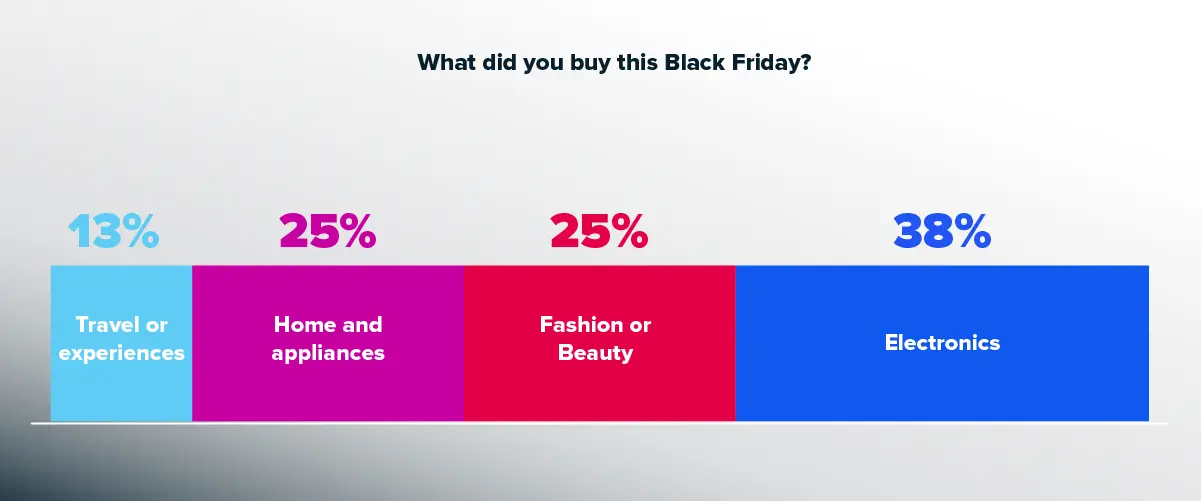
Our LinkedIn poll data also reflected these category trends. Among respondents, electronics (38%) and fashion/beauty (25%) led consumer demand.
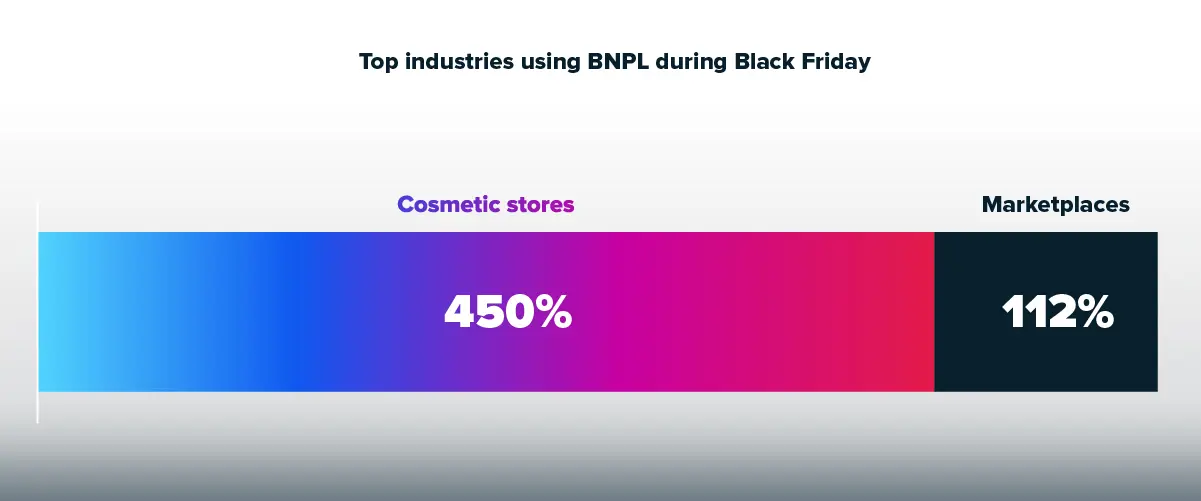
Insight 4: BNPL leads in two categories: Cosmetics and Marketplaces
BNPL usage during Black Friday was heavily concentrated in two categories: Cosmetic Stores (+450%) and Marketplaces (+112%).
In beauty and personal care, BNPL removes friction for shoppers making larger basket purchases, especially where premium products, curated bundles, and holiday gifting drive higher order values.
Marketplaces, on the other hand, benefit from BNPL because they aggregate diverse price points and product types; consumers use Pay Later options to manage spend across multiple items or merchants in a single checkout.
In both industries, BNPL works because it improves the consumer’s buying power at the moment of purchase, boosting conversion and lifting average order value during the most competitive shopping window of the year.
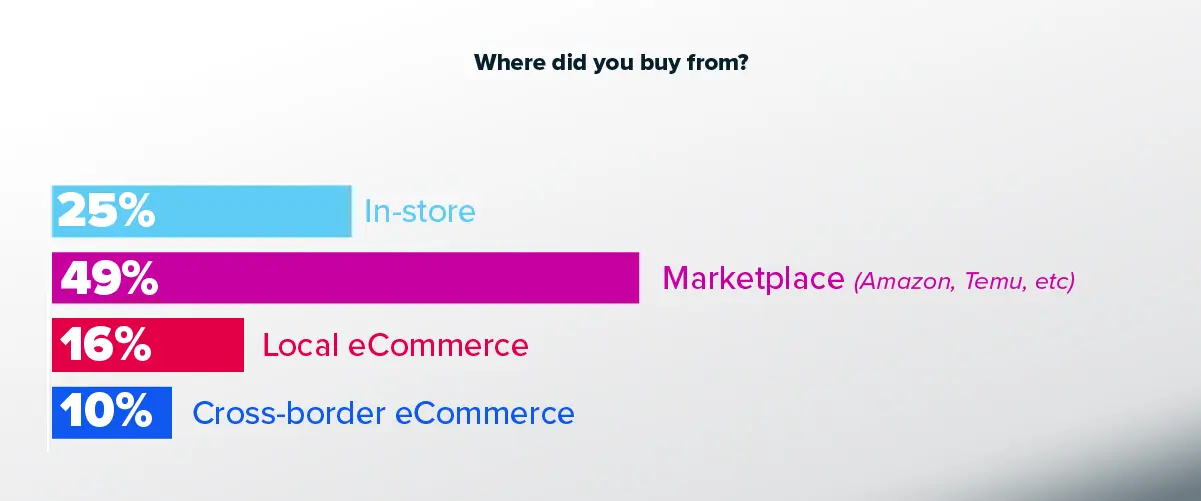
Our LinkedIn poll showed that 49% purchased through marketplaces like Amazon and Temu, compared to only 24% in-store. This aligns with our Black Friday volume patterns, where marketplaces saw significant growth and BNPL usage rose sharply in multi-merchant ecosystems.
Recap: What this means for your 2026 strategy
As you plan for next year's peak season, the data points to five clear priorities:
- Payment localization is non-negotiable. Consumers increasingly favor regional payment methods over global card networks. If you're not supporting the dominant payment methods in each market you serve, you're losing conversions, especially during high-intent shopping moments like BFCM.
- BNPL is baseline functionality. With Klarna Pay Later growing 592.35%, deferred payment options have moved from "nice to have" to "must have." Younger demographics expect BNPL at checkout and offering it can increase average order values while reducing cart abandonment.
- Mobile-first markets require wallet support. In Southeast Asia, Scandinavia, and parts of Latin America, digital wallets aren't alternative payment methods but the primary way consumers transact. Supporting wallets like Swish, Momo, and GoPay is essential for market entry.
- Direct bank payments offer cost advantages. The 476%+ growth in secure bank transfers demonstrates rising consumer comfort with direct-from-bank options. For high-volume merchants, these methods offer lower processing fees and better authorization rates compared to card networks.
- Infrastructure must scale seamlessly. With peak transaction windows concentrated in narrow time periods, your payment infrastructure needs to handle dramatic volume spikes without degrading performance. Downtime during peak hours is lost revenue you can't recover.
About the data
This analysis is based on aggregated, anonymized data processed on the Nuvei platform during the 2025 Black Friday and Cyber Monday (BFCM) period, spanning Friday, November 28 through Monday, December 1. All comparisons reflect growth benchmarked against the same calendar days one month prior (October 31 to November 3, 2025), to isolate the impact of peak-season activity.
Transaction volumes are reported in USD and cover a global range of payment methods and geographies.
The LinkedIn results came from our polling on the official Nuvei account, which has more than 300,000 followers.
Nuvei processes payments for businesses of all sizes across more than 200 markets, supporting over 700 local payment methods and 150 currencies. Our platform is built to help businesses accept payments locally while scaling globally.